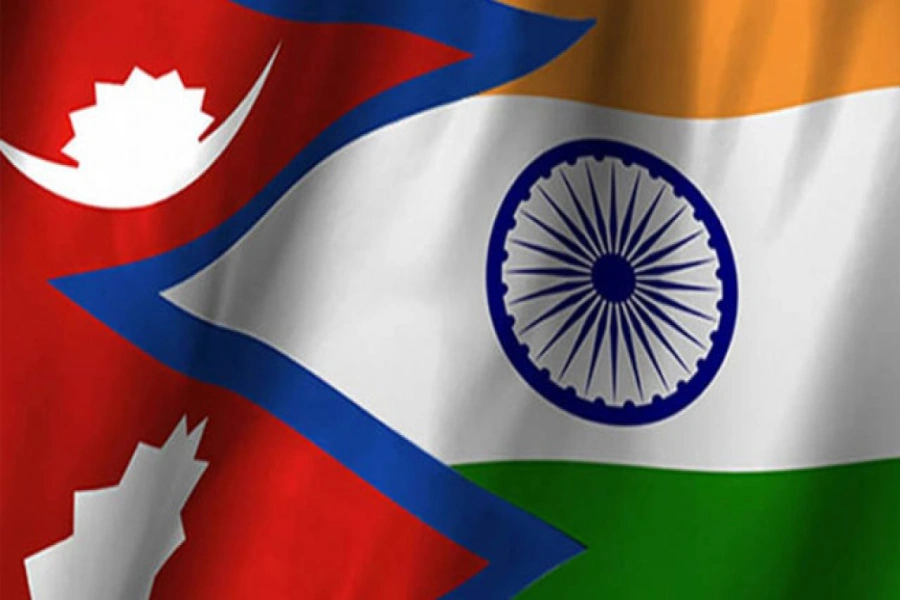
For most countries, a 1,700-plus kilometre open border would be a nightmare. For India and Nepal, it is a living example of how security, economics and people-to-people ties can reinforce one another when handled with patience and strategic foresight.
Stretching 1,751 km across five Indian states — Sikkim, West Bengal, Bihar, Uttar Pradesh and Uttarakhand — the India–Nepal border is one of India’s longest land frontiers. It is also unique: citizens of both countries can cross without visas, trade and transit are deeply integrated, and families on both sides often share language, religion and culture. Far from being a liability, this open border has increasingly become a platform for cooperative security and shared prosperity.
A border managed together, not policed apart
Security agencies on both sides now talk less about “problems” and more about “coordination.” In November 2025, the 9th India–Nepal Annual Coordination Meeting brought together India’s Sashastra Seema Bal (SSB) and Nepal’s Armed Police Force (APF) in New Delhi. The agenda was telling: not blame-trading, but practical steps — joint action against cross-border crime, drug smuggling and human trafficking, and better information-sharing.
At the local level, joint initiatives are becoming the norm. In Madhesh Province, officials from both countries have launched a coordinated drive to protect the “no-man’s land” along the border from encroachment, combining joint patrols and shared land records to prevent illegal grabs. This is exactly the kind of quiet, technocratic cooperation that rarely makes headlines but fundamentally stabilises a frontier.
New infrastructure is also being built with security and connectivity in mind. The Gorakhpur Link Expressway, just 100 km from the Sunauli crossing, now cuts travel time between Lucknow and Gorakhpur to about 3.5 hours, improving access to one of the busiest India–Nepal gateways. Officials openly acknowledge that the expressway is not just about trade and tourism; it also enables faster military and disaster-relief mobilisation when needed. On the western side, a four-lane road to the Banbasa border in Uttarakhand is being upgraded at a cost of roughly ₹250 crore, with a major bridge and flyover linking to a Nepali dry port — again underlining how highways double up as strategic assets.
Nepal is not a passive beneficiary in this story. Its security agencies have stepped up action against transnational criminal networks using the open border for cybercrime and counterfeit operations, coordinating closely with Indian counterparts and with agencies such as the NIA during recent raids. In other words, both sides are investing political and institutional capital to keep an open border secure, rather than sealing it and undermining the people-centric character of the relationship.
UN chief Guterres welcomes "Call for Control of Frontier AI Mod...

Defence ties rooted in trust – and people
India–Nepal defence cooperation is often reduced to a cliché about “Gorkha soldiers,” but the numbers show how deep and enduring this partnership is. Around 34,000–40,000 Nepali citizens serve in the Indian Army today across seven Gorkha regiments, deployed from Ladakh to the Northeast. This is not just labour mobility; it is a shared security architecture in which Nepali youth literally stand guard for India and later retire to their villages with pensions, skills and strong goodwill.
Symbolism reinforces this trust. Since 1950, the two countries have upheld the tradition of conferring the honorary rank of “General” of each other’s Army on their respective Chiefs — a gesture unique in India’s military diplomacy. It quietly signals that New Delhi sees the Nepal Army as a partner, not a pawn.
The joint military exercise Surya Kiran has, in less than 15 years, become one of India’s most substantive bilateral drills. Held annually and alternately in each country since 2011, it focuses on counter-terrorism, jungle warfare, mountain operations and humanitarian assistance and disaster relief (HADR) under UN mandates. The 18th edition, held in Saljhandi, Nepal from 31 December 2024 to 13 January 2025, and the 19th edition that began in Pithoragarh, Uttarakhand on 25 November 2025, each involved about 334 personnel from both armies. These are battalion-level field exercises, not symbolic tabletop games.
For Nepal, Surya Kiran and access to Indian training institutions such as the Indian Military Academy are force multipliers, enhancing its own capacity for UN peacekeeping, border management and disaster response. For India, the exercises deepen interoperability with a neighbour situated at a crucial Himalayan junction between the Gangetic plains and the Tibetan plateau.
From Relief to Rebuilding: India and Nepal in Action
The 2015 earthquake was a painful test of this relationship. India’s Operation Maitri mobilised aircraft, helicopters, engineering teams and medical units within hours. Indian teams rescued nearly 6,500 people, evacuated about 3,975 Indian nationals, treated over 4,700 injured persons and helped clear 6,500 cubic metres of debris, including at World Heritage sites. Community kitchens run by Indian organisations provided hot meals and dry rations to nearly 100,000 people.
But the crucial story is what followed. At the International Conference on Nepal’s Reconstruction in June 2015, India announced a US$1 billion package — almost one-seventh of Nepal’s estimated US$6.7 billion reconstruction requirement. One-fourth of that was in outright grants. This US$1 billion has since been operationalised as long-term assistance for housing, education, health and cultural heritage, including the reconstruction of 50,000 houses in Gorkha and Nuwakot districts alone.
Nepal, for its part, has demonstrated how quickly a small country can bounce back when external support is matched with internal political will. Kathmandu’s focus on quake-resilient building codes, community-driven reconstruction and decentralised decision-making has ensured that Indian assistance has not merely rebuilt what was lost but created more resilient infrastructure for the future.
Border as a corridor for trade and energy, not tension
Economic data underscores how central India is to Nepal’s development — and how much New Delhi has at stake in a stable, prosperous neighbour.
Trade with India accounts for about 63% of Nepal’s total trade, equalling roughly US$8.02 billion in Nepali FY 2023/24. India is also Nepal’s largest export destination, taking nearly 68% of its total exports. Bilateral trade touched about US$8.5 billion in 2024–25, with India exporting around US$7.3 billion worth of goods to Nepal and importing about US$1.2 billion — a volume equivalent to nearly 16% of Nepal’s GDP. Over 20 major trade and transit points dot the border, enabling free movement of goods and services.
Energy is fast becoming the new anchor of this cooperation. Cross-border transmission infrastructure, such as the Dhalkebar–Bhittamod 400 kV line, already enables up to 452 MW of power export from Nepal to India. India has agreed to fund additional corridors like Bheri, Nijgadh–Inaruwa and Gandak–Nepalgunj at an estimated cost of nearly US$680 million under its Lines of Credit framework.
In January 2024, the two countries signed a landmark agreement allowing the export of 10,000 MW of Nepali electricity to India over the next 10 years. This aligns neatly with Nepal’s own Energy Compact, which targets 15,000 MW of exports by 2035, of which 10,000 MW is earmarked for India and the rest for Bangladesh or China.
The dividends are already visible. In June 2025, Nepal began exporting 40 MW of power to Bangladesh using India’s grid, while also selling 80 MW to Bihar. India thus becomes the transit hub for Nepal’s regional energy ambitions — a classic win–win in which Nepal monetises its hydropower surplus, Bangladesh diversifies its energy mix, and India cements its role as the central node in a South Asian power pool.
A quiet success story in a noisy region
Of course, India and Nepal have their share of political disagreements, map disputes and rhetorical flare-ups. But the data tells a more grounded story: an open border increasingly managed through joint mechanisms; security forces training and patrolling together; tens of thousands of Nepali soldiers serving in the Indian Army; billions of dollars in trade, reconstruction and energy projects; and a shared vision of turning the Himalayas from a wall into a corridor.
In a region often defined by closed borders and zero-sum geopolitics, India–Nepal border cooperation and defence ties stand out as a quiet success story — one where geography, history and hard numbers all point in the same direction: neighbours first, and together.