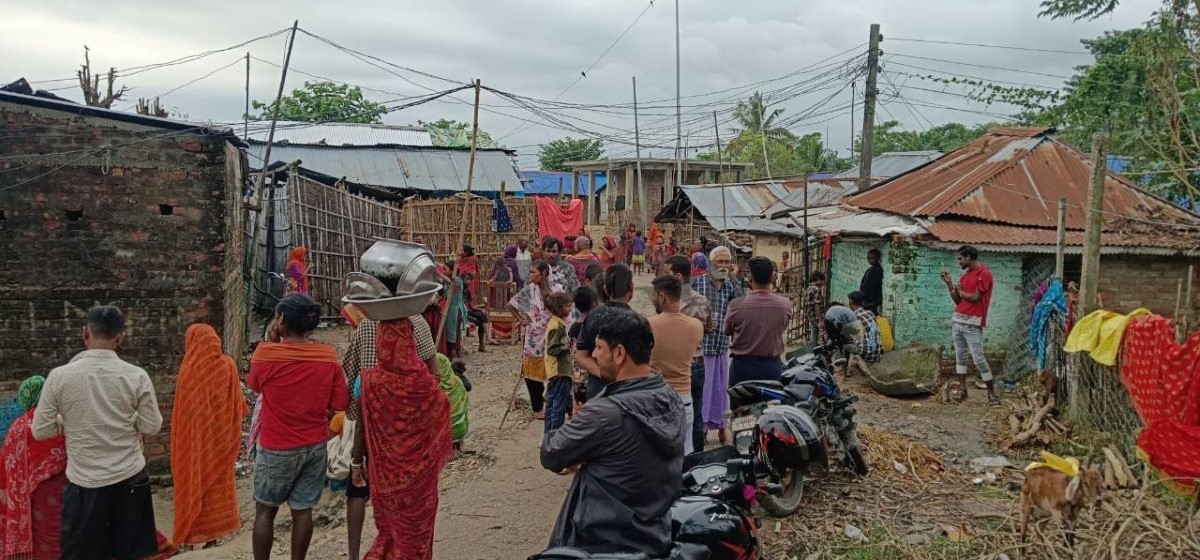
But then isn´t it a little embarrassing, a little shameful that we should be distributing relief packages to victims of a diarrhea epidemic in the 21st century. Isn´t it true that not a single person should be dying of diarrhea, let alone over 150? Controlling such a disease requires nothing but a habit of drinking boiled water and whenever it breaks out the patients´ just need to re-hydrate their bodies with enough water, salt and sugar. Bear in mind that such an epidemic is a thing of the past, as old as 150 years, in the developed countries.
What actually happened in Jajarkot and the other districts affected by diarrhea is that with the prolonged spell of drought sources of water-- rivers and springs-- got contaminated more than ever. As humans and animals defecate indiscriminately and pollute the water sources the concentration of bacteria in the water increases during droughts. That´s why we routinely get news of diarrhea outbreaks at such times.
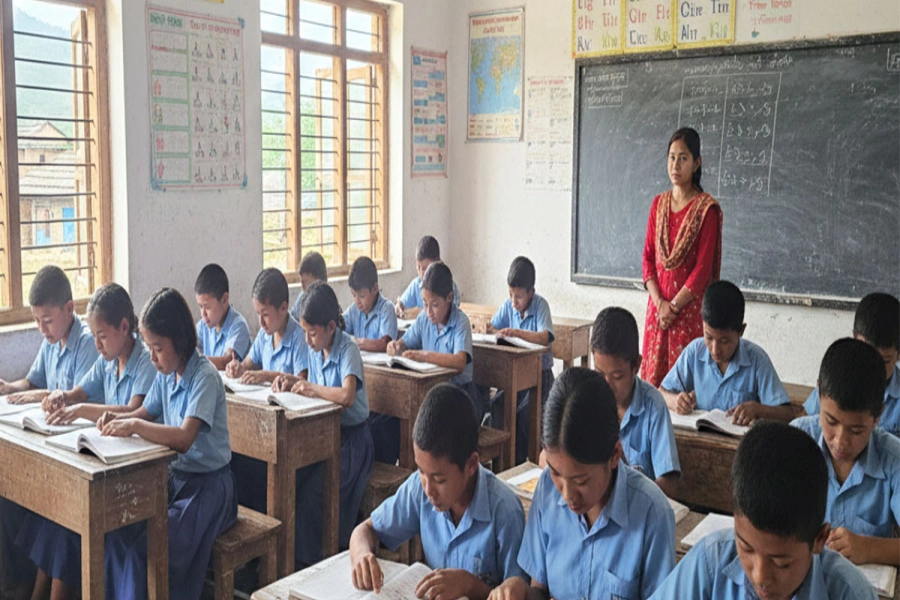
The lesson of the epidemic in the far-flung hill districts is that there is still a misconception about the disease; people still don´t understand the value of boiling drinking water; and they are also ignorant about the need to re-hydrate those infected with the bacteria. All this means we are still lacking in basic awareness programs regarding health and education. It also points to a need for increasing the number of health volunteers in the rural areas, especially in the hill districts. Actually, we need to launch a massive campaign to raise awareness about basic health issues. One of the best ways to do so is to recruit local students and teachers to go around the nearby villages on a monthly basis and talk to the villagers about health, education and important social issues. Such a campaign should especially target the illiterate families since it is they who are most vulnerable.
Related story
Coliform behind diarrhea epidemic in Nainhi village