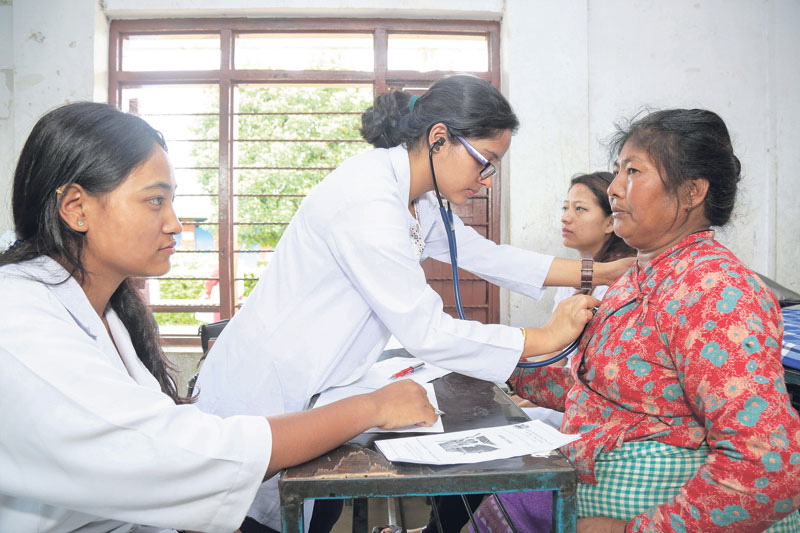
The World Health Organization (WHO) has announced that Nepal has eliminated rubella, making it the third disease eradicated in the nation through widespread vaccination campaigns. This achievement marks another significant milestone for public health in Nepal. Previously, the country eliminated polio in 2014 and maternal and neonatal tetanus in 2005. With the recent elimination of rubella, Nepal joins a select group of countries demonstrating the impact of sustained vaccination campaigns and community participation in preventing vaccine-preventable diseases. German measles, another name for rubella, is a viral infection that can be extremely dangerous for pregnant women, potentially causing stillbirth, miscarriage, or serious birth defects. Fortunately, safe and affordable vaccines are available to prevent it.
Power of Literature

Nepal launched a nationwide rubella vaccination campaign in 2012, targeting children aged 9 months to 15 years. A second dose was added to the routine immunization schedule in 2016. Despite challenges posed by earthquakes and the COVID-19 pandemic, the country successfully conducted four major vaccination campaigns in 2012, 2016, 2020, and 2024. By 2024, over 95% of Nepal’s population had received at least one dose of the rubella vaccine—a remarkable achievement. Before officially declaring Nepal rubella-free, the Regional Verification Commission for Measles and Rubella Elimination in South-East Asia reviewed the country’s data, including vaccination coverage and surveillance systems. The commission formally recognized Nepal’s rubella elimination at its annual meeting in July 2025, making it the sixth country in South Asia to reach this status. This milestone highlights the effectiveness of Nepal’s vaccination program and the power of commitment and teamwork.
Communities, volunteers, health workers, and the government have worked tirelessly on vaccination campaigns. WHO officials praised Nepal for being the first country in South-East Asia to implement a surveillance system that incorporates new laboratory testing procedures. Officials and communities were encouraged to continue outreach initiatives, such as declaring districts “fully immunized” and celebrating “immunization month.” Although Nepal had aimed to eliminate both measles and rubella by 2026, it achieved the rubella target ahead of schedule. Attention now turns to measles, which still affects children and remains a regional concern. Public health specialists stress the importance of sustaining these gains: communities must remain engaged, surveillance systems functional, and vaccines accessible to all children. Without vigilance, eliminated diseases can return. Nepal’s success in eliminating three severe diseases underscores the strength of its immunization drive, careful planning, and coordinated efforts across society. While the battle against preventable diseases is ongoing, Nepal has shown that determined action, planning, and attention to detail can deliver remarkable results.