


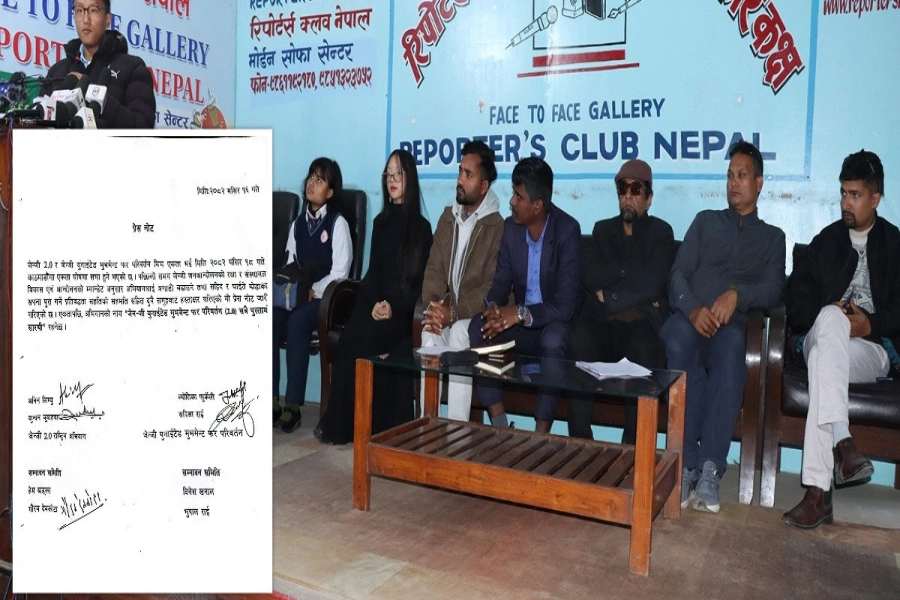
The new Sushila Karki government is struggling to gain direction even after a month in office. The youth-led Gen Z rebellion, despite being hugely successful in bringing a new political atmosphere, has now been accused of division, with various groups of Gen Z pulling the government in multiple directions. The new generation displayed unprecedented unity and bravery, with more than two dozen people giving their lives for a corruption-free society. But the youths are now split on political representation and power-sharing. But the discord among youth members began when Prime Minister Karki attempted to add some youthful representation from the Gen Z movement to her cabinet. Reports suggested four names, Ramji Ram, Ganapati Lal Shrestha, Bablu Gupta, and Tashi Lhazom; all of them having some credentials will be included in the cabinet. These nominations, however, brought an uproar. Senior Gen Z activist Miraj Dhungana questioned their authenticity, wondering who among them represented the movement and who had authorized them to be nominated. His statement reflected a growing belief among most Gen Z members that bureaucrats and politicians who are disconnected from the revolution have hijacked their movement. This has put PM Karki in an awkward situation.
Shangri-la brings two new saving products

Karki's task was to restore order, hold elections on March 5, and form a government that represented the youth belonging to the Gen Z protesters. Instead of backing her, Gen Z factions are battling with each other to be in charge. While some are calling for her to arrest former Prime Minister Oli and his Home Minister on the spot, others are calling for her to rebuild institutions first and then seek arrests. These contradictions have blocked decision-making while Karki's cabinet remains incomplete. As such, her government looks increasingly fragile. The mainstream political parties, already skeptical of her authority, have seized on the youth division as proof that the movement lacked coherence. President Ram Chandra Poudel has stepped in to mediate, but even he appears unsure how to reconcile the competing interests of youth members. If this difference persists, the government might not be able to carry out work for the coming election, let alone take vital decisions to run day-to-day affairs. The Election Commission itself has been in question for declaring the poll schedule without party consultations, increasing distrust between the interim government and mainstream politicians.
Meanwhile, common citizens are tired of delay, fearing another bout of political unrest. The irony is that the Gen Z revolution that started as a demand for openness, inclusion, and fairness now risks being remembered for youths' ego and discord. If the same generation that worked together and sacrificed blood together starts questioning the legitimacy of others, then the very reason for their sacrifice is defeated. To maintain the credibility of the movement, its leaders should not forget what brought them together: the quest for a corruption-free, transparent system. The Gen Z movement members now need to focus on free and fair elections and institutional reform. Harmony, not fractiousness, among them will determine if their struggle works up to concrete reforms. The government of Prime Minister Karki has time to regain purpose, but only if Gen Z leaders stop vying for seats in the cabinet for their members. Their division and differences among youths are not only undermining the Karki government, but they are threatening the very soul of their movement as well as the next elections that must be held on time to set the nation and democratic institutions on the right path.








-1782782519.webp)


