January 18th will be a momentous day in Nepali politics if the Big Three and the Madheshi Morcha, as they claim, can by then really hammer out an agreement on the amendment of the new constitution. This will end five months of continued protests in the Tarai belt and with it India’s nearly four-month-long economic blockade of Nepal that started after the promulgation of the new constitution on September 20th. A breakthrough is likely because everyone is tired.
Democracy was saved but hope is all we have

The Madheshi parties in Morcha clearly lack the kind of support they had when the whole Tarai belt erupted in spontaneous protests in 2007. Keenly aware of their reduced popularity, this time they resorted to a more convenient, but ultimately self-defeating, tactic of blocking the movement of goods into Nepal from key border points—with India’s support, a few hundred Morcha foot-soldiers would suffice for the purpose.
But even the handful of people who were in the past trying to block the entry of vehicles into Nepal have stopped turning up of late. At the no-man’s land on the Raxaul-Birjung border, through which 70 percent of Indo-Nepal trade takes place, there is now light traffic of two wheelers, and Morcha protestors are nowhere to be seen.
Their agitation is clearly losing steam. Although Morcha claimed responsibility for the disruption in movement of goods between the two countries, it was India which was actually imposing a unilateral blockade on Nepal, as goods were not coming even from the border points where there were no protests. Even now, when there are no protestors at Birjung, goods and fuel-bearing trucks stranded on the Indian side are still not entering Nepal. India, it appears, won’t ease traffic on this route, the lifeblood of Nepal, unless the political establishment in Kathmandu heeds India’s concerns and ‘sufficiently’ accommodates Madheshis in the new charter.
Amend, save the day
The political grapevine in Kathmandu has it that India will open the Raxaul-Birjung border when the Nepali parliament passes the pending bill for amendment of the new constitution. If that happens, two of the major demands of Madheshi parties—federal provinces on population basis and proportional representation of all ethnic groups in state organs—will be addressed. It will also vindicate the Indian blockade, supposedly imposed to secure the rights of the Madheshi people, and give the Indian establishment the much-needed face-saver.
India now wants a quick end to the conflict in Nepal because contrary to its expectation the establishment in Kathmandu, instead of capitulating to its pressure, decided to tough it out, come what may. Kathmandu gravitated towards Beijing when New Delhi started pushing it away—an outcome the Indian establishment feared the most. The new Indian thinking is: if the political crisis in Nepal is further prolonged, China will surely look to occupy the power vacuum.
The leaders of the three main parties are also in a mood for compromise. The country’s economy has been badly battered, first by the earthquakes and now by the blockade; at least half a million have lost their jobs in the past four months. There is now great public pressure on the government to find timely solution to the constitutional crisis and thereby ease public hardship.
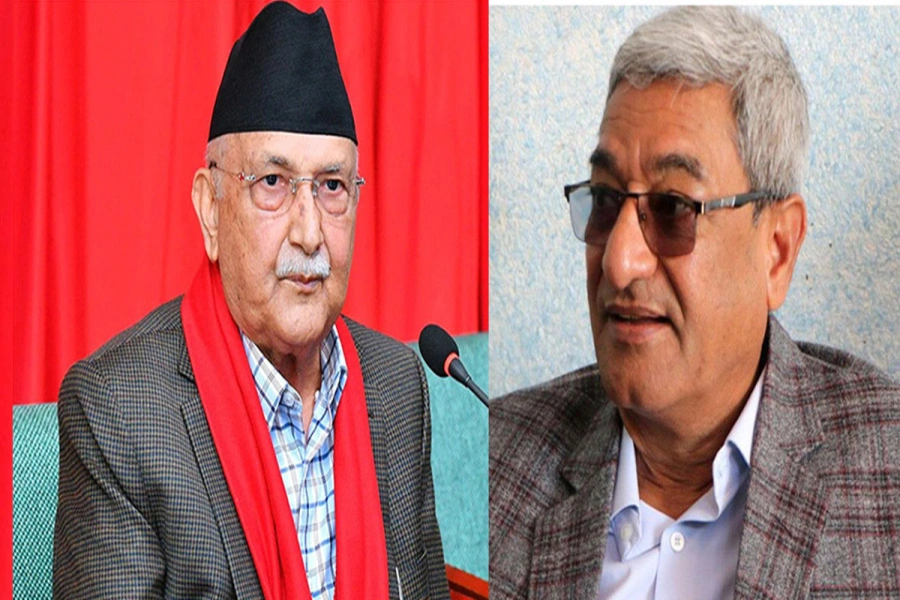
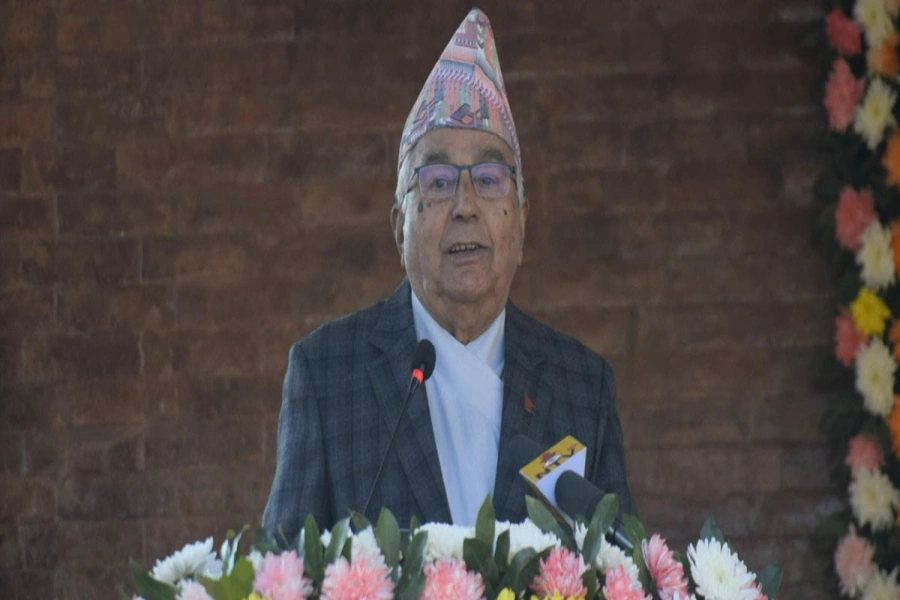
Congress and Maoists are considered relatively flexible about the demands of Madheshi parties. UML under its Chairman—and now and prime minister—KP Sharma Oli on the other hand seem to be in a mood to frustrate and tire out the Morcha. Oli is doing so because he believes the ‘divisive’ demands of Madheshi parties are unpopular. So the more he frustrates them, the greater will be the popularity of both him and his party.
Now talk sense
I personally believe the constitutional issues under discussion have been greatly distorted by the likes of Oli and the Morcha hardliner Rajendra Mahato. The fear of Congress and UML lawmakers that conceding the demand of the Madheshi parties for two Madhesh-only provinces will ultimately lead to secession ignores basic geopolitics of the region. The last thing India wants is yet another secessionist movement on its doorstep, with its reverberations for the Maoist-ridden West Bengal to the battlegrounds of Kashmir.
But nor is the demand of the Madheshi parties for two Madhesh-only provinces entirely credible. The 22 districts comprising Tarai-Madhesh are not homogenous. For example in the easternmost district of Jhapa, there are only five percent native Madheshis. So it will be hard to impose a Pan-Madheshi identity on non-Madheshi majority districts like Jhapa and Morang.
Nor does their demand for ethnic federalism take cognizance of the fact that the new federal states carved on ethnic basis could be dominated by a handful of Madheshi elites in the highly stratified Madheshi society—as examples of other diverse federal countries such as Nigeria and Ethiopia whose provinces were carved along ethnic lines suggest.
The dicey power dynamics in Nepal that developed partly because of these willful distortions of important issues was further complicated by the Indian blockade, as it further increased polarization between the Madheshi and Pahadi communities. The Madheshis attributed the hardship from the blockade to the intransigence of the Pahadi-dominated Kathmandu elite. Big sections of the Pahadi community, meanwhile, increasingly viewed Madheshi parties as ‘India’s agents’. The Indian blockade also, paradoxically, boosted the secessionist movement in Madhesh.
In these polarized times emotions easily trump reason, something prime minister Oli, a master at manipulating public opinion, is acute aware of. He knows baiting Madheshi parties goes down well with his core Pahadi constituencies. Yet Oli and his UML party also can’t go it alone if Congress and Maoists —and, of course, India—are in a mood for a negotiated settlement with the Madheshi parties.
Whatever the reason for the recent rapprochement between the two sides in the constitutional standoff, the effort itself must be welcomed. It is utopian to expect neat solutions in such a polarized polity. The new constitution was a document of compromise. The federal project, like the constitution, will materialize only with similar compromise.
The political parties would do well to keep this in mind in the next few days of inter-party parleys leading up to January 18th.
biswasbaral@gmail.com