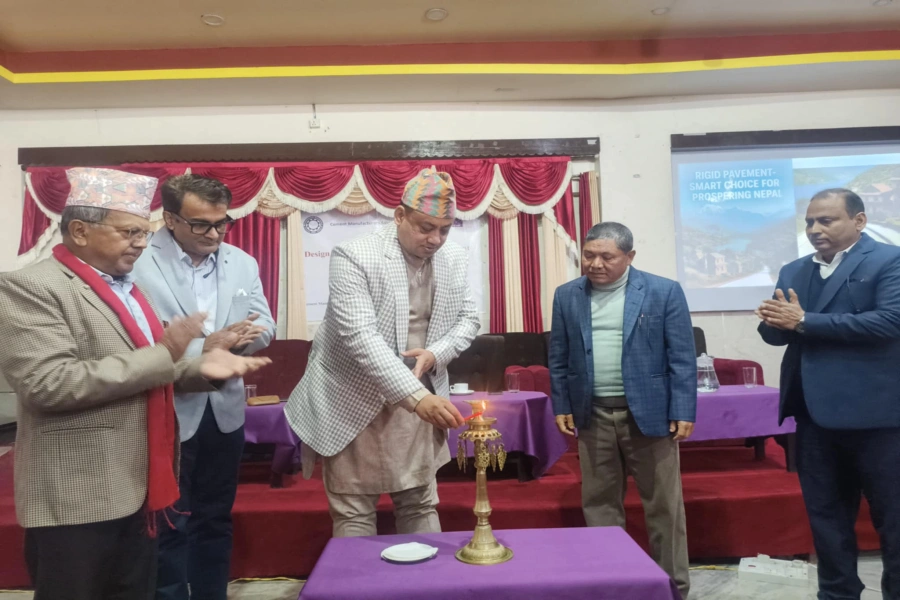
HETAUDA, Jan 20: A one-day training program on the design and construction of rigid pavement for roads, aimed at promoting sustainable development of road infrastructure, was concluded in Hetauda.
The program was organized on Tuesday by the Nepal Cement Producers’ Association with facilitation from IPTM Nepal Pvt Ltd. The event was held under the chairmanship of Raghunandan Maru, President of the Nepal Cement Producers’ Association, and was attended by Bagmati Province Chief Minister Indra Bahadur Baniya as the chief guest.
No mechanism to test quality of bitumen
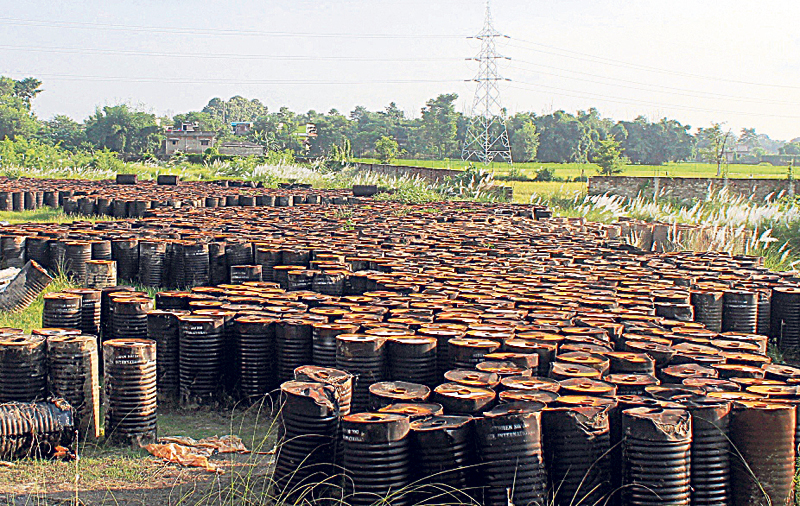
Inaugurating the program, Chief Minister Baniya stressed the need to reduce the use of imported bitumen in road construction and prioritize the use of domestically produced cement. He said replacing bitumen not only promotes the cement industry but also helps reduce the country’s trade deficit.
Emphasizing sustainable development and a self-reliant economy, Chief Minister Baniya said the use of domestic raw materials is essential. He also expressed the Bagmati Province government’s commitment to work in coordination with the cement industry and give priority to such program in the upcoming budget.
He added that to increase cement consumption, roads should move towards concrete pavement instead of blacktopped roads.
At the program, Engineer Arjun Jung Thapa delivered a presentation on “Introduction to Rigid Pavement and Its Relevance in Nepal.” He highlighted challenges to road durability arising from Nepal’s geography, climatic conditions, weak subgrade, increasing traffic pressure, and heavy freight movement, and said concrete roads offer a reliable long-term solution.
Explaining the background and objectives of the program, speakers noted that with more than 90 percent of goods and passenger transportation in Nepal taking place by road, sustainable road infrastructure development has become essential.
While the initial cost of concrete pavement is slightly higher compared to blacktopped roads, it was concluded that concrete pavements are cheaper in the long run due to lower maintenance costs, higher durability, and reliability.
The training provided practical knowledge on the concept and types of concrete roads, criteria for selection, design principles, structural elements, the role of joints and reinforcement, and the construction process. According to the organizers, the training targeted technical personnel involved in policy making, planning, design, supervision, and construction.
The program was attended by Ward Chairperson of Hetauda Sub Metropolitan City Ward No 2, Bishnu Gopal Maharjan, Superintendent Engineer Dipak Kumar Das of the Infrastructure Development Planning Office Makwanpur, former President of the Nepal Cement Producers’ Association Ishwar Thapa, representatives of various agencies, and provincial technical officials.