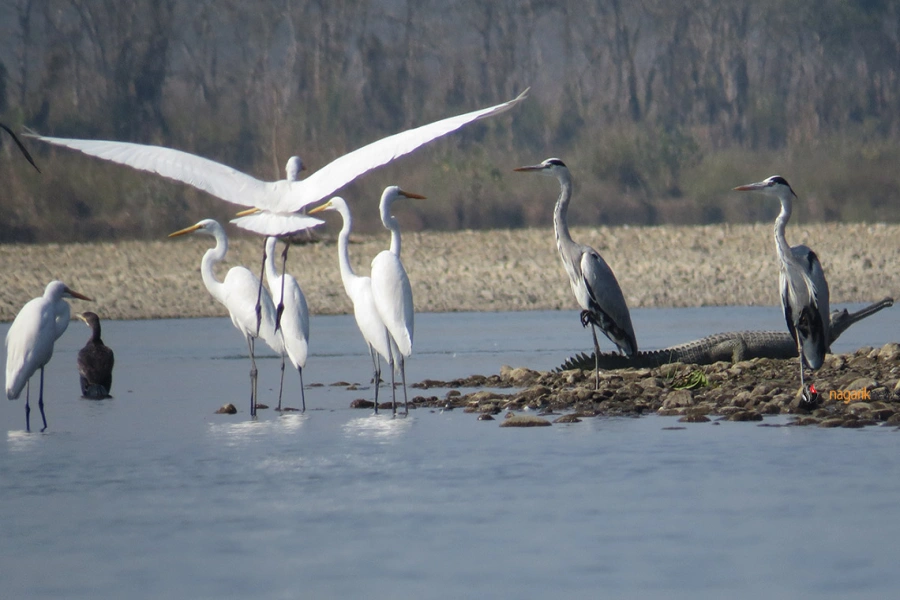
KATHMANDU, Feb 5: Annual counts of waterbirds in Nepal’s lakes, ponds, rivers and wetlands indicate a continuing decline in both species and population.
According to the 2026 survey, 90,688 waterbirds of 89 species were recorded, down from 96,565 of 94 species in 2025, with earlier counts exceeding 100,000 birds.
Crane population on decline with shrinking wetland

The survey conducted by Department of National Parks and Wildlife Conservation and coordinated by the Nepal Ornithological Society covered 18 major wetland sites and 78 smaller areas nationwide. It included 411 volunteers—including officials, birdwatchers and citizen scientists—collecting data on resident and migratory species.
Experts attribute the decline of habitat due to human encroachment, infrastructure expansion, invasive species, intensive agricultural chemical use, and habitat loss are the major reasons for decreasing number of waterbirds in Nepal. Birds migrating from cold regions such as Russia, northern China, Mongolia and Siberia increasingly seek alternative habitats as wetland conditions deteriorate.
The survey highlights the importance of wetlands for millions of migratory birds, fish, amphibians, insects and plants, while calling for stricter protection and sustainable management to ensure food and safe breeding grounds for waterbirds.
According to conservationists, unregulated riverbed extraction, boating activities, construction and increased pollution in wetlands are further threatening habitats, forcing birds to search for new feeding grounds and contributing to their declining numbers during Nepal’s winter season.


-1200x560-1774606010.webp)


-1200x560-1783685616.webp)