In a written speech before the chiefs of around 28 political parties at the president´s office on Friday, the head of state expressed serious concern over the leaders´ failure to end the political stalemate despite the repeated commitments they made before him to do so.[break]
"It was made public immediately after the previous meeting convened here [president´s office] that leaders from some major political parties had reached agreement in principle on the nature of elections and the relevent procedures," Yadav said in his mildly-worded but firm statement.

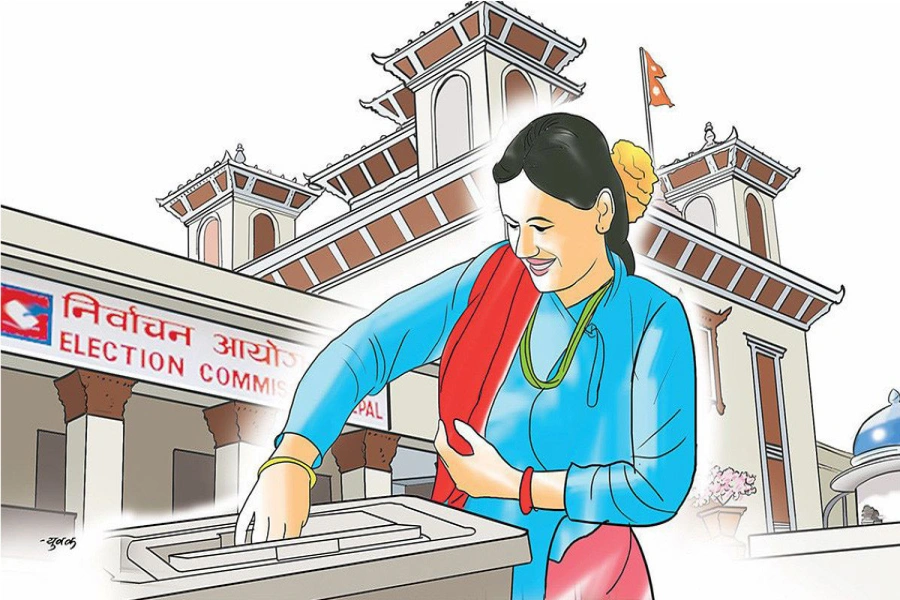
CARTOON: RABIN SAYAMI
"The people also learnt from none other yourselves about the commitment to reach agreement by mid-October on fixing the election date, the number of members in the to-be-elected CA and forming a consensus government."
He made it clear to the gathering that he had invited them there with a view to stop the situation from worsening and avoid additional political complications, a constitutional deadlock or any other serious crisis that may arise for lack of an annual budget.
He said he was repeating his call before the leaders to take urgent initiatives to promulgate a new constitution through consensus and set a political and constitutional course that would lead the country to the right destination.
"I said this in the past and I repeat it here now -- you tell me if I can play any role in forging consensus," said the president.
The president hoped the leaders would appreciate that he was not interested in calling the party leaders to his office time and again and making "boring appeals" for a political solution and consensus, but it was a moral responsibility and a compulsion.
The head of state made it emphatically clear that he wouldn´t issue any ordinances unless the government forwards them through broader political understanding.
Stating that ordinances could be issued as per the spirit of the constitution and for the purpose of removing difficulties in connection with day-to-day administration, he asserted that unnatural issuance of ordinances in the absence of a popularly-elected parliament would only weaken the democratic commitment. "Therefore I urge basic understanding among the political forces for a wise and minimal use of ordinances," he said. "I repeat the same thing here again."
The president in his speech underscored that there was no alternative to ending the political stalemate through understanding among the political forces.
The chiefs of the 28 political parties represented in the erstwhile CA attended the meeting where the president read out his written speech but none of them gave any speech in reply. There were informal conversations among the leaders in the presence of the president during the subsequent lunch.
During the informal talks, UCPN (Maoist) Chairman Puspa Kamal Dahal said the parties would be able to end the stalemate by the end of this month. But according to a leader present, Nepali Congress (NC) President Sushil Koirala expressed doubt over Dahal´s commitment, saying there was no strong basis for believing the Maoist chairman.
The president convened the meeting of the leaders after they failed to meet the series of commitments they made in the past. Previously, the leaders, while emerging from the president´s office, had said in public that they had committed themselves before the head of state to find a solution by mid-October.
But in recent days, the head of state has publicly expressed his dissatisfaction over the failure of the major parties, and particularly the leaders of the ruling parties, to take concrete initiatives toward ending the crisis. The prime minister had countered the president, saying that the head of state was overstepping his constitutionally-defined role.
Also, Chairman Dahal recently floated a proposal to hold elections for the president simultaneously with elections for the CA and local bodies.
Sources at the president´s office said the president has construed that as a reactive statement.
Related story
Under pressure




_20220508065243.jpg)