

KATHMANDU, Jan 20: The Nepali Congress (NC), under its newly elected president Gagan Thapa, has opted to sideline several senior party leaders in the distribution of tickets for the March 5 House of Representatives elections, signalling a decisive generational shift within the party.
The decision was taken by the party’s newly formed Central Working Committee, which finalised candidate selections on Tuesday. Several veteran leaders who had repeatedly won parliamentary elections were denied tickets, as the party moved to field younger faces amid growing calls for reform, particularly following the youth-led Gen Z protests of September 8 and 9.
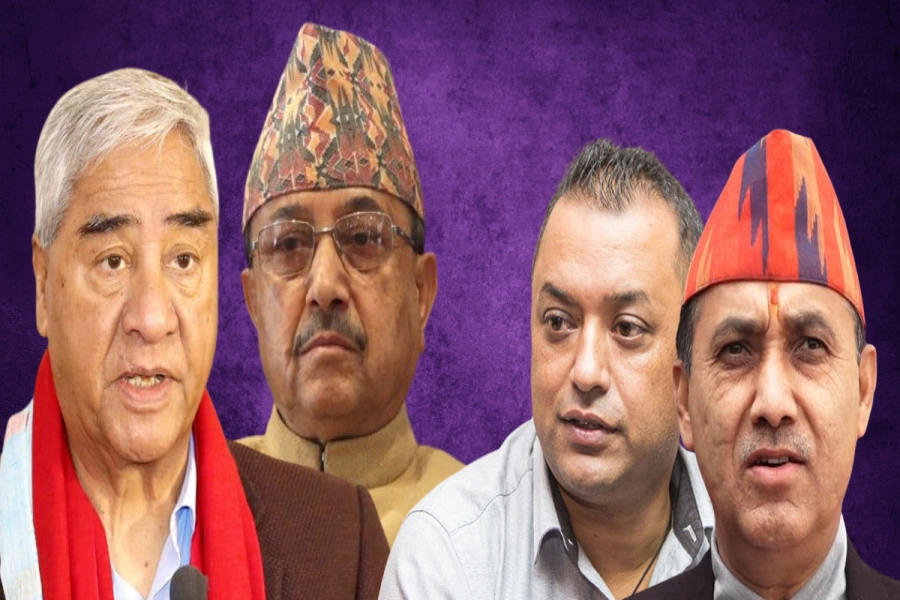
Among those denied tickets is former party president Sher Bahadur Deuba, who had represented Dadeldhura for 34 years and served five terms as prime minister. Former Home Minister Ramesh Lekhak of Kanchanpur-3 was also denied a ticket. Lekhak was the home minister during the September 8-9 protests, during which more than 70 people lost their lives.
ANFA fixes ticket price for Nepal-Pakistan football match, 1 lu...
-1200x560_20220915164632.jpg)
Senior leader Prakashman Singh of Kathmandu-1, the son of party founder Ganeshman Singh, was also denied a ticket despite winning election from the constituency in the last four elections. Shashank Koirala, son of NC founding leader BP Koirala, and Sujata Koirala, daughter of former prime minister Girija Prasad Koirala, were also left out. Aarzu Rana Deuba, wife of former NC president Deuba, was similarly denied a ticket.
The party has instead nominated several younger and relatively new figures. Nain Singh Mahar, a second-tier leader, has been fielded from Dadeldhura, long considered Deuba’s stronghold. In Kathmandu-1, the NC nominated Prabal Thapa, a younger leader active in mobilising party youth. The party also granted a ticket to cricket commentator and former Nepal Student Union president Sachin Timalsena in Kathmandu-4.
Party leaders say the nominations reflect the NC’s commitment to renewal and to bringing fresh faces into electoral politics. Political observers view the move as a clear departure from the party’s traditional reliance on established leaders.
The reshuffle also reflects the party’s response to the Gen Z movement, which raised demands for good governance, accountability and an end to corruption. Thapa, who was elected unanimously during the party’s Special General Convention held from January 11 to 14, has repeatedly emphasised the need to acknowledge public anger expressed during the protests.
Addressing the convention, Thapa said the party must take responsibility for past failures. “The youth protested against the government, and we were the government; they protested against parliament, and we were the parliament. We must take ownership of the movement,” he said.
Political analyst Krishna Pokharel said the decision to sideline senior leaders, along with Thapa’s decision to contest from Madhesh, signals political maturity. “These moves align with the aspirations of the younger generation and could help reposition the party in line with public expectations,” he said.






-1200x560-1783083574.webp)




