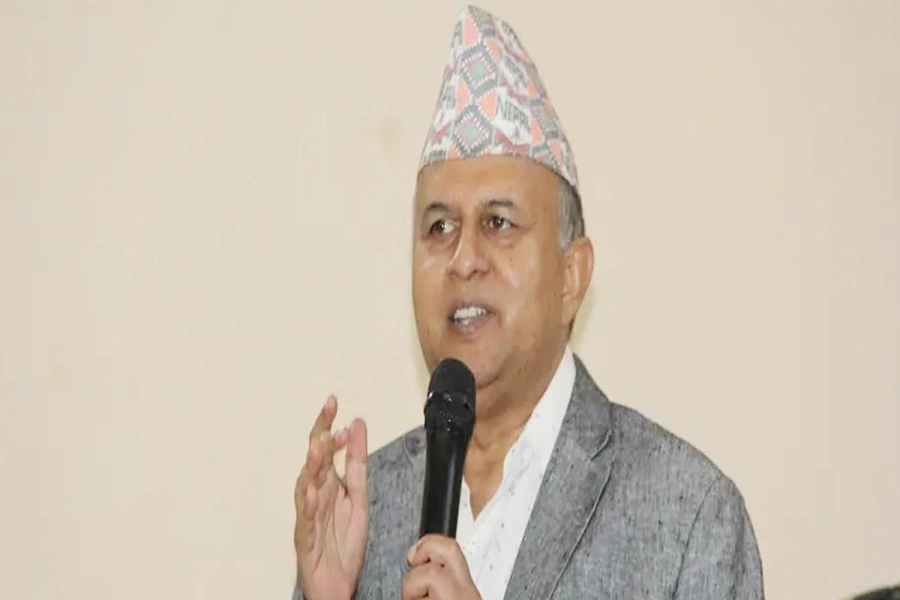
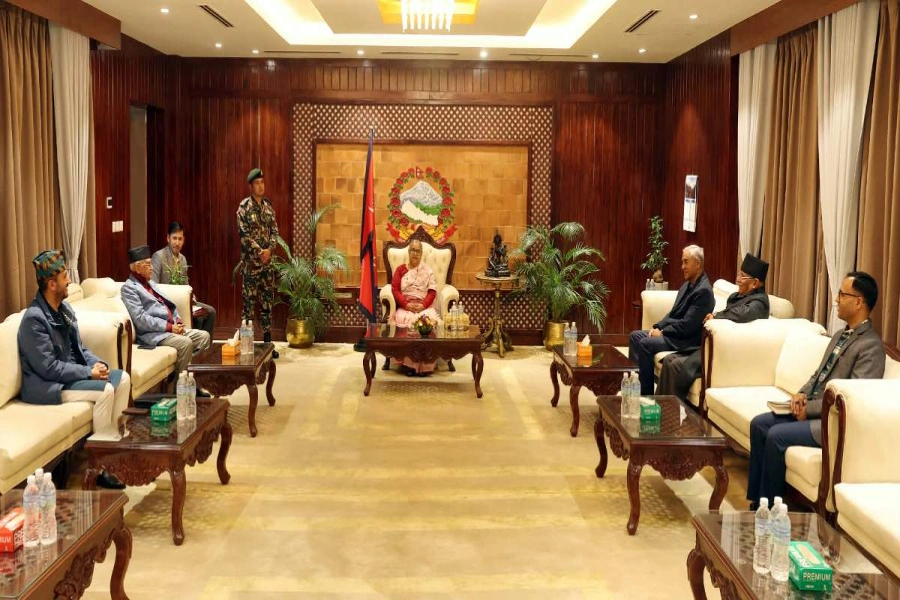
Poush 27 (Jan 11) this year may be remembered as a day that tested the power of narrative once again. While Deputy Prime Minister Kamal Thapa, a royalist, and DPM CP Mainali, a veteran communist, paid their obeisance to Bada Maharaj Prithvi Narayan Shah as the country's unifier, their Maoist counterparts within the Council of Ministers didn't agree. In fact, the public sphere was equally charged, as reflected by media, as well as the wider civil society.It's been more than two-and-half century since Prithvi Narayan Shah conquered Kathmandu valley, all the way from Gorkha, and declared it as his new capital. But the debate is still going on in a nascent republic where many still see him as a 'nation builder' against the threat of British expansion, while some Adivasi and Janajati groups have called him an 'internal colonizer.' The debate continues to intensify in the country's current political interregnum and its prolonged transition from a unitary state to a federal one.
Not only 'Prithvi Jayanti,' almost all political ideologies have drawn huge controversy in contemporary Nepal. After a decade-long 'people's war' and loss of over 15,000 lives, the outlawed Communist Party of Nepal (Maoist) came into the centre-stage of country's politics in 2006 after signing a Comprehensive Peace Agreement (CPA) with the then GP Koirala-led government. Two years later, the first popularly elected Constituent Assembly declared the country a secular republic. Many, however, still argue that the proclamation was made in haste and that future of an institution like monarchy should have been decided through public consultations or popular mandate such as the referendum.
Throughout the past decade, major political parties argued that promulgation of a new constitution through the Constituent Assembly will usher Nepal into an era of peace, progress and prosperity. But the Madheshi parties that are launching a prolonged agitation in Tarai districts have largely rejected that argument saying that it discriminates them. So, what will happen to the billions of rupee worth of investment, politics of hope and aspiration for peace, stability, development and economic growth? Perhaps we will have to explore the power of narrative to answer these questions.
The power of narrative—or telling a story—is what leaders are supposed to do. Fighting against the Colonial British rule, Mahatma Gandhi floated the idea of Swaraj (Self-Rule). Indira Gandhi got elected as India's Prime Minister on the basis of her popular slogan garibi hatao (Eradicate Poverty). While pushing the city state of Singapore towards the path of progress, Lee Kuan Yew entwined the idea of development with discipline.
All strong leaders around the world have floated their own ideas and have carried the majority of the population with them to a great extent. In case of Nepal, late King Mahendra and late BP Koirala had their own narratives which they wanted to sell to the people.
In his recent book Kutniti ra Rajniti, (Diplomacy and Politics), former journalist and politician Ramesh Nath Pandey recalls how King Mahendra, during his trip across Nepal in 1950s, saw himself most suited to take the country forward in terms of national development. BP Koirala, a visionary leader, however, strongly believed in people's power and saw monarchy in a supportive role in his scheme of things. As geo-politics came into play, King Mahendra sacked Koirala in 1960, put him and his close colleagues in jail, banned political parties and later launched his own brand of Panchayat politics. The rest is history.
Recently, the students of history are studying how the Maoists were able to mobilize thousands of youths, especially from marginalized communities in the armed struggle, all in the name of profound social transformation. Talking to World People's Resistance Movement, Maoist leader Dr Baburam Bhattarai said, "To break with the old mode of production and leap into a new one, you have to break all the relations within the state backed by the army. And that inevitably requires the use of force... If you revise or abandon it then you are no longer a Marxist. There is no question of our party ever ending this basic principle." (Monthly Review, Nov 2009).
Six years down the line and after becoming the country's chief executive for around 18 months (2011-13), Bhattarai quit the party he helped found and is now working hard to establish a Naya Shakti (New Political Force) in the Nepali political arena. His success or otherwise will depend on his power of narratives and if Nepali people will buy his arguments. It will also depend on his ability to form alliances with those who have been frustrated with the old narratives.
Whether the blockade at the Nepal-India border was imposed 'unofficially' by India or by our own Madheshi parties, the answer probably lies on which side of the fence you are. High sounding concepts like federalism, secularism and republic are still a matter of debate in the national psyche, sharply polarizing public opinion on the ground. Reports suggested that a significant number of people, when consulted while the constitution was being finalized, spoke in favor of Nepal becoming a 'Hindu nation' once again. So, could Nepal become a Hindu republic in a foreseeable future?
Addressing a group of expatriate Nepalis at the Nepali embassy in London last month, Deputy Prime Minister Kamal Thapa said that his party had decided to join the government despite not agreeing with the basic tenets of the new constitution. "This is a democratic constitution as people can change any of its feature/s by a two-thirds majority, if they so wish," he added. Does this mean that features of the new constitution like republicanism, federalism or secularism could change over time if the Nepali leaders were able to tell and sell their story to the general public at large?
Until then, the debate on whether Prithvi Narayan Shah was a unifier or an internal colonizer is all set to continue.
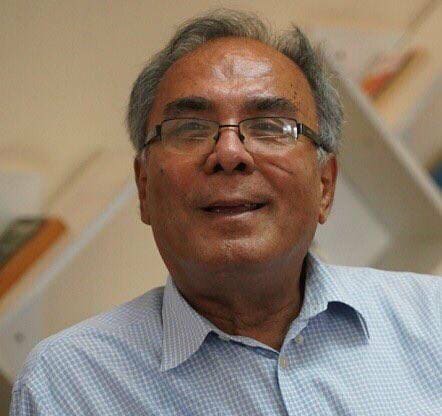
The author is a BBC journalist based in London. Views expressed are his own.
bhagirath.yogi@gmail.com
Related story
More ‘austerity’