

KATHMANDU, Dec 28: After the events of September 8 and 9, a large section of Gen Z pushed Sushila Karki forward as prime minister. After prolonged wrangling, President Ram Chandra Poudel agreed to hand her the reins of an interim government.
Karki, though, insisted on following a constitutional route. The President also wanted consensus among major political parties to ensure smoother governance. He proposed that Karki hold talks with top leaders of the main parties. President Poudel suggested dialogue with Nepali Congress President Sher Bahadur Deuba, CPN UML Chair KP Sharma Oli, and then Maoist Centre Chair Pushpa Kamal Dahal. Deuba, at the time, was hospitalized after being injured.
Signs you have a ‘bad’ boss

Karki flatly rejected the proposal. She said she would not even look at their faces. As a result, when she was appointed prime minister, there was no direct dialogue with the parties. The president still held consultations with party leaders in his own way, without Karki’s participation.
Even after assuming office, Karki maintained the same stance for a long time. At one point, she was even seen exploring ways to have UML chair Oli arrested. Her statements about not meeting party leaders began appearing in the media. Dahal publicly expressed hurt over this. Speaking at a Nepal Communist Party unity rally on November 5, he said it pained him to hear that Karki would not even meet leaders who had supported her elevation and the success of her government.
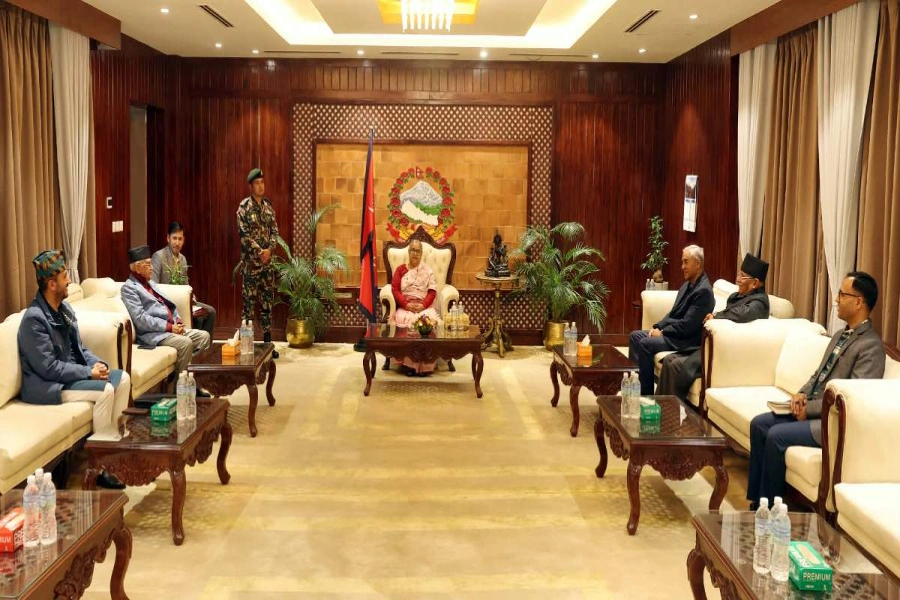
This week marked a shift. On Tuesday, December 23, the president invited Deuba, Oli, and Dahal to Shital Niwas and also called Prime Minister Karki, creating the first direct dialogue between her and the three leaders. Earlier that morning, Information Minister Jagadish Kharel, Law Minister Anil Sinha, and chief adviser Ajay Bhadra Khanal visited major party offices. It was the government’s first visit in more than three months to offices damaged during the vandalism of September 10.
On Friday, December 26, Minister Kharel met Deuba, Oli, and Dahal at their residences, carrying Karki’s message. This was the first official outreach by the government to party leaders through a minister. On Saturday, Karki herself invited the three leaders to Baluwatar for talks. In all these meetings, Karki and her ministers said the government had come solely to conduct elections and sought cooperation.
During the Saturday meeting, Karki tried to reassure leaders by saying the Baluwatar residence belonged to the parties and that she was there only due to exceptional circumstances. Party leaders, for their part, repeated that they were ready for elections but accused the government of failing to create the right environment. After the meeting, Deuba said all parties were prepared for polls and asked the government to make it possible. Asked about UML, he said it would also go to elections.
Government under pressure
Formed on the foundation of the Gen Z movement, Karki’s government viewed traditional parties with suspicion from the start. Most parties were unhappy, though only UML openly criticized the government. Even so, nearly all parties pressured the government for failing to prepare an election environment.
Recently, even some Gen Z groups have turned critical of Karki, Home Minister Om Prakash Aryal, and others. Karki voiced her frustration at a public event on Thursday, saying she felt stuck like a grinding stone, attacked by both parties and Gen Z activists. She said parties abused her, while Gen Z groups kept demanding her resignation. She added that even if she resigned, blame would still fall on her. She also said she feared Nepal sliding into chaos like Bangladesh.
Election compulsion
Sources say Karki initially carried strong energy after rising on the wave of the Gen Z movement. Her protest era speeches were fiery and many went viral. Once in office, the weight of responsibility and national instability began to press on her. In recent weeks, she has been seeking a way out through elections.
To do that, she needs trust and dialogue with party leaders. That need has pushed her to set aside past rhetoric, meet senior leaders face to face, and work with them through consultation.





