KATHMANDU, Dec 28: “The role of the general secretary is to support the party president. If the party leadership falters at the point of decision making, it is our duty to warn them not to fail. I will fulfill that responsibility.”
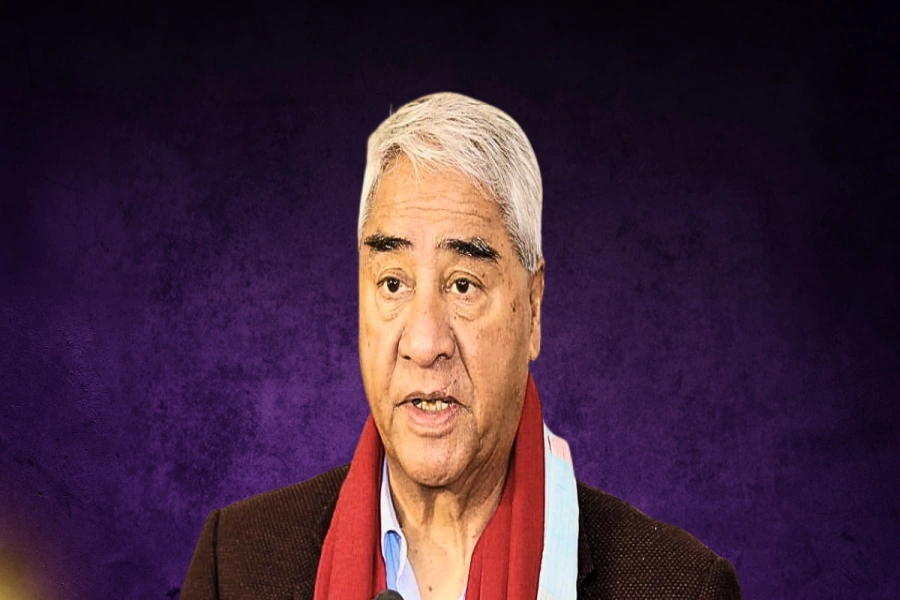
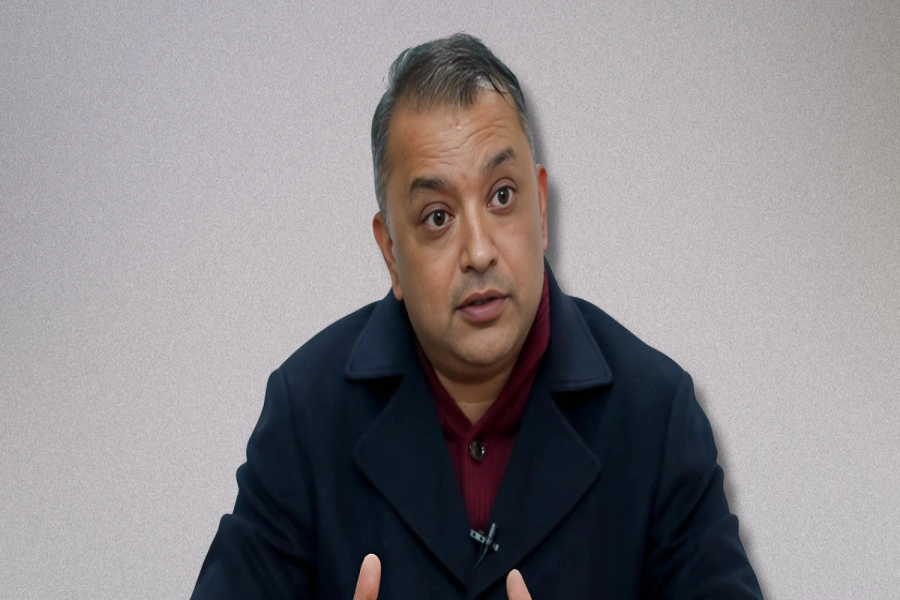
This statement was made by Gagan Thapa in December 2021, after he was elected General Secretary of the Nepali Congress at its 14th General Convention.
Outpacing not only former minister Minendra Rijal and general secretary Prakash Sharan Mahat, and Bishwaprakash Sharma, Thapa was elected general secretary from the Shekhar Koirala faction. Thapa secured 3,023 votes, while Sharma also became general secretary with 1,984 votes.
Known for repeatedly rebelling, both within national politics and internal party factions, Thapa has consistently managed to secure his position. Yet questions remain about whether he has fulfilled the responsibilities he himself defined. Despite holding one of the most powerful executive posts in the party after the president, Thapa has retained his image as a rebel leader. Many Congress leaders believe that over the past four years, he has more often acted as an internal dissenter than as an enforcer of party decisions. While the general secretary is responsible not only for shaping decisions but also ensuring their implementation, Thapa has frequently been seen opposing them.
Critics argue that Thapa projects himself as a rebel mainly to stay in the spotlight. They also accuse the general secretaries of failing to take concrete initiatives to run the party in line with its statutes. The party constitution mandates that a general convention be held within four years. Thapa himself presented the timetable for the 15th General Convention at the Central Working Committee meeting in February–March 2024.
He proposed holding the 15th convention by November–December 2025, with a statute convention in September–October 2024, ward conventions by mid November 2025, and the central convention by the end of November–December 2025. Though the proposal was passed, it was never implemented, leaving the convention in limbo. When preparations lagged, Thapa, despite being responsible for placing agenda items before the Central Committee, called on party cadres to demand a special convention.
US seeks lift of ban on Nepali security guards in Afghanistan

According to party rules, representatives submitted a petition signed by 54 percent of convention delegates demanding a special convention. However, the issue was never formally tabled in the Central Committee. After a 49-day long meeting, the committee approved a schedule to hold the convention from January 10, 2025. Even then, it was clear deadlines would not be met. With active membership distribution still incomplete, the convention became virtually impossible. At that point, proponents of a special convention submitted a memorandum to the party office, with Thapa’s support. Thapa publicly stated that there was now no alternative to a special convention.
Ironically, it was Thapa himself who had presented a proposal to begin the convention on December 31, 2024. Countering this, Joint General Secretary Mahendra Yadav proposed holding it in late April or May 2025. Seeking compromise, the party decided, on the 49th day, to begin the convention on January 10, 2025, in Kathmandu. That date, too, now appears unviable.
Beyond organizational disputes, Thapa has repeatedly broken ranks on electoral strategy. At the Central Working Committee meeting, he proposed that Congress contest the 2027–28 general election without alliances. Though the proposal was passed, the party has not adhered to it. Earlier, on January 6, 2024, Thapa registered a formal dissent during a meeting to select candidates for the National Assembly elections, stating that the process undermined internal democracy and fairness.
A central committee member accused Thapa of prioritizing rebellion over responsibility, saying, “He has forgotten the role and duty of a general secretary.”
Thapa opposed electoral alliances during the 2022 local elections, standing against party president Sher Bahadur Deuba and most senior leaders. Despite his opposition, the party chose to ally. He again opposed alliances in the provincial and federal elections that followed, though Congress contested them as part of a coalition and emerged as the largest party in the House of Representatives.
After the election, Thapa initially rebelled within the parliamentary party, prompting Shekhar Koirala to back him as a future leadership contender. However, Deuba was re elected parliamentary leader. Thapa later announced his own candidacy for party president.
When Maoist Centre leader Pushpa Kamal Dahal became prime minister with UML support in December 2022, Congress was pushed out of power nationwide. Critics accuse Thapa and co general secretary Sharma of focusing more on criticizing leadership than managing the crisis. While Congress lost power, the two attended an event in Pokhara, comparing party leadership to football metaphors and declaring Deuba would not return after the 15th convention.
Two weeks later, Deuba and other leaders supported Dahal with a vote of confidence, again opposed by Thapa. Though he wanted to formally register dissent, he ultimately did not.
Political equations shifted again by the presidential election. Congress backed Ram Chandra Poudel, joined the Dahal led government in March–April 2023, and returned to power in the provinces. Thapa initially supported the revived alliance and sought an active role in governance, but his expectations were unmet. As government performance faltered, Thapa became increasingly critical, repeating that alliances were unnecessary.
Despite opposing alliances publicly, ruling parties coordinated seat sharing in the National Assembly elections, again against Thapa’s stance. The Maoist Centre later switched sides, backing Dahal with UML support, pushing Congress out of power once more.
Months later, Deuba struck a seven point agreement with UML, and Congress joined KP Oli’s government in June–July 2024. Though initially dissatisfied, Thapa joined the government’s coordination mechanism, defended its actions, and even claimed credit for its successes, despite earlier criticism of governance by ordinance. He later alleged that brokers had access to the prime minister’s bedroom.
From September 9, 2024 onward, Thapa openly opposed Deuba again. He supported elections following parliamentary dissolution and argued for earlier polls. As both the proposed elections and the 15th General Convention remain uncertain, Thapa has returned to open rebellion.
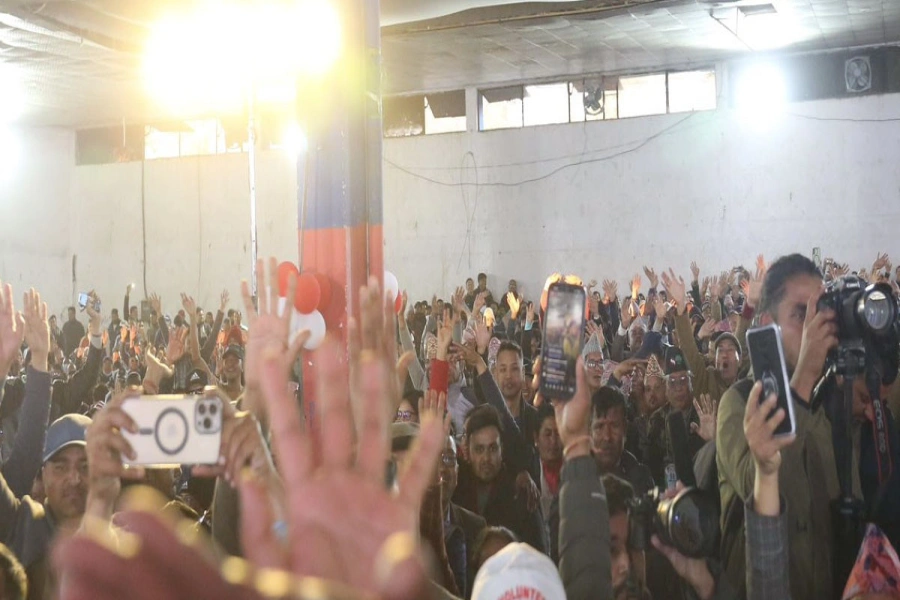
On Monday, at a program in his own constituency, Thapa formally announced his candidacy for party president.
Thapa’s rebellious streak is longstanding. As a student leader at Tri Chandra Campus, he contested as a rebel candidate for Free Students’ Union secretary before later receiving organizational recognition. As NSU general secretary in 2002–03, he supported republicanism while the party still backed monarchy. His defiance disrupted the NSU’s Pokhara convention, and though he sought leadership at the 2007–08 convention in Chitwan, he later withdrew and became a Constituent Assembly member.
He was elected central committee member with the highest votes at the 12th General Convention, contested for general secretary at the 13th alongside Krishna Prasad Sitaula, became health minister from that faction, and finally broke away to contest and win from the Shekhar Koirala group at the 14th convention, arguing the party needed visible and audible leadership change.
When Thapa and Sharma were elected general secretaries, Prakash Sharan Mahat came third with 1,556 votes, followed by Pradeep Paudel with 1,393, Minendra Rijal with 809, and Rajaram Karki with 106.