The year 2015-2016 has been unpredictable for Nepal. There was a devastating earthquake, a protracted turmoil in the southern plains, followed by an Indian economic blockade. There has also been an increase in absolute poverty and out-migration.Nepal is governed today by a coalition led by CPN-UML, the second largest party in the parliament, in alliance with fringe parties. The largest party, Nepali Congress, is in the opposition. Following the election of Sher Bahadur Deuba to the post of NC president, there have been whispering campaigns for government change. There have been questions raised over the execution and acceptability of the new constitution in parts of the country. Despite these odds, Prime Minister KP Sharma Oli stands firm.
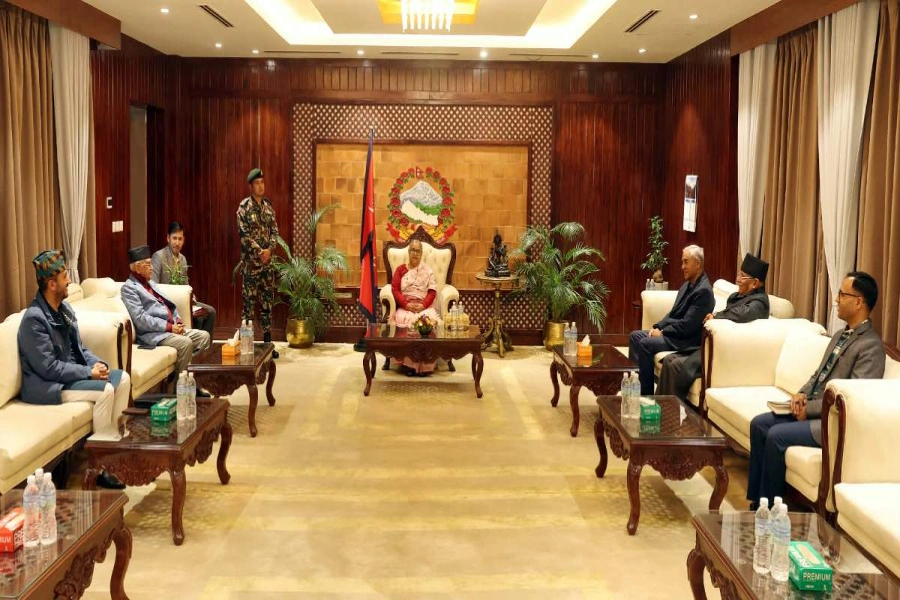
There is a great hope among Nepali people about Oli's visit to China starting March 20th. There have been 20 official and state visits to China by Nepal's heads of state and heads of government since Nepal started diplomatic relations with China in 1955. Chinese leaders have also visited Nepal eight times in this period. The last instance of high-level state visit from China was Premier Zhu Rongji's 2001 trip to Nepal, meanwhile, prime minister Sushil Koirala visited China in 2014.
In many ways, the period between 1962 and 1990 was a great time for Nepal-China relations, thanks largely to the foresighted leaders in Nepal. There was not only exemplary relations and great respect for each other, but China also helped in socio-economic transformation of Nepal through rapid industrialization, with its help in the establishment of more than three dozen Public Enterprises (PEs). This not only guaranteed employment to thousands of Nepalis but also helped in making Nepal self-reliant in some important products.
Infrastructure development such as starting electric trolley bus service in the capital; construction of Araniko, Prithvi and Mahendra highways; Kathmandu ring road; and other important hydroelectric projects were undertaken in the same period. Privatization of the Chinese-assisted PEs in Nepal after 1990 change must have disappointed China. It looked like a deliberate attempt to sabotage Nepal's nascent industrial foundation.
Albeit late, Nepal and China are once again discovering each other. Nepal has just emerged from its biggest disaster. Oli is in China in this situation.
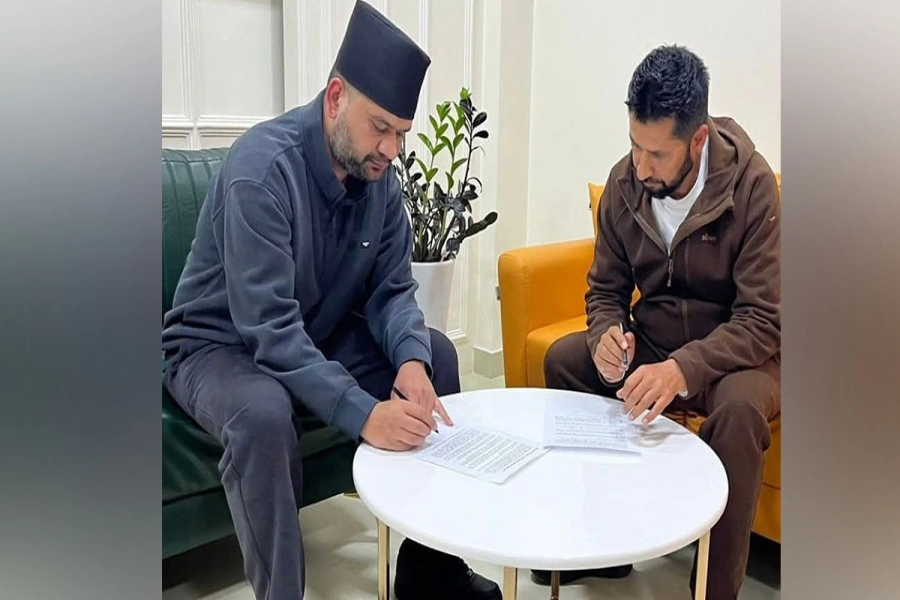
Nepal is expected to enter into an agreement with China on the Comprehensive Mutual Framework (CMF) of economic development, connectivity and infrastructure development, as charted out during Deputy Prime Minister and Foreign Affairs Minister Kamal Thapa's China visit in December, 2015.
Agreements regarding extradition, commercial import of petroleum products, trade and transit, Free Trade Agreement (FTA) with the third country export and value addition provision and commitment to 'One Belt, One Road initiative' of China with an effort to institutionalize a tripartite mechanism of Nepal-China-India (NECHIN) are also expected. It is vital to make all 28 passes on Nepal-China border functional for the success of proposed Trans-Himalayan economic corridor.
PM Oli is well-known for his nationalistic stand. The agreement of China and India on Lipulekh, which is the recognized tri-junction boundary point between Nepal, India and China, has turned into a diplomatic faux pas for China. There is a growing public pressure for resolution of Lipulekh to safeguard Nepal's territorial rights. Nepal should thus try to extract maximum benefits from the proposed Lipulekh Tri-lateral Business Hub (TBH) agreement during this trip. Nepal is desperate to expedite its development and, after the blockade, to maintain equidistance with its two giant neighbors.
As Nepal is moving to a new era of economic development, it should explore and create a broader framework for enhancement of development cooperation with China, especially by establishing industrial and economic zones in Nepal and prospecting for fossil fuels, gold and uranium. Cross-border gas pipelines and cross-border freighter ropeway and boosting religious and cultural tourism by creating Hindu and Buddhist pilgrimage circuits, both in Nepal and China, should be the other priorities.
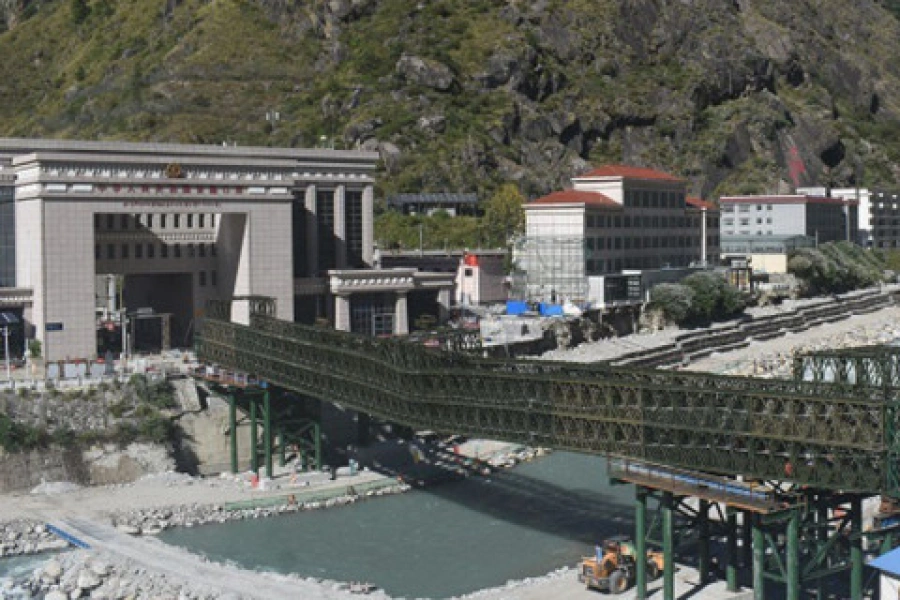
China has principally agreed to build Trans Himalaya Betrawati-Trishuli riverine corridor (Rasuwagadhi-Galchi) and Koshi riverine (Kimathanka-Tumlingtar) corridors from Tibet to Nepal. China has the capacity to supply 2,000 MW of electrify to Nepal immediately. Chinese proposition to build trans-Himalayan cross-border railway and high-voltage power transmission line between Kyerung (Tibet) and Kathmandu indicates China's generosity in this direction. It already has an electricity transmission super highway up to Kyerung. These are key areas in which we expect concrete outcomes.
The success of PM Oli's visit to China hinges on his wisdom. People are waiting to see how he convinces his Chinese counterpart for development of alternative accesses to Chinese sea-ports like Shanghai, Hong Kong and Nanning as well as in-land dry port in Kunming, Yunnan for entry into Vietnam, Thailand and Myanmar markets.
There is a big gap in Nepal's foreign policy. For this, we need our politicians to commit to development and come-up with a concrete 'neighborhood policy'. Many of our embassies are currently lying empty. The one in Beijing is soon to be vacant. We should also not forget that China has its own set of concerns about Nepal, particularly related to security vis-à-vis Tibet. Consequently, China would be anxious to seek assurances from Nepal's PM on this. It would be better to explain to Chinese leadership Nepal's future course on republicanism, secularism and federalism and their ramifications on bilateral relations. Because of weak government and intelligence services in Nepal, Chinese are worried that other power centers might use Nepali territory against them.
People of Nepal are watching PM's visit to China with hope. It will also set a tone for President Xi Jinping's state visit to Nepal in the near future. A new chapter in the bilateral relation is expected to open with PM's visit.
China would need a 'stable' and 'self-determined' Nepal so that China can share its innovations and prosperity with us. Can we reorient ourselves in this direction?
The author is a member secretary of RPP-Nepal's department of international relations
Related story
What Nepal can learn from China