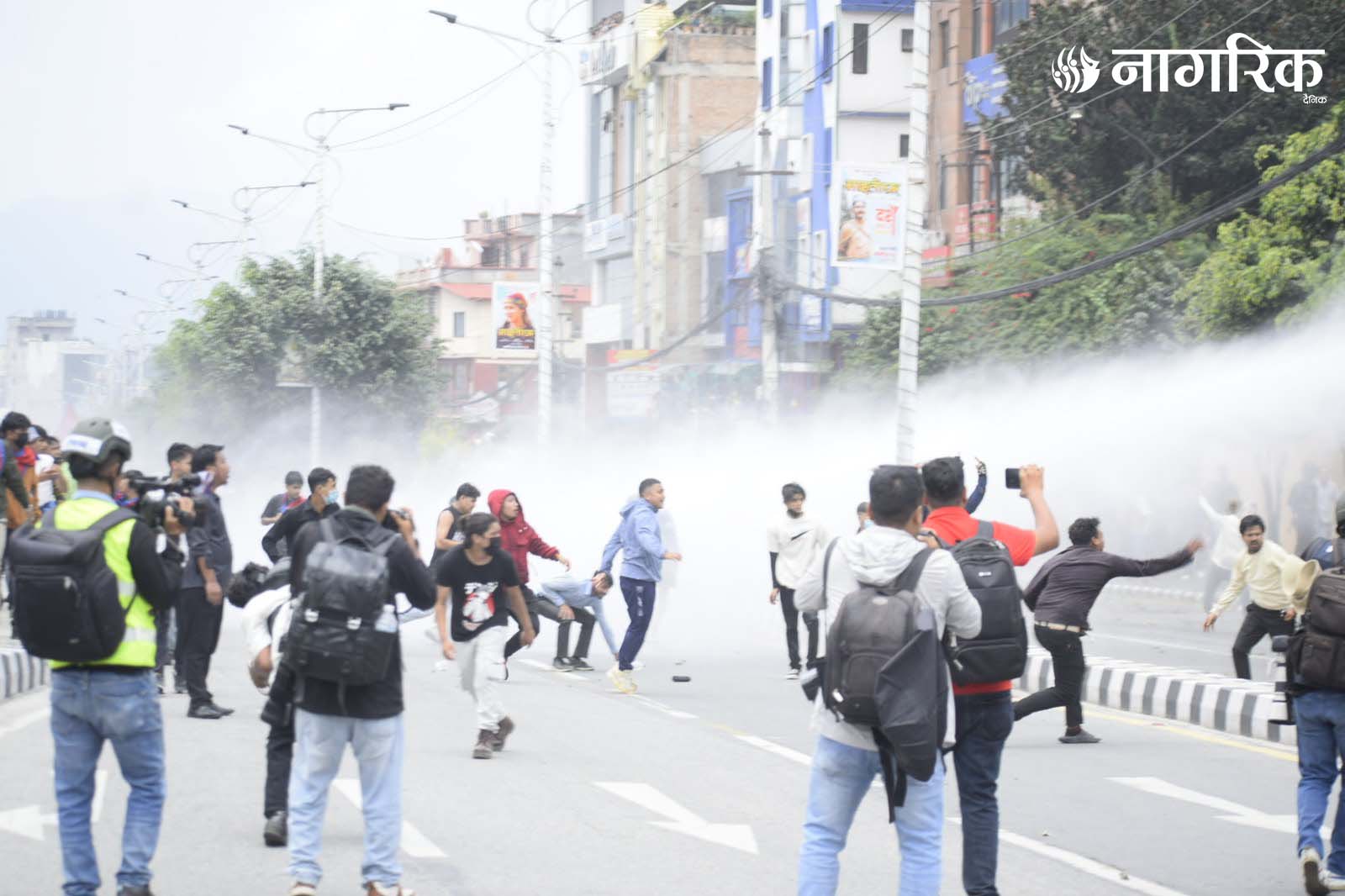
Most of this dust has collected on the roads where the wind sweeps it on pedestrians and vehicles alike. Whether we walk on the roads or drive, our eyes bear witness to this phenomenon.[break]
The growth in the amount of dust has also had many adverse effects on us. Oftentimes, it enters our eyes, leaving us blinking furiously and tearing up.
Other times, it’s our hair that’s roughened up and our clothes collect these unwanted particles. More still, vehicles that were cleaned in the morning return home in the afternoon with a darker shade of color.
The dusty roads have indeed proven to be an enemy to our form of cleanliness. So what have we done to adapt to such conditions? How do young people in Kathmandu deal with the dusty roads of Kathmandu?

Sushant Thapa, 20, a Bachelor’s in Business student at Nesfield International College, says, “Because I live in a village (Chapagaun), I don’t suffer as much. However, I need to travel on roads daily, and in that situation, I wear a mask. Since I ride my bike, my legs suffer most as they smell of dust.”
One of our Facebook fans who goes by the name Yogesh Stha says, “I fight the dusty surroundings by using a mask and covering my eyes with goggles or glasses which are attached to the helmet itself.”
Praveen Bhusal, 16, a Social Science student at Siddhartha High School, says, “I put on a mask. Even though it makes me look like a terrorist, it’s the only way to avoid dust.”
For a majority of people, it seems that masks are the easiest alternative for protection against dust. Other methods include using goggles and covering your legs while riding bikes. If dusty roads are a sight to be seen more often, maybe more innovative ways to reduce its damages will be introduced.
Related story
DoR constructs over 36,000 kilometers of roads across Nepal so...