

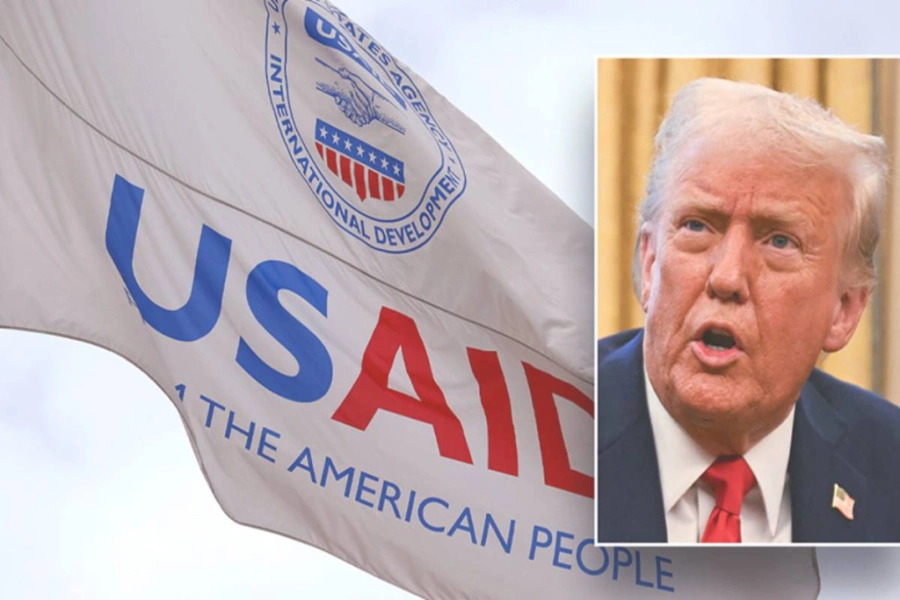
The year 2025 was a challenging year for the development sector due to mounting political instability and socio-economic and environmental shocks that led to massive changes in funding architecture globally. The year started with the US government issuing a ‘pause’ order to all development assistance, which triggered changes in the funding ecosystem, prompting several other countries to follow suit. It added so much hue and cry to an already fragile development funding. However, on the bright side, a few philanthropists went out of their way to support the most affected persons, and more resilient and adaptive funding is arising. Here are a few noteworthy insights and takeaways for me:
Firstly, the unplanned cessation of funding from a few key institutional donors exposed structural vulnerabilities and called for action to reimagine effective models for development cooperation. Reports specify that termination of USAID alone shut 34 projects worth $329 million with 30-35 thousand jobs in Nepal. It clearly highlights that our progress and achievements to attain sustainable development goals and other commitments need systemic rethinking. Without proper transitional support, there is a critical threat for backtracking earlier progress. This calls for a strong collaboration among development partners for efficient mobilization of resources by having inclusive strategies to protect the most vulnerable people.
Secondly, the disturbance caused by the shift in priority of conventional donors also stresses the need for locally-led and sustainable interventions. Any organizations wanting to have a meaningful impact need strong engagement with communities and individuals being served, the agency and empowerment of the local grassroots institutions, and to build on indigenous and productive social norms. This should not be limited to ‘feel good’ politically correct ‘localization’ expressions but rather the actual willingness to listen let go of the position, power, and conservative way of designing, implementing, and evaluating development projects.
Interaction must for enhancing distance and classroom learning

Thirdly, be it navigating a complex political change in Nepal following the GenZ-led movement in September with over 84 billion rupees worth of damage to public private properties or a rare drought emergency in Madhesh Province affecting 1.2 million people, there is a strong need for us to have solid emergency preparedness and future-ready positioning. As one of the most climate-affected countries with outdated practices, structural and deep-rooted exclusion, and inequality of disadvantaged groups, organizations need to have inclusive policies, skilled teams, efficient partners, and flexible funding that allows delivery of services to the neediest population. Nepal needs to proactively explore innovative financing i.e the Green Climate Fund, which allocated a $36.1 million grant recently to help Nepal reduce the growing threat of climate risk, and $9.4 million from the World Bank’s Forest Carbon Partnership Facility for reducing approx. 1.88 million tons of carbon dioxide in Terai.
Fourthly, there is a strong push towards trade and investment from development partners. However, the procedural hurdles, unstable policies, poor infrastructure hinder resilient and self-reliant economic development. There is a significant need to complement foreign aid with the foreign direct investment that balances foundational needs with growth and productivity. In view of the changed situation, the projected LDC graduation in November 2026 may be halted, as the private sector stakeholders themselves are operating at a low morale due to massive loss of private property, security threats, and existential crises. To attract private sector engagement in rural communities where there may not be a strong market, there is still a need for an initial investment to establish a market and boost the local economy so that several families can enjoy the benefit and there is a strong likelihood of continuing the ecosystem beyond the project duration.
Fifthly, the ethical use of Artificial Intelligence (AI) and digital solutions is central for learning, efficiency, and prompt service delivery. The use of AI in capturing data and key information in a short span allowed the retention of a massive knowledge repository that the development partners, such as USAID, had invested in for over six decades. Clearly, the point is not to replace staff with AI but to make it a core part of capturing the learning, and in view of the restructuring that the organizations are mandated to pursue, the proper use of AI should ideally help minimize heavy administrative costs and hold knowledge for a long time for humans to make the most use of it. Besides, Nepal needs several small-scale digital solutions to efficiently deliver essential services such as health, safe drinking water and decent toilets, and education to serve the last-mile population. For this, the government should establish strong regulations that create an enabling environment and facilitate innovative solutions that are applicable to our context.
In conclusion, 2025 was a very challenging year with several insights and valuable learnings that can, if done well, shape the future of the development sector. Though the present reality may be a bit unsteady in Nepal, let’s hope the new year brings about the stability and meaningful transformation with growth and inclusive economic development opportunities that the people have been dreaming of. May 2026 be a stable, resilient, and productive year for all of us with a peaceful election in March.
(The author is a development professional associated with WaterAid. Opinions expressed are solely personal and do not represent the organization’s viewpoint.)








-1782782519.webp)


