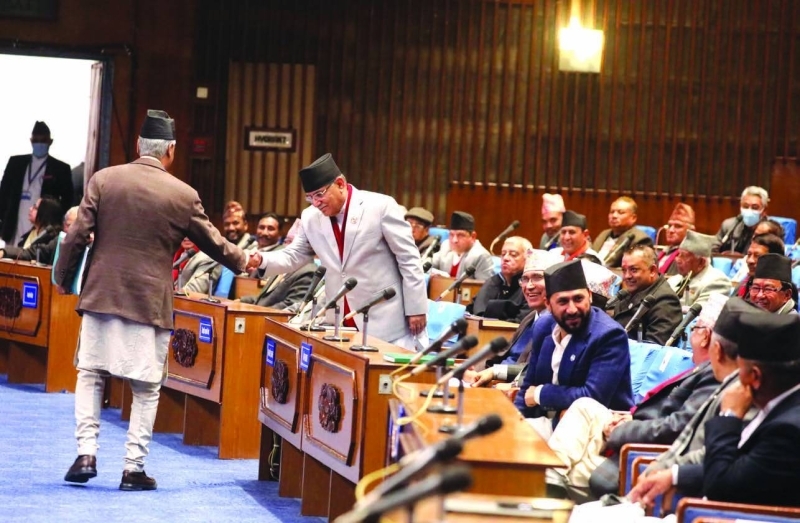
The days when someone would sacrifice their life serving a party and remain a lifelong “karyakarta” are over. That idea no longer works—and it shouldn’t. Among the old guard, almost all top leaders rose through the ranks of a “karyakarta” and therefore believe it is the only way to project leadership. Such a rigid view of political leadership, rooted in hierarchical and legacy-based structures, has weakened parties, harmed democratic health, and undermined national welfare. Partisan reform in Nepal should create organisations that serve as platforms for ideas rather than gatekeepers of power. Many old-school party leaders still assume a loyalist bubble can maintain their relevance, but people have run out of patience and now demand visible, notable, and fast outcomes. Citizens are free to choose.
Why They Are the Way They Are
Nepal’s oldest political party, the Nepali Congress, was founded in 1950 during the Rana era, a hereditary autocracy marked by the absence of democracy and civic liberties. Mobilizing against the powerful Ranas in 1951 required extensive planning, coordination, and sacrifice. People willingly joined partisan forces as “karyakartas” to serve the greater cause of liberation. After the Rana rule, Nepal experienced the Panchayat era, a party-less system with limited civic space. Smaller communist factions later merged with the Nepali Congress to overthrow the Panchayat system, leading to People’s Movement I in 1990. This success restored the multiparty system and pluralist politics. During these turbulent periods, party members remained loyalist volunteers, propagating the party’s mission and acting as both messengers and paramilitary forces. Today, technological advances, socio-political changes, and democratization have fundamentally altered the nature of partisan membership.
Coping with Present Realities
How strong is internal democracy within political parties?

Most major political parties today, particularly the Communist Party, remain cadre-based, thriving on a loyal network rooted in Nepal’s Maoist and leftist history. Leaders control decisions through rigid hierarchies, rewarding silence and approval while discouraging dissent. Loyalty has become the primary path to leadership.
Democratic parties, by contrast, should be mass-based, rooted in broad political participation rather than elite control. Their strength lies in mobilizing members around ideology and collective identity. In Nepal, however, parties like the Nepali Congress have adopted cadre-based models that prioritize centralization. Few elites dominate decision-making, while ordinary members have minimal influence. The rise of new parties, such as the Rastriya Swatantra Party (RSP), and the mass approval of leaders like Kathmandu Mayor Balen Sah, show that periodic leadership renewal, merit-based selection, and results-oriented governance inspire trust. These new parties can democratize internally, reach grassroots levels nationwide, and empower ordinary members. Post-Gen-Z movements demonstrate that people-centered politics can reshape the political culture, which older parties have lost.
What Meaningful Partisan Reform Looks Like
The biggest problem with Nepal’s democracy is that a few partisan elites, unguided by the public, conduct governance—a system known as “party-tantra.” This approach undervalues citizen voices and individual capabilities. In a mature democracy, governance should reflect the will of the people, with parties acting as platforms to mobilize and deliver outcomes.
1. Ending Entrenched Hierarchies Through Active Membership: Political influence is often tied to family lineage, personal networks, and patronage. Parties must ensure equal rights and voting power for all members. Democratizing membership makes leadership less captureable.
2. Direct Election of Leadership: Party leaders should be chosen through transparent voting by party members, not opaque elite processes. Leadership must reflect ideas and public appeal to rebuild trust and ensure political stability.
3. Democratized Candidate Selection: Candidates for all elections should be selected based on grassroots engagement, popularity, and local support. Leaders rooted in communities are accountable, effective, and able to mobilize citizens.
4. Issue-Based Politics: Citizens care about solutions to their problems, not internal party disputes. Leaders must listen to people, understand their needs, and advocate for them, rather than focusing solely on factional battles.
Conclusion
Partisan reform begins with internal democracy, moving beyond individual leaders and factional disputes to focus on public needs. Party structures must incentivize leaders to prioritize local concerns over catering to elites. Politics should reward merit, not vengeance. In a functioning democracy, only leaders and parties approved by the masses remain relevant.