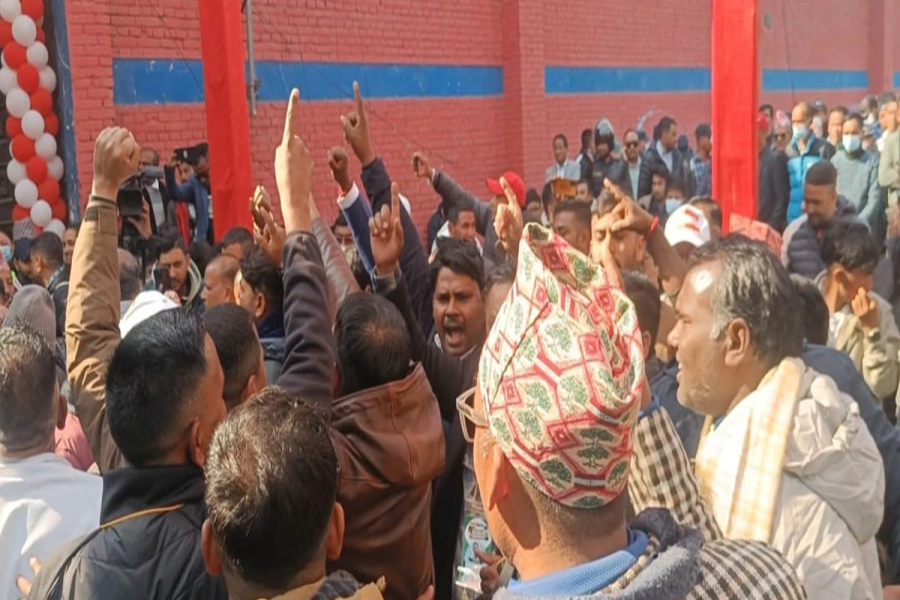
When all the government hospitals and institutions remain plagued with political meddling, Dr KC successfully rescued IOM and TUTH. To save TUTH, an epitome of quality medical care in Nepal which was struggling to maintain its very identity due to gross mismanagement and politicization, KC had staged a series of hunger strikes and he finally succeeded in his mission.[break]
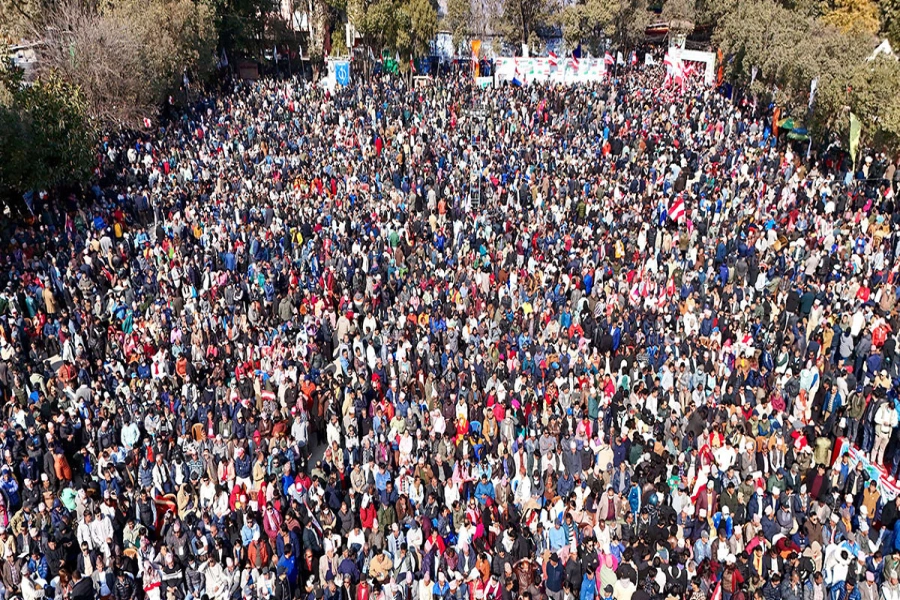
The change brought through the single-handed efforts of Dr KC was a visible and significant one in the year 2012. The whole country and the civil society were overwhelmed by his selfless efforts and had also supported the peaceful protest.

Photo: Keshab Thoker
Dr KC along with other professors, doctors and students were dissatisfied with the decision of the TU´s executive council to extend the term of Dean Arun Sayami. They had warned the TU authorities against extending Sayami´s term, but the executive committee ignored the request and extended his term for an indefinite period.
But Dr KC would not relent, he vowed to launch more protests against corruption in the TU. Demanding action against IOM officials including Dr Sayami who were implicated in several cases of irregularities by the Jayaram Giri-led committee formed after the 17-day TUTH strike in March 2010, Dr KC staged fast-unto-death thrice within a period of three months. And he started fast unto death on May 14.
Dr KC ended his strike only after Prime Minister Dr Baburam Bhattarai invited him to the former´s residence and assured to fulfill his rightful demands. Bowing to the pressure of Dr KC´s strike, Prime Minister Bhattarai was compelled to write to the TU´s executive committee directing it to form a committee to recommend names of office bearers on merit basis. At that time, six top positions at IOM, including that of dean were vacant for the past eight months.
Following continuous pressure of protest and Prime Minister´s directive, the TU finally sacked Dr Sayami from the post of IOM dean and appointed Prof Dr Kumud Kumar Kafle to the post. But Kafle retired after five weeks due on age ground. Kafle-led committee had recommended names of office bearers on the basis of merit and seniority, but TU VC Hira Bahdur Maharjan had prepared another list of names.
Dr KC smelled a rat and again resumed protest on July 4 which lasted for four days. The executive council meanwhile appointed Dr Dharma Kanta Baskota as dean at IOM but Dr KC and agitating doctors rejected the decision outright saying it was not in line with seniority and merit. This prompted Dr Govinda KC to launch fresh fast-unto death protest.
Dr KC´s last strike that started August 12 lasted six days until the government bowed to his demands. Classes at IOM remained halted and later all services except emergency at TUTH were disrupted.
As Dr KC´s health worsened, doctors intervened and put him on a saline drip. Doctors threatened to stop all services except emergency at medical institutions across the country. An extended meeting of Nepal Medical Council (NMC) had decided to close all medical institutions across the country for two days to pressure the government to fulfil Dr KC´s demands. Finally the government bowed to the pressure and Dr Prakash Sayami as appointed as new IOM dean.
Professor Dr Prakash Sayami, dean of IOM, later recommended the names of office bearers but TU VC Maharjan refused to accept the names saying the recommendations were not inclusive. Then Dr Sayami tendered his resignation over the dispute. IOM sources said VC Maharjan had sought to make political appointments to the vacant posts. When Dr KC again threatened protest, the TU council made the appointments as recommended by him. Following this Dr Sayami withdrew his resignation.
The TU executive committee has appointed Dr Bimal Sinha as the chief of planning section, Dr Bharatmani Pokhrel as the examination head, Dr Sarad Onta as the academic chief and Dr Sarala Joshi as the chief of administration. Top positions at IOM had remained vacant for the past one year, which had severely affected the institute´s academic calendar. With the appointment of new office bearers, every shortcoming is expected to come on track.
Later, as per the recommendation of IOM Dean Office, Dr Bhagwan Koirala was appointed as director of TUTH. Dr Koirala who served for eight years as the director of Sahid Gangalal National Heart Center is credited with markedly improving the hospital management.
Within weeks of his appointment, Dr Koirala has made his presence felt at TUTH. Two changes are already visible -- first, the bed occupancy rate has reached almost 100 percent with Dr Koirala ensuring that patients do not have to turn back. Secondly, patients now do not need to queue up for hours to get admission as Dr Koirala has ensured that the ticket counter is open continuously from 10 am to 5 pm.
Dr KC has proved that one man´s efforts can bring big change.
Related story
Nobel-worthy