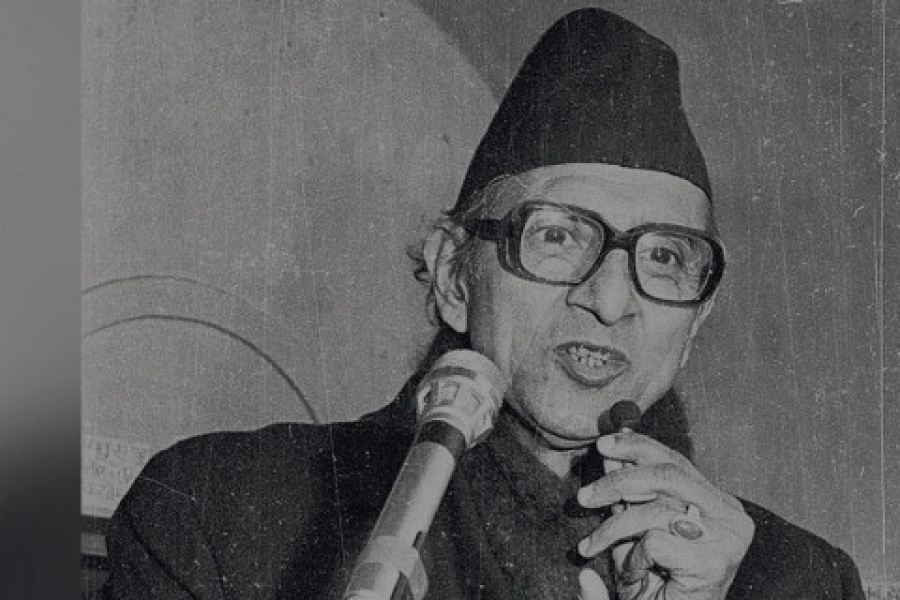
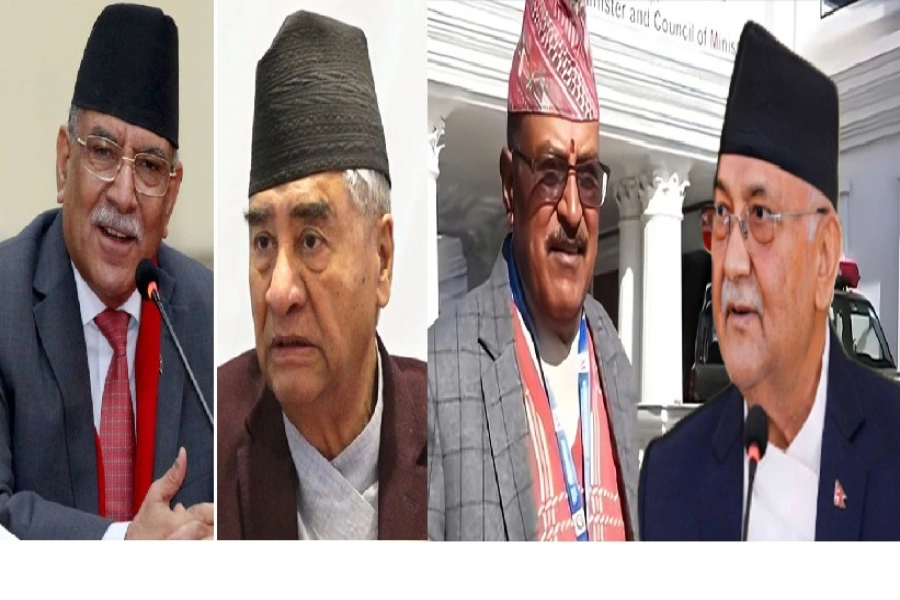
We have wholeheartedly supported Dr Govinda KC's repeated attempts to reform medical education in Nepal. This is because his example of peaceful satyagraha stands out in a country where it has now become common to take to violence to establish your agenda. We have seen how one man, purely on the strength of his conviction, can make the corrupt state bow before him. We can only wish that our political leaders had similar moral clout. The country's problems would not be so intractable then. On Monday evening, Dr KC was summoned to the prime minister's residence in Baluwatar to discuss his latest ultimatum to the government. Prime Minister KP Sharma Oli reportedly asked Dr KC to desist from starting yet another fast-unto-death, a request the 58-year-old orthopedic surgeon politely declined. Dr KC had threatened to go on a hunger strike from coming Wednesday if the government went ahead with its plan to give teaching license to the Kathmandu-based Manmohan Medical College. Dr KC's gripe is not with Manmohan College per se. He has rather been arguing that no new for-profit medical college be allowed in a place like Kathmandu that is already saturated with medical establishments.Dr KC was bang on when he suggested to the prime minister on Monday that if his government was really serious about increasing people's access to healthcare, they should establish the proposed medical college in the Far Western region where there is an acute shortage of qualified medical personnel. Another of the major demands of Dr KC is that the fees for the five-year MBBS courses in private medical colleges be capped at Rs 3.5 million. Dr KC believes that in a poor country like Nepal the state should be primarily responsible for the healthcare of its people. The state should thus invest in the medical education of students chosen on merit basis and in return these students, upon graduation, must be made to serve in the regions where they are needed the most. The fee of Rs 3.5 million, in the reckoning of Dr KC, is more than enough for private medical colleges operating in one of the poorest countries in the world. Dr KC proposes that a separate autonomous medical commission be established to propose reforms in medical education. The government, the veteran doctor argues, should not be granting new affiliations to any of the proposed medical colleges until such a commission is formed.
Yet the Oli government, under the pressure of UML parliamentarians who have invested in Manmohan College, seems determined to push ahead the parliamentary bill to establish the college as an autonomous 'health science academy'. If the government does so, it will be in contravention of previous government commitments to Dr KC. If piecemeal affiliations can be given to cherry-picked colleges, purely on the basis of political connections of their operators, all that Dr KC has been able to achieve in the past five years, by repeatedly putting his life on the line, could be undone in a jiffy. Prime Minister Oli must reconsider his decision. Such blatant favoritism does not suit a democratic government, nor is it in the country's interest.
Related story
The Do's and Dont's before buying a laptop