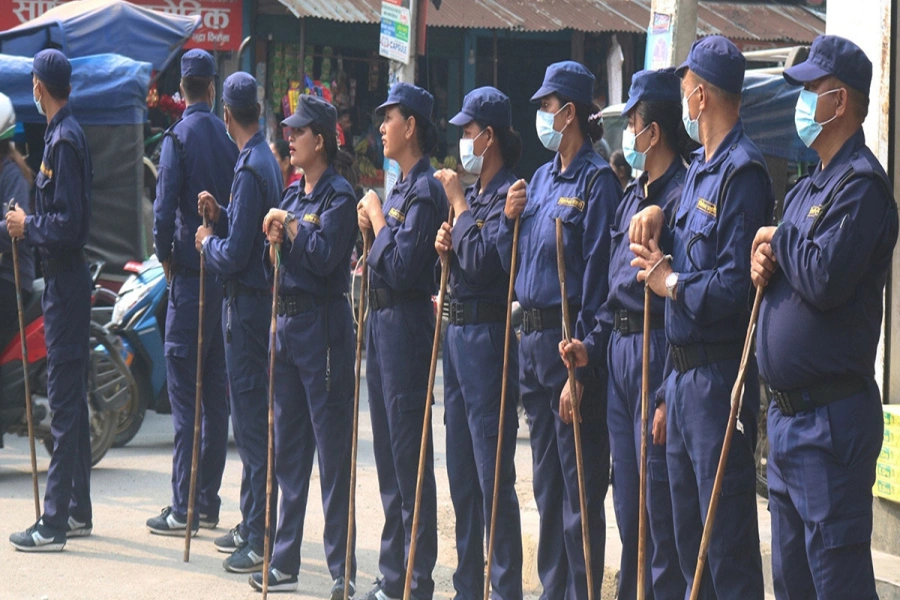
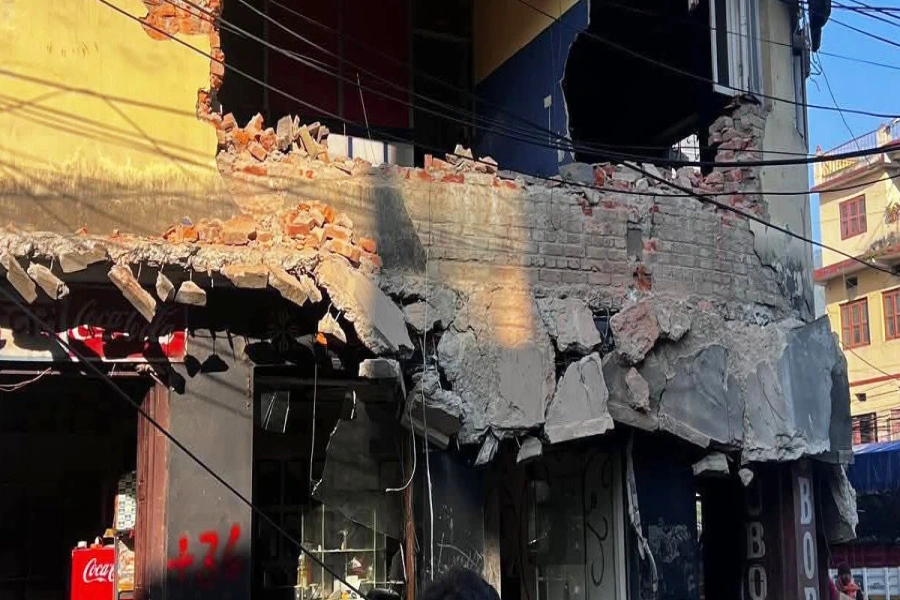
The security situation in Tarai-Madhesh is getting from bad to worse. On Saturday night two protestors were killed in police firing at Bhardaha of Saptari district. According to the police, they were forced to open fire when an irate mob tried to block the movement of vehicles under police escort on the East-West Highway. The firing started from the protestors' side, police say. But the protestors, who had descended on the highway at around 10:30 pm, accuse the police of indiscriminately firing on them even though they were unarmed. Just like the two sides to this sad story, the Nepali public also seems to be divided right down the middle about the ongoing protests in Tarai and the government response to it. Plenty of Nepalis back the police, who, they believe, have acted with admirable restraint even though they have been repeatedly provoked. In their view the police cannot look on helplessly while petrol bombs and bullets are raining down on them. But Madhesh-based parties and their supporters are having none of it. The violent confrontations in Madhesh are the result of the security-minded approach of Oli government, in this view, which is taking the country on the path of perpetual confrontation—or worse.As the crisis depends, the Nepali society has perhaps never been as polarized as it is now. Partly this is due to the India-imposed economic blockade, which has contributed to hardening of positions in both pro- and anti-constitution camps. We would like to believe that if Madheshis have genuine grievances they are more than capable of raising their voice—without any help from India. This is why the Indian blockade, supposedly imposed to safeguard the rights of Madheshis, is counterproductive. But whatever the case, it would be dangerous to let things drift any farther, with each reaching a point of no return. We would thus like to urge Prime Minister Oli to get serious about meaningful dialogue and at once form a new talks-team comprising Nepali Congress. It is important that at least the Big Three are in one place if there is to be serious negotiations; for it would be impossible to amend the constitution to the satisfaction of the Madheshi parties without the support of Congress. This would be the clearest sign of the three parties' collective commitment to resolve outstanding issues in Madhesh through dialogue.
On the other hand, the Madheshi parties must restrain their cadres against violent activities. Incidents like attacking ambulances carrying sick patients, lobbying petrol bombs on police, destroying bridges and preventing leaders of certain parties from entering Madhesh does their credibility as democratic parties a lot of harm. They must be more responsible. The solutions to the problems that have been raised on the streets of Madhesh, again, cannot be found at the end of the barrel of the gun; the only way to restore peace and harmony in the Nepali lowlands is through timely political solutions. Extremists and other vested interests would like to see nothing more than escalation of the sporadic incidents of violence into a full-blown war. Any more delay could mean Nepalis will no longer be in a position to decide their own fate.
Related story
Stop brinkmanship, embrace dialogue