BARDIYA, Nov 19: Devi Prasad Ghimire, a local farmer of Rajapur village used to earn enough for a year by selling paddy. This year, he planted paddy in 10 bighas of land and was expecting good return. However, with the harvest in and the time to cash it at the door step, he is extremely worried. Due to the erstwhile Tharuhat in the region followed by Indian blockade has put made it hard for him to find buyers for his crop.
"Unlike previous years, this year there aren't buyers around to sell the crop. Tharuhat agitation earlier and the ongoing Indian blockade has seriously threatened the prospect to earn a better price for the crop this year," said Ghimire.
National Paddy Day today

Ghimire says that in the previous years traders would queue up at his doorstep for buying his paddy and offering him best price possible. "But this year none have turned up so far because the ongoing blockade and difficulties in supply of goods due to fuel shortage in the market."
Paddy production is one of the main occupations of the farmers in this region. Ghimire says that his village is even more recognized when it comes to paddy production. "Businessperson would line up here and offer good amount of money for our paddy as our village's paddy is famous in the entire western Tarai,"he said.
Chaitu Tharu, another farmer, from Gola village said that he harvested paddy just last week and separated certain amount for sale. But, so far, nobody has offered him a deal for the crop. "They say there is no fuel to carry away our crop. No one seems to be interested to buy our produce," said Tharu.
Tharu pointed to agitation and the blockade as the major reasons behind the situation. He stated that few farmers have however been able to find buyers. "The situation has badly hit us. This is the main season for selling paddy. Selling paddy is our main source of income. I hear that some people have been able to sell off their crop, but that's the case of just one or two farmers."
While Tharuhat agitation got slowed down, farmers had regained hope of getting good price of their crops. Unrest in the region continued even later, according to Tharu, but they had least expected of the economic blockade that would throw people's businesses out of gear, including that of farmers. "As the transportation service got badly affected, transactions of goods and crops have quite slowed down. Farmers like us are so hard hit. We are not getting even half the price of our production," Tharu said.
A trader from Khairi Chandanpur claimed that 'it is not wise to take risk' during such critical situation. "There are high chances of the investment not returning. What if we are not able to take the crops to the main market and have the return?" he questioned pointing to the volatile market situation that he claimed might be a risky proposition for investment. "We all know about the situation. If the crop is not sold to factories in time it will rot. This is the reason traders are not willing to buy paddy right now."
A bridge was erected in Kothiya ghattwo years ago. This had added to the profit of farmer. Due to easy supply of their crops to the main market, last year they received quite good return for their paddy. "But things are quite disappointing this time. Even best quality paddies are not being picked up by anyone," said Bishnu Rijal a farmer from Rajapur. "There is no excitement among farmers, traders or general people. Businesses have gone down. Normal life has been hit hard by the blockade," he said.
Bindu Shrivastav, a trader from the same town, said that it has been hard to get vehicles to transport the crops to market. "We are not getting vehicles even when after offering double fare.
We could purchase the paddy if we could get means of transportation," he said. Shrivastav also complained that even the Nepal Food Corporation has not fixed the rate of paddy this time. "If they had fixed the rate, it would be easy for both us and the farmers to make the transactions whenever possible," he said. As
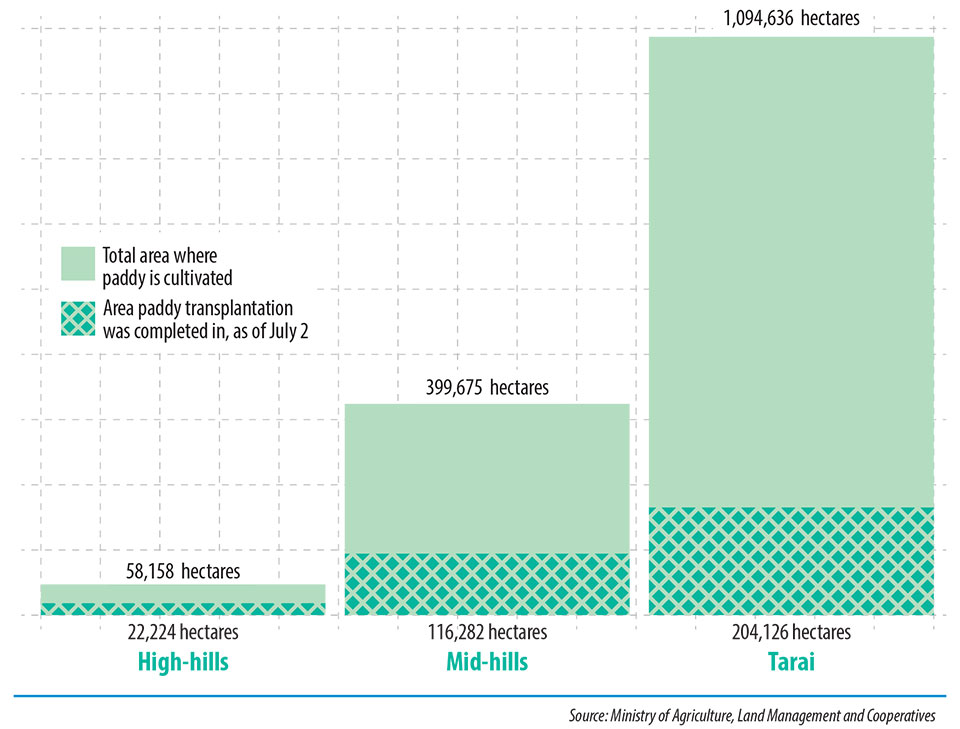
per the data of District Agriculture Office, Rajapur region produces around 9, 00,000 quintal of paddy annually.