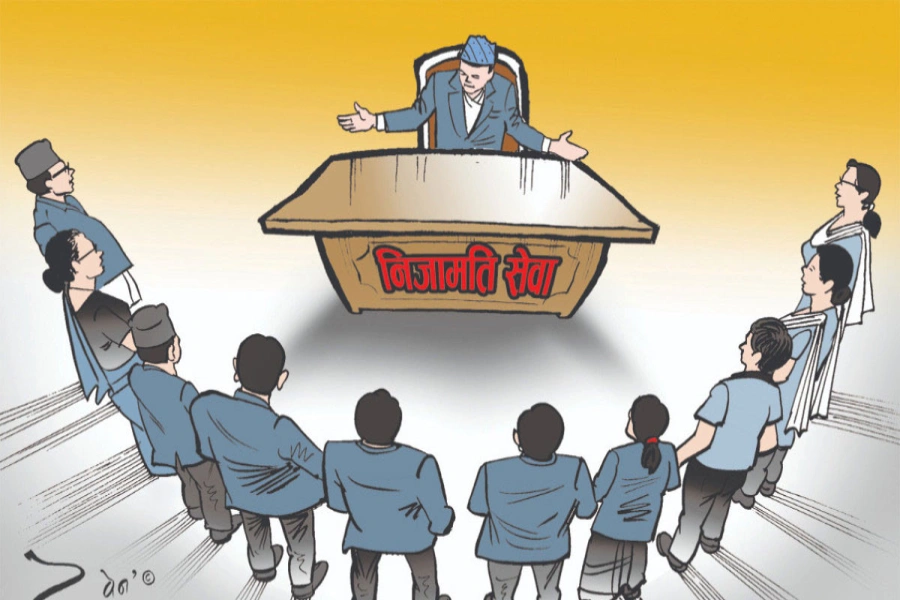
There's nothing quite like a dollop of anti-India sentiment to bring out the loud fervor and 'in your face' nationalism that had been absent from proceedings so far. Their stance has greatly helped rally the people around our politicians and served to remove any lingering indifference to the constitution in our minds. People are now suddenly taking 'ownership' of the constitution and if social media is to be believed the issue of legitimacy has taken a back seat – at least for the moment. The hash tag #backoffindia is trending on twitter with all sorts getting involved with their pithy comments and criticisms of big brother's petulance.
All that criticism is rightly deserved for their handling of the entire episode, irrespective of whether they were unhappy with the contents of the constitution or simply the timing of it. I would have struggled to write a better script if my intent was to make them the bungling villain of the piece – right from the inopportune dispatch of Mr Modi's emissary to the curt tone of their first press release, the veiled threats of their second and now the amendments that they supposedly want in our constitution. The threat of an economic blockade to arm twist us is tantamount to bullying and hardly befitting a nation aspiring
for a permanent seat on the UNSC
and its rightful place on the global stage.
Why didn't they request for the time extension prior to the clause by clause voting process or long before that? They could have easily done it through proper diplomatic channels or through informal consultations and meetings with the political leaders. They haven't been averse to doing that before in the process of attempting to influence our country's affairs, either overtly or covertly. After all no matter how much our leaders bang on about sovereignty few will actually attempt to stonewall India's requests.
But No! What they decide to do instead is put our politicians between a rock and a hard place by sending an emissary after everything was done and dusted. It would have been unforgiveable for any politician to delay the constitution and be seen as giving into India's demands publicly and therefore undermining national sovereignty.
As if our politician's subservience to India wasn't enough of a bugbear for us, this would be a monkey that would be too difficult for any politician to shake off their backs. The gross miscalculation to leave it that late is either a case of underestimating our politician's ability to deliver a constitution or overestimating their influence on Nepal.
While the Indians haven't really covered themselves in glory we should also be careful what we wish for. All the nationalist bravado seen on social media and in print must also be viewed against the backdrop of our trade compulsions resulting from geographical constraints.
India is by far our largest trade partner, bordering us on three sides and it really is difficult to overstate our dependence on them. The word big brother goes well beyond just the all-seeing Orwellian reference in our context. The mere rumor of a blockade shows us the pitiful sight of people queuing up to hoard everything they can get from fuel supplies to various essentials as you might have recently witnessed around the capital.
We stand to suffer a lot more than them from strained bilateral relations. Yes, anti-India feelings will rise, exports to our country will dry up and security concerns will be heightened for our neighbors but these are problems that they will have a home grown solution for. What solution do we have for ours? One only needs to look as far as the economic blockade of the 1980's for the consequences of strained bilateral relations. Nothing much has changed over the years in terms of our reliance on them.
Just as the aftershocks of the big earthquake continue to rattle us even today, the aftershocks of the constitution's promulgation may continue for some time to come. As the constitution will evolve new compromises will be found and concerns of dissenting parties accommodated in cognizance of ground realities.
For the moment each country has no choice but to agree on a way forward as friends and not as yes men (as rightly stated by Prachanda) because a troubled neighborhood and prolonged standoff are not in anybody's interests. Mr Modi put it quite eloquently at the SAARC Summit when he said, 'A good neighborhood is a universal aspiration in the life of an individual or a nation.' Let's hope he really meant his words.
gunjan.u@gmail.com
Related story
Satisfaction: Rolling Stones to headline 50th Jazz Fest