Delegates visiting Kathmandu for the International Conference for Nepal's Reconstruction post-earthquake might already know that there have been many lapses in rescue and relief operations, on the part of both government agencies as well as I/NGOs. Nepal was clearly not prepared for a disaster on this scale. But it is remarkable what the country has been able to manage largely on its own.
NC Special General Convention: Over 49 percent delegates comple...
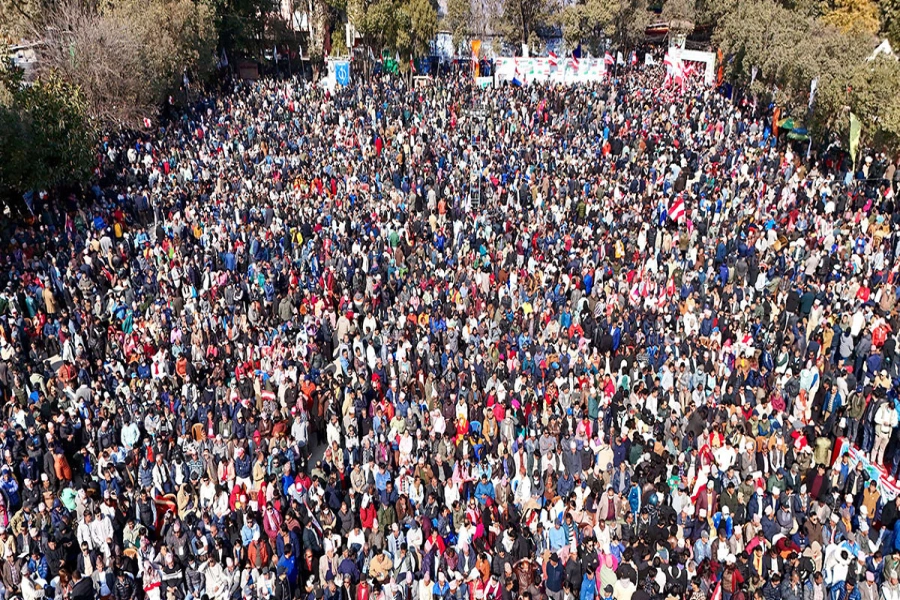
Immediately after the April 25 earthquake, our security personnel were at Ground Zero, pulling out survivors from under the rubble, often at risk to their own lives. Our political parties, after a faulty start, quickly regained their composure and successfully leveraged their grassroots mechanisms to help in the post-quake efforts. Private organizations and individuals contributed wholeheartedly with whatever they could muster. But perhaps the most remarkable facet of Nepal after the devastating earthquake is the remarkable solidarity shown by its people. Ethnic animosities that had threatened to boil over were swiftly shelved as Madheshis and Pahadis joined hands, as did the traditional caste 'elites' and the marginalized Dalit and Janjatis, to bring Nepal back onto its feet. Incidents of theft and looting, common in the aftermath of such natural disasters, were notably absent.
It was no less remarkable that the main political parties, which seemed to be bitterly divided over the new constitution, are now collectively committed to a timely constitution. Before the devastating Earthquake, Nepalis had all but given up any hope of a constitution through the Constituent Assembly. Now, a viable constitution is only a few months away. It is in this context that all conference delegates have come to Nepal. As our government has clarified, we Nepalis will never extend a begging bowl. We are not asking for any write-off of our international debts or any other freebies. Our request is that whatever you decide to give to Nepal, please do so as well-wisher friends, not out of pity and not out of any sense of forced obligation. The best way our friends can help is by strengthening our national mechanisms, through the sharing of their post-disaster expertise, through grants and soft loans to rebuild damaged infrastructure and boost key sectors like agriculture and tourism.What we most definitely don't want is to become another Haiti. Five years after its own devastating earthquake, that country beloved of donors and INGOs is still in shambles. As much as 90 percent of the international aid to post-quake Haiti, it is estimated, has been siphoned back by the respective donors in the form of sky-high fees for their consultants and relief workers. Donors have every right to demand a high level of transparency and maximum efficiency in the expenditure of monetary aid. But, as you are surely aware, experience from around the world shows that any kind of international aid is best utilized if it encourages the use of local resources and local manpower and is channeled in areas identified as priorities by the local actors. So why not use your clout to strengthen our government mechanisms instead of pitching for compatriot consultants. If you can instill a sense of accountability and probity in the workings of our government, this, more than any amount of money given to us, would be the single biggest contribution to rebuilding Nepal.