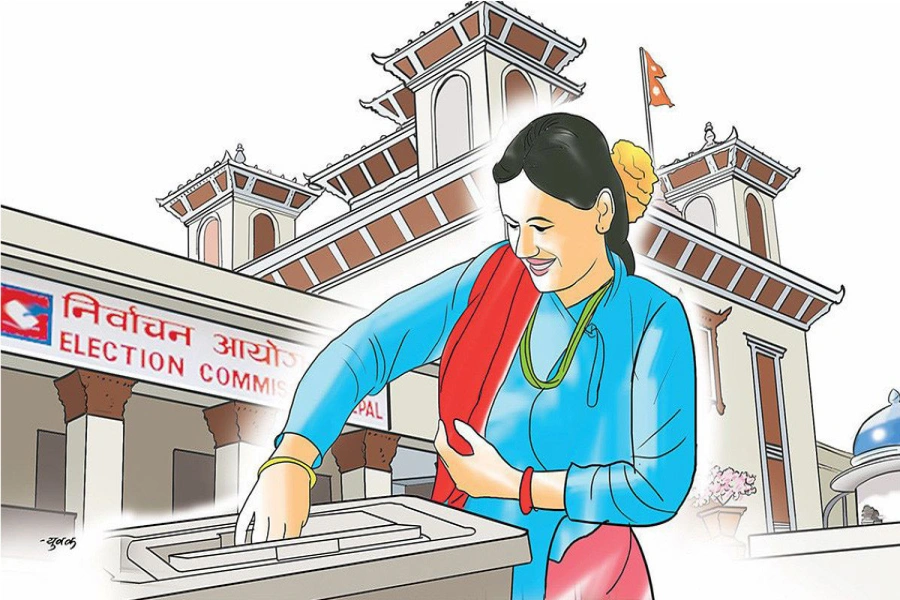
Even as the government of KP Sharma Oli has chalked up some foreign policy successes, most notably the transit and oil agreements with China, the government's performance on domestic front, as we have noted many times, has been dismal. One of the handful of good things it is doing back home is implementing the revised civil service regulation. As per the revised regulation, there will from now be a single trade union in every public sector organization. This makes sense. Currently there are up to seven trade unions in each. Trade unions, in theory, are elected so that they can collectively bargain for worker rights. But in Nepal the very concept of trade unionism has been perverted. Here these unions are formed to pursue the (often competing) agendas of individual political parties. The parties use trade unions to put pressure on organization management for things like promotion or transfer of certain hand-picked employees. At other times they resort to open blackmailing to force the management to toe their line. So a change in how unions pursue collective bargaining was overdue.Surely, as the government argues, genuine concerns of employees—wage-related bargaining, better working conditions—would be better pursued if there was one, strong union speaking on their behalf. But existing trade unions have been up in arms against the government decision to hold an election on April 22nd for new trade unions, as per the amended regulation. They say it is 'undemocratic' to try to take away their right to unionize. But what the government wants to do is just the opposite: strengthen the workers' collective bargaining power through the election of one strong bargainer in every sector. The way we see it, the mushrooming of trade unions in Nepal has only had deleterious effects on our civil service. Since they pursue disparate policies, it becomes impossible for the management to make timely decisions without irking one or the other trade union. This translates into frequent strikes and shutdowns. There is also constant infighting between members of different trade unions. Having a single trade union for every sector could solve all these problems.
The protesting trade unions have no case. For they have shamelessly misused the space that was opened for unionism after the 1990 democratic changes. The trade unions have curiously (and illegally) been protesting inside Singha Durbar, a protest-free zone. In the past they have resorted to open coercion like locking up organization heads until their demands are met. They could resort to similar dastardly tactics this time as well. But if those involved in unionism are genuinely concerned about the rights of the workers and if they believe in the democratic process, they should give up their misguided quest and take part in the April 22nd election. The government, for its part, should not give in to their bullying. The momentum that has been building for this timely reform must not be lost at any cost. The fragmentation of unionism in Nepal, as ample evidence over the past 26 years suggest, is not beneficial to anyone, well, except maybe for a few union bosses.
Related story
Be not afraid of greatness