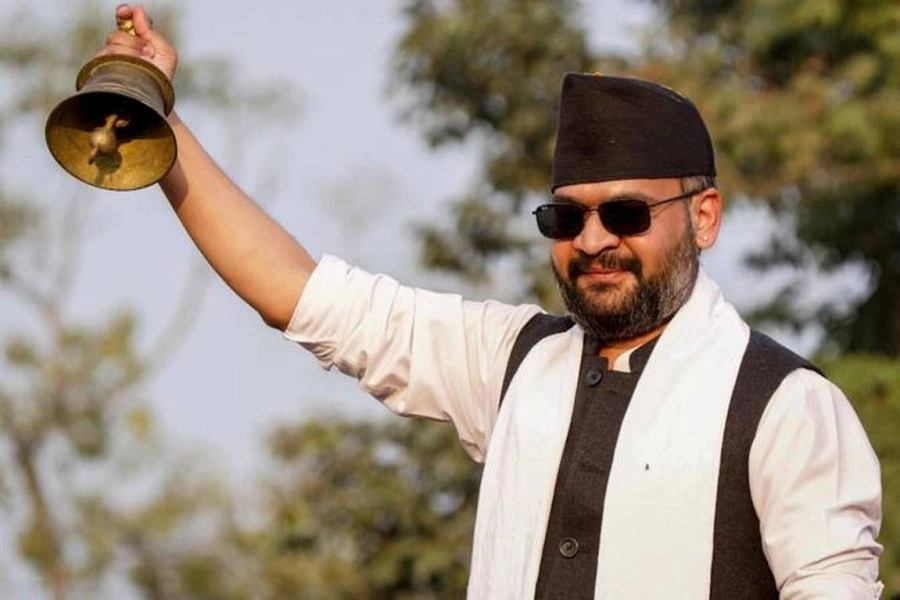
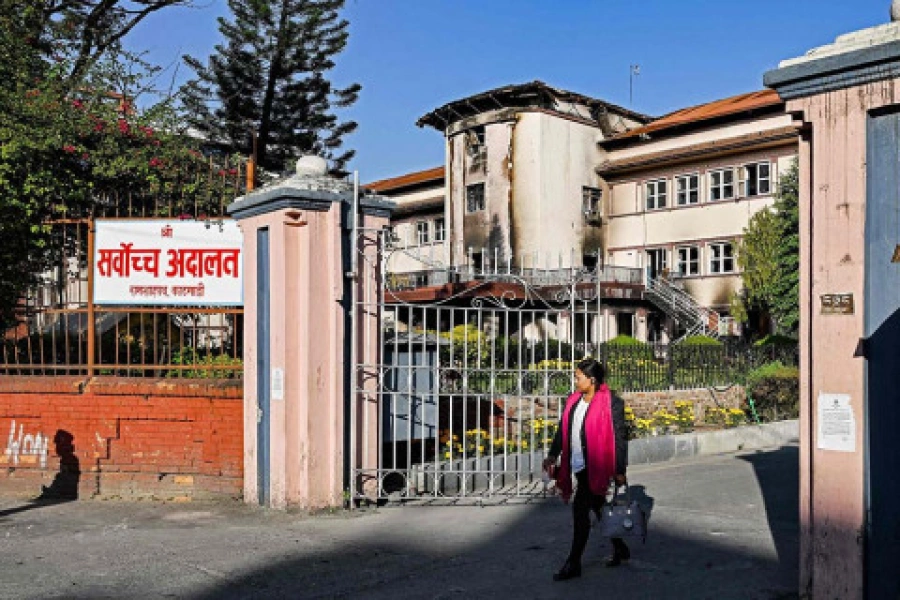
KATHMANDU, Nov 2: Prime Minister Balendra Shah's constitutional position has come under scrutiny amid a deepening internal dispute within the Rastriya Swatantra Party (RSP), particularly over whether he can continue in office if he ceases to be the leader of the party's parliamentary faction.
Shah became prime minister under Article 76(1) of the Constitution, which requires the president to appoint the leader of the parliamentary party commanding a majority in the House of Representatives as prime minister. He is the first prime minister to assume office under this provision since the promulgation of the new constitution.
The growing rift within the RSP has brought a constitutional question to the forefront: Can a prime minister appointed as the leader of a majority parliamentary party remain in office after losing that position?
Article 76 provides for the appointment of a prime minister under different circumstances. While clauses (1) and (3) require the prime minister to be the leader of a parliamentary party, clauses (2) and (5) allow appointments based on the support of two or more parties or a majority demonstrated through a vote of confidence.
The Constitution specifies several grounds on which a prime minister ceases to hold office, including death, ceasing to be a member of the House of Representatives, and failure to secure or retain a vote of confidence. However, it does not explicitly address whether losing the leadership of a parliamentary party automatically ends the prime minister's tenure.
Prime ministers appointed under Articles 76(2), 76(3) and 76(5) must secure a vote of confidence from the House within 30 days of appointment. However, there is no such requirement for a prime minister appointed under Article 76(1).
Constitutional experts are divided over the issue. Some argue that a prime minister appointed under Article 76(1) must remain the leader of the majority parliamentary party to continue in office. Others maintain that the prime minister can be removed only through the procedures explicitly prescribed by the Constitution.
Maoist Center instructs parliamentary party to immediately rect...

"If a person appointed prime minister as the leader of a majority parliamentary party is removed from that position, the majority party can write to the president seeking the appointment of another person as prime minister," a constitutional expert said. "The president would then have to appoint and administer the oath of office to the new prime minister."
However, there is no consensus among constitutional experts on this interpretation.
Article 76 (1) prime ministers are also protected from a no-confidence motion during their first two years in office. This restriction has further complicated the debate over Shah's possible removal.
Constitutional expert Purna Man Shakya argues that in a parliamentary system, the leader of the majority party becomes prime minister. Therefore, a prime minister who loses the party's parliamentary leadership cannot continue in office on moral grounds.
In such a situation, the prime minister should resign. If he refuses, he may have to seek a vote of confidence from the House, Shakya said. He added that losing parliamentary party leadership could create a situation in which the prime minister no longer qualifies under Article 76(1), requiring political parties to reach an agreement and pursue the process under Article 76(2).
Legal expert Radheshyam Adhikari also maintains that a prime minister appointed under Article 76(1) must be the leader of the majority parliamentary party. If removed from that position, the prime minister should either resign or seek a vote of confidence, he said.
Legal expert Chandra Kanta Gyawali, however, argues that since the government is not a coalition, a no-confidence motion cannot be brought against Shah during the first two years unless the RSP splits or removes him as its parliamentary party leader.
Gyawali said Shah would face moral pressure to step down if he lost the parliamentary party leadership. Even if he refused to resign, the Constitution would no longer recognize him as a prime minister under Article 76(1), he argued. In that case, the country would need to move towards the process outlined in Article 76(2).
Legal expert Ram Narayan Bidari takes a different view, saying the government could fall only if the RSP splits and Shah fails to secure a vote of confidence, or if a no-confidence motion is passed after the completion of the first two years.
Otherwise, he said, the government remains firmly positioned.
Article 100(4) allows one-fourth of the members of the House to register a motion stating that the prime minister has lost the confidence of the House. However, its restrictive clause bars a no-confidence motion during the first two years of a prime minister appointed under Article 76(1). It also prevents another such motion from being tabled within one year of the failure of a previous no-confidence motion.
The dispute within the RSP intensified over amendments to the party statute, with differences emerging between supporters of Prime Minister Shah and those aligned with party chairperson Rabi Lamichhane.
At a Central Committee meeting on July 29, central committee member Ganesh Karki accused the party leadership of altering provisions of the statute approved by the general convention and demanded the formation of an investigation committee. Lamichhane rejected his demand.
Leaders aligned with Lamichhane also demanded an investigation into allegations that Shah's supporters had distributed slips during the general convention. Shah's camp, meanwhile, accused the party leadership of amending the statute approved by the convention to suit the chairperson.
According to sources, tensions among senior leaders have also grown due to a lack of clear coordination over whether the party should guide the government or the government should follow the party's policies.
Disagreements have also emerged over provisions introduced during the convention's amendment of the party statute and the parliamentary party statute. One contentious provision allows the parliamentary party leader to be removed for violating the party chairperson's directives. Shah was unanimously elected leader of the RSP's parliamentary party.
President Ram Chandra Paudel appointed Shah prime minister on March 27, 2026, under Article 76(1), following the RSP's majority in the House of Representatives.
The RSP emerged as the largest party in the House after winning 182 of the 275 seats in the parliamentary elections held on March 5. Its tally is nearly two-thirds of the House.