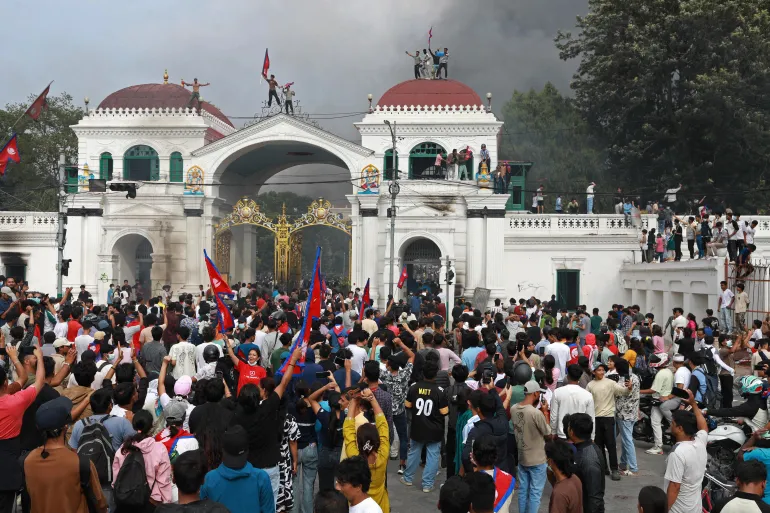
A new political force, the Nepali Communist Party, has been formed through the unification of 10 leftist groups, including the CPN (Maoist Centre) and the CPN (Unified Socialist). The party is led by Pushpa Kamal Dahal of the Maoist Centre and Madhav Kumar Nepal of the CPN (Unified Socialist), along with other senior figures. The leaders have stated that, while they are heading the party for now, new leadership will emerge in the future. The Gen Z movement of early September has left a lasting impact on the country, inspiring self-reflection and a call for political reform. Yet, change in Nepal’s political culture is rarely easy; even so, it now seems unavoidable. Senior leaders such as Janardan Sharma of the Maoist Centre, Ghanashyam Bhusal of the Unified Socialist, and Netra Bikram Chand of another communist faction have begun holding talks. Interestingly, Chand — long known for his electoral abstention — is now reportedly in favour of contesting elections. On the other end of the spectrum, leaders advocating a Hindu state or monarchy restoration, including former Panchayat-era figures, are also discussing political unification.
Nepal Police will act in line with Gen Zs' aspirations: AIG Kar...

Meanwhile, the political landscape continues to fragment and expand. Several new parties are emerging and independent public figures who have gained mass appeal through social media and digital platforms are exploring formal political engagement. Dharan Mayor Harka Sampang has already initiated the formation of a new party, while another party supported by Kulman Ghising is set to be registered with the Election Commission (EC). Nepal’s political environment is thus witnessing not only the rise of new parties but also growing pressure on established ones to reinvent themselves. Whether new or old, all political actors are now under scrutiny from an increasingly aware public. For decades, political leaders assumed that the system could function as it was. Reform was not a priority. Top party leaders monopolised power within their organisations and, in doing so, reduced parliament to a mere formality. The legislature’s inability to function effectively and address national challenges has become a key source of public frustration. Even during major crises, parliamentary galleries have often been half-empty. Senior leaders never felt the urgency to revitalise the institution — a failure many see as central to the country’s current predicament.
In a democracy, political parties are its primary custodians. The way they act determines the health of democratic governance. Since the 1990 People’s Movement, Nepal’s politics has been party-dominated, yet these same parties have failed to ensure good governance. The present juncture calls for introspection — to learn from past missteps and chart a new course. Until now, political parties have relied on electoral majorities as the sole basis for legitimacy. While votes determine who forms the government, true legitimacy must be sustained through accountable and transparent governance. Rather than exploiting electoral mandates, parties must now focus on policies and actions that build lasting trust. With citizens more informed and vocal than ever — empowered by technology and global connectivity — political leaders must operate with greater care and openness. Political parties that claim to uphold democracy must now adapt to changing times and rebuild credibility. It is time for Nepal’s political class to abandon complacency and commit to a culture of accountability and renewal. The awareness and aspirations unleashed by the Gen Z movement must not remain outside the political system. Integrating this new consciousness into party structures is essential if the country is to meet the challenges of a fast-changing era.







-1779842101.webp)