According to Pokhara Sub-Metropolitan Office, the population in the lake city is growing at the rate of 10 percent in recent years -- highest among all cities, including Kathmandu. Along with the increase in population, the number of applications seeking permission to construct new house has crossed over 2,445 in 2008/09 fiscal year, up by one-third against the data of the preceding year. This, in turn, is exerting pressure on basic infrastructure and services such as drinking water, electricity and telephone lines, among others.
According to conservative estimate, Pokhara is home to around 60,000 households and a population of around 300,000. Five years ago, the population of the city was half of the present estimation.
“The city is expanding with the influx of large number of people from rural parts of the same district, Kaski, and others,” said Dilip Bayali, local registration officer. The causes of migration, he elaborated, were growing facilities, good environment and income opportunities that the city offers.
This population explosion has added additional challenges to the sub-metropolis and other service providers.
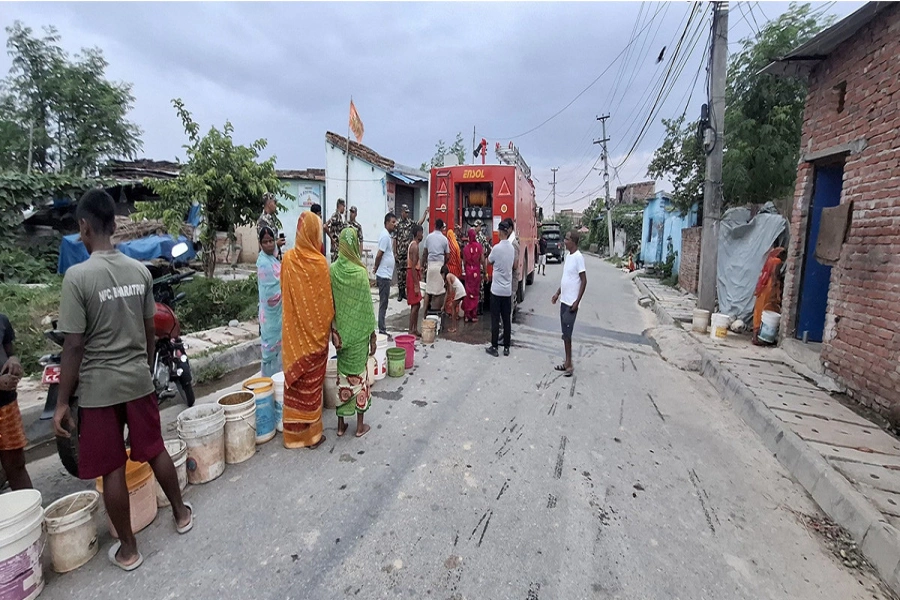
“Increased demand has made available basic services such as drinking water, sewer system, electricity and telephone lines, among others, inadequate,” said Bayali. As goes with rapid migration, which fuels demand, the sales of land and housing have shot up and prices of real estate and other costs of living have soared like never before.
The market center has already become dense and land fragmentation and sales in the outskirts too have intensified.
“Transactions of land have soared sharply over the last five years in Pokhara,” said Rajendra Bajracharya,” chief of Map Division at the sub-metropolis. “Rapid construction has made the city core almost filled up with concrete houses. Small settlements at the periphery of the city too have rapidly urbanized.”
Land development for the housing purpose and rise in construction have reached Birauta, Dharipatan, Chhorepatan, Malepatan, Paardi and Kudahar, which till five years ago, had small settlements. Main markets such as Prithvi Chowk, Mahendrapul, Srijana Chowk, New Road, Naya Bazar and Chipledhunga have already become overcrowded.
“Construction has boomed in Wards 8, 13, 14, 15 and 17 of the sub-metropolis. These Wards had sparse population in the past. But within two years, they have converted into a dense city,” stated Bajracharya.
Located at an altitude of 727 meters to 980 meters above sea level, Pokhara is a beautiful city, known for the lakes and striking sceneries of snowy peaks and mountain ranges. Because of these attractions, the city attracts thousands of tourists from abroad and even more number of visitors from the different parts of the country every year.
Related story
Boom Remittance signs MoU with Kasthamandap Bank