


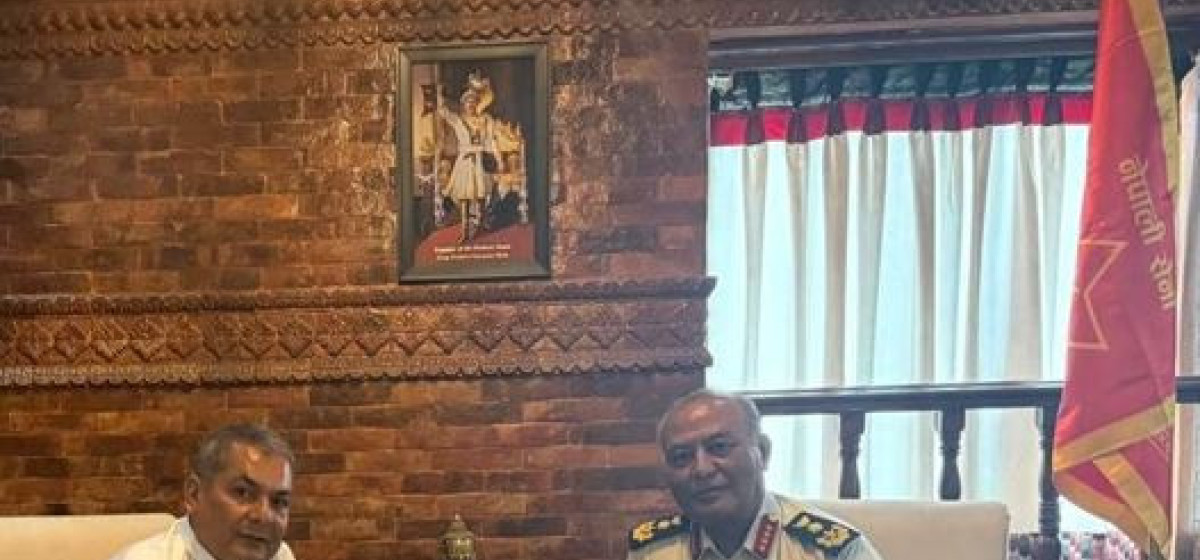
KATHMANDU, Oct 10: Amid mounting criticism over its delayed response to incidents of vandalism and arson during the recent Gen Z protests, the Nepali Army (NA) has clarified that its interventions were guided by an objective assessment of internal security needs.
In a statement issued on Friday, the NA said it had actively worked to stabilise the situation and is committed to restoring normalcy ‘as soon as possible’.
“The Nepali Army took necessary initiatives with the aim of maintaining peace and security by objectively assessing the impact on internal security,” the statement read.
The army also acknowledged public feedback from scholars, social workers, journalists, and citizens regarding the evolving national situation. In the context of the current sensitive environment, the army said its attention has been drawn to various opinions, criticisms, and suggestions received through media and social media platforms.
Rapid assessment highlights child trauma and trust deficit foll...
Some members of civil society and the intelligentsia have argued that the army could have protected key government installations—including Singha Durbar, Sheetal Niwas, the Supreme Court, and the Parliament Building—had it acted sooner. Certain critics have also alleged that army leadership sought to reinstate the monarchy in the aftermath of the protests.
Addressing such concerns, the army emphasised its commitment to transparency. “We inform the public that the Nepali Army has been regularly communicating its position and activities via press releases, press notes, and official social media accounts,” the statement added.
The statement comes amid heightened national tension and an uptick in political demonstrations following the Gen Z movement, which has triggered widespread debate on governance, security, and public accountability.
Political leaders have also questioned the army’s role. Pushpa Kamal Dahal, chairman of the CPN (Maoist Centre), said Friday that it was questionable for the NA to prioritise only the protection of political leaders while failing to safeguard Singha Durbar and the Supreme Court.
The Gen Z protests saw widespread vandalism, including fires that destroyed major government complexes such as Singha Durbar, the Supreme Court, and the House of Representatives. Political figures and civil society members continue to scrutinise the army’s timing and effectiveness in responding to the crisis.







-1779842101.webp)








-1200x560-1779450784.webp)
