Speculations are rife about why the visit was cancelled. Although the Chinese envoy to Nepal, Yang Houlan, has clarified that the Premier had to put off the visit due to China’s own pressing economic and budgetary issues and has even proposed to PM Baburam Bhattarai to reschedule it, the explanation from Chinese side does not seem to have convinced the people and the political leaders, who are now demanding clarification on what they see as an international embarrassment for Nepal.
Reportedly, Wen’s trip to Myanmar for the Greater Mekong Sub-Region (GMSR) meeting two days before his intended visit to Nepal too was called off. However, no new or significant development inside China on the economic front has come out in the last few weeks.
The news of the visit was announced by PM Bhattarai himself after returning from the UN General Assembly meeting. Accordingly, Nepal’s Deputy PM and Foreign Minister, Narayankaji Shrestha, went to Beijing last month with an official invitation. Following this, a Chinese security team arrived in Kathmandu to take stock of arrangements ahead of the trip.
Even the agenda of the visit had been worked out. The two countries were expected to sign agreements on Bilateral Investment Protection and Promotion, building of four dry ports, construction of an international airport at Pokhara and setting up of two economic zones in Nepal.
The visit was abruptly cancelled on December 13.
WHAT WENT WRONG?
First, the news of the visit was prematurely announced. By breaking diplomatic norms, PM Bhattarai made public the date of the visit. It is noteworthy that no official statement had come from China. The rush has now backfired on Bhattarai whose government is now being blamed for its diplomatic failure and its unpreparedness for the visit.
Second, the Chinese of late have shown great disappointment over the rise of anti-Chinese activities by the Tibetan refugees in Nepal. The Chinese security team which visited Nepal recently had taken this up with the home ministry of Nepal. Reports that more Tibetans were travelling to Kathmandu from India too could have made China weary of the security situation. Although Nepal has consistently assured China of its One-China policy, the number of protests by the refugees has gone up significantly. Tibet remains China’s top security concern and any act of violence by free-Tibet movement in Nepal is considered a breach in Sino-Nepal relations. Thus the Tibet factor could well have been another reason for the cancellation of Wen’s visit.
But what is happening in Nepal on domestic font is of huge consequence too. Although the Bhattarai government raised much hope for the completion of the peace process and constitution writing, his credibility is fast eroding. He has come under heavy criticism for seeking amnesty for rights violators, promoting corrupt politicians in cabinet (the largest in Nepal’s history), randomly transferring and promoting government officials and for his lack of commitment on addressing law and order problems. There are now serious doubts over whether Bhattarai will be able to lead the next consensus government.
While China, like India, has expressed outright support for the peace and constitution processes, much depends on Bhattarai’s ability to deliver on the peace front.
EFFECT ON SINO-NEPAL RELATIONS
The cancellation is unlikely to make a big dent in diplomatic relations. China has broadened its engagement in Nepal, both at political and institutional levels. There has been a definite shift in China policy on Nepal since the ascendance of Maoists to power. China, which had earlier adopted a policy of ‘non-intervention’ in internal affairs of Nepal, was force to reshape its policy after the end of monarchy. It started seeking a reliable force in Nepal. It was the release of a controversial audio tape in 2009 purportedly containing a conversation between Krishna Bahadur Mahara, International Bureau Chief of the UCPN-Maoist, and an unknown Chinese (in which Mahara is heard asking for Rs 500 million to buy off 50 lawmakers required to form the government under Prachanda) which dragged China into Nepal’s political debate. Nepalis for the first time started questioning Chinese role in their internal affairs.
Twelve high-level Chinese delegations, including two military teams, visited Nepal in the course of 2008-2009. During these visits, China repeatedly assured economic, technological and military aid to Nepal. The Maoist-led government, for its part, was asked to adopt a ‘One-China’ policy, not allow Nepali land for any anti-China activities, take strong action against Tibetan refugees and grant special facilities for Chinese investments in key areas. Beijing has also initiated Track-II diplomacy with Nepal and invited Nepalis scholars to visit Chinese think tanks.
China had submitted to the then Prachanda government a draft of Sino-Nepal friendship treaty, which states that China will not attack Nepal and would respect Nepal’s sovereignty and territorial integrity. Nepal, in turn, would recognise ‘One China’ policy and not allow its territory to be used for “anti-China” activities. The draft treaty conveys Chinese security concerns in Nepal.
Towards that end, there is likely to be tremendous rise in Chinese assistance in military and development efforts in Nepal in years ahead. As a part of its economic assistance, China announced doubling of aid to Nepal to US $21.94 million after 2008. Notably, China is the third largest source of FDI in Nepal after India and US. The actual trade volume between the two neighbours stands at $401 million, with China selling goods worth about $386 million. It was in order to bridge this deficit that China agreed in 2009 to provide duty free access to 497 Nepali goods.
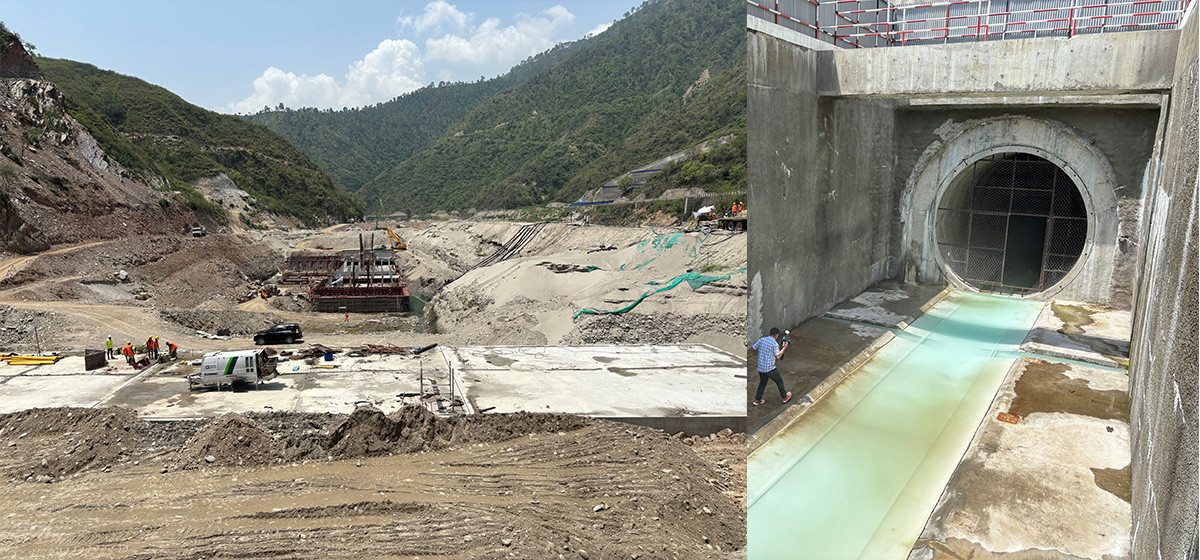
China is keen on taking up the multi-billion dollar Lumbini development project which aims at transformation of Lumbini into a “Mecca for Buddhists.” Besides, China’s role is being facilitated by the promotion of China Study Centres (CSCs) in Kathmandu. On water resources front, China pledged in 2008 a loan of $125 million for Upper Trishuli 3 A and another $62 million for Upper Trishuli 3 B.
In India, the rise of Chinese influence in Nepal predictably raises eyebrows. Although India cannot contain China from spreading its tentacles in South Asia, closer Sino-Nepal ties are perceived as unfavourable to Indo-Nepal relations. In the 1980s Nepal began to import Chinese weaponry, which India perceived to be against the spirit of the Indo-Nepal treaty of 1950. Nepal has since sought to establish extensive military cooperation with China to reduce dependency on India. When the US, India and the UK refused to supply lethal weapons to Nepal during King Gyanendra’s Emergency rule, China stepped up to the place. Since, China has established a proactive military exchange program with Nepal Army and announced $2.6 million in non-lethal military aid to Nepal in 2008; in 2009 it pledged $3 million.
Given these developments, China is more than likely to consolidate its hold in Nepal and become more assertive in the near future. Although a direct confrontation between New Delhi and Beijing over Nepal is highly unlikely, the growing anti-India sentiments in the Himalayan state could make it easier for China to stay put in Nepal.
The writer is Republica correspondent based in New Delhi
akanshya@gmail.com
Related story
Come