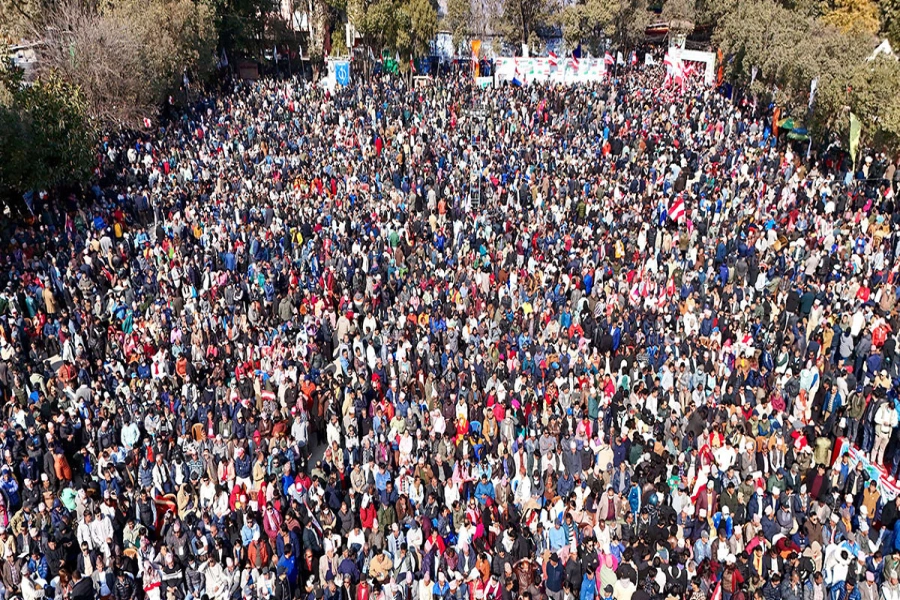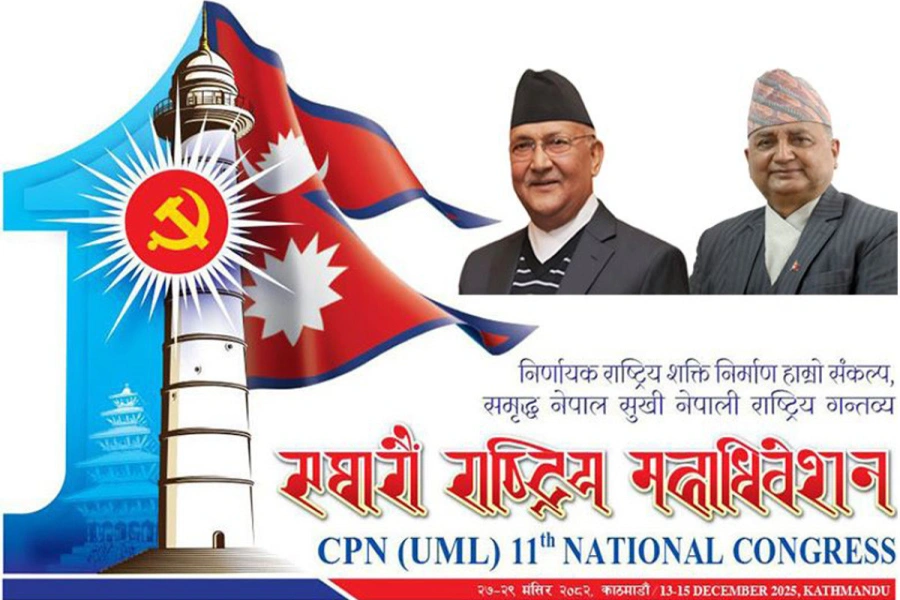
KATHMANDU, Dec 7: The 11th general convention of the Nepal Communist Party (UML) has entered the stage where the selection of representatives is closely intertwined with the upcoming leadership contest. Discussions and alignments have already begun between supporters of KP Sharma Oli and senior vice-chair Ishwar Pokharel at Oli’s residence in Gundu and Pokharel’s contact office. Party leaders are analyzing delegate counts from across the country to gauge their chances.
Oli’s camp is focusing on swaying delegates who have not publicly aligned with any faction, as these undecided votes are expected to be decisive in the leadership election. Party positions, including office-bearers, the standing committee, politburo, central committee, and provincial chairs, are gradually revealing which faction they support.
While initial delegate counts favored Oli, the distribution of office-bearer positions could reduce his advantage. Many leaders in Oli’s camp are also aspiring for office-bearer posts, creating potential shifts in allegiance that could affect Oli’s vote share. A senior leader supporting Pokharel explained, “We are ready to stay neutral in office positions. If our colleagues take leadership responsibilities, we will support them. Our goal is to ensure capable leaders emerge at the top.”
Oli’s faction is not expected to face a smooth convention either. Some who previously backed Oli have now moved toward Pokharel’s side, signaling possible internal dissent. “Rebellion signals are emerging where office-bearer posts are not allocated. Pokharel’s faction is waiting for this. Many in Koshi and Bagmati provinces are particularly ambitious about central committee positions,” a senior leader in Oli’s camp noted.
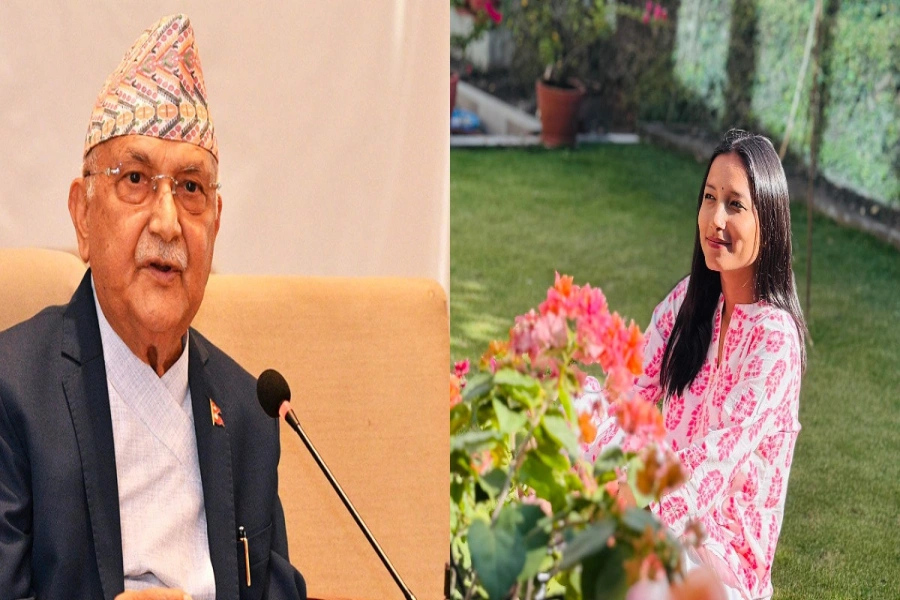
Gen Z activist Rakshya Bam issues open appeal to UML delegates
Current figures show that of the 354-member central committee, 293 members, including 12 office-bearers, have aligned with Oli. Pokharel’s camp counts 43 members with 6 office-bearers, and 12 members in contact with both sides are likely to lean toward Pokharel. If Pokharel’s claims hold, significant polarization could occur within the central committee and among delegates.
Preliminary analysis indicates that 45% of delegates selected by geography support Oli, while about 33% back Pokharel. More than 22% of delegates remain undecided, making them pivotal in the leadership decision. In terms of office-bearer posts, votes are expected to be split between both factions.
Some central committee members who advocated for granting party membership to former President Bidya Bhandari are now leaning toward Oli to safeguard their political standing, though they have not entirely distanced themselves from Pokharel. Leaders such as Bidya Sundar Shakya, Thammaya Thapa, Krishna Thapa, and Navina Lama have openly aligned with Oli.
Amid internal criticism, Oli publicly claimed at a recent program that UML would emerge as the nation’s foremost political force, signaling his intent to reclaim party leadership post-convention. Meanwhile, General Secretary Shankar Pokharel urged delegates to support Oli, emphasizing that the party needs a capable leader to navigate the current complex national political situation.
Vice-chair Surendra Pandey has openly backed Pokharel, asserting that Pokharel is now the preferred choice for UML leadership. Pandey noted that Pokharel’s claim to the chair could have been made earlier, given his prior experience as general secretary and senior vice-chair.
He argued that multiple leadership claims strengthen internal democracy, providing leaders and cadres space to express their aspirations. Vice-chair Yubaraj Gyawali predicted that undecided central committee members, who have remained silent on former President Bhandari’s membership, may gradually align with Pokharel, leading to eventual polarization after delegate selection is complete.
Both factions have begun active campaigning: Oli supporters have promoted the slogan “Save the Nation, Preserve KP Oli’s Leadership,” while Pokharel’s camp has circulated messages emphasizing “Wisdom, Collaboration, and Collective Leadership under Ishwar Pokharel.”
Delegate selection for the 11th general convention is largely complete. While some disputes occurred in Okhaldhunga, Dhankuta, and with the Discipline Commission, consensus delegates have been elected across central departments, provincial committees, special districts, labor sectors, and mass organizations. In most districts, delegate elections preceded leadership selection, ensuring a representative process.
With eight provinces, 32 departments, 24 mass organizations, 165 electoral constituencies, advisory committees, four central bodies, four special district committees, labor sectors, and international representatives, a broad network of delegates has been established. The total convention will include 2,200 delegates, with about 1,200 already confirmed.
Of these, central committee representation includes 355 members, 29 from the Discipline Commission, 30 from the Audit Commission, 25 from the Election Commission, and 25 from the Advisory Council.
Delegates from provincial-level party structures were selected at a ratio of five members, including at least two women. Similarly, party members from constituencies contributed four representatives per 1,200 members, including one youth under 40 and one woman.
With this structure, the convention is set to witness a high-stakes leadership contest, where undecided delegates and office-bearer alignments could determine the outcome.