Not so long ago, a married Nepali woman’s outfit was rendered incomplete without a thread (or more) of glass beads adorning her neck. Those multihued pieces of glass cut in different sizes and certain shapes so that they shine are also known as “pote” in Nepali. From ultra huge structures worn around the neck with blocks of gold and silver to dainty little accessories that range from finger rings to hairpins, glass beads have their own stories to tell.
Glass beads today come under the umbrella term of ethnic jewelry, and in the current scenario, most female youngsters seem utterly infatuated with it. Traditional Hindu belief system advocates that pote is strictly and solely for married women only; but even young girls these days have learnt the art of “bending the rules” anyway.
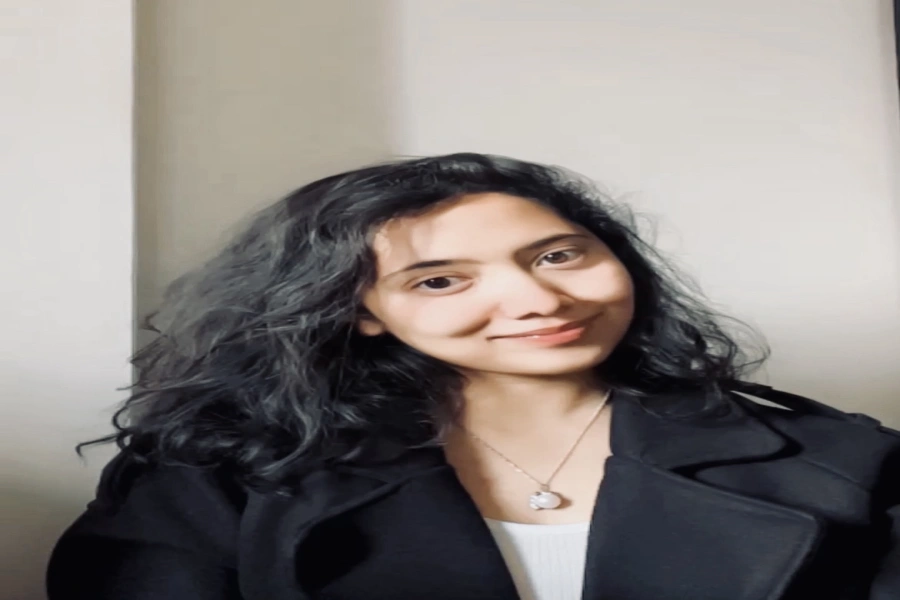
Pranjata Mishra, 20, loves glass beads. But her mother believes that glass bead neckpieces are for married females only. Therefore, Pranjata has found a middle way. “I don’t wear them round the neck but that doesn’t mean I can’t wear bangles, anklets, earrings and lockets made out of glass beads,” she smiles.[break]
She thinks that they are classy and elegant and seem to go with everything she wears. They can be worn with designer gowns as well as simple kurtas, and at any time of the day. And as far as the color is concerned, she often opts for the darker hues, like black, blue and chocolate brown.
“I don’t want to end up looking like a middle-age lady by wearing too much red or green,” she laughs.
Where is it, anyway?
Keeping the changes in consumer culture at bay, there’s something, nevertheless, that has remained unaltered over time. It’s a small patch of a street market on this side of Indra Chowk. This bazaar has adapted itself with the changing whims of its customers and still stands as Nepal’s biggest marketing hub for glass beads.
Aashad Shah, 70, an old designer and trader who owns a shop at the bazaar, takes pride in having sold pote to generations of customers, sometimes even from the same family.
According to him, in the earlier days, women used to wear big bulky looms of glass beads pompously as a symbol of matrimony. However, with changing times, pote seems to have become a hobby and a matter of choice, too. “Modern jeans-loving girls are happy to wear a thin strand of thread of any color around their necks,” he smiles.
However, he adds, traditional Hindu women cannot do without big bulks of red and green “tilahari”-s and “naugedi”-s during weddings, poojas and festivals.
That being said, Shah too has felt that glass beads have become more of a fashion accessory than a traditional symbol in recent times. Before, Nepali women were biased to the colors red and green and preferred unpolished pote because those beads were considered “auspicious.” Unpolished pote never fades and thus, accordingly, the belief prevailed that just like that evergreen pote, the happiness and stability in one’s conjugal life would never grow fainter. Also, red and green were the favored colors because they signified a healthy and happy conjugal life for a woman.
But those notions are gradually losing their impact with time. Nowadays, the color of the pote is required to match with the rest of the outfit, may it be red or something else. And polished beads are more popular since they are shinier and more attractive.
Changing times, different trends
Sociologist Ganesh Man Gurung relates pote with the rising awareness regarding identity. For women, he comments, pote isn’t just a piece of jewelry. Psychologically, socially and culturally, too, it’s a part of their identity. Just like women’s statuses and roles are changing in Nepali society today, he says, so are the facets and significances of ancient cultural symbols, like pote.
He also talks about Nepali widows’ voices that are demanding for the rights to keep on wearing red outfits, glass bangles and potes regardless of the demise of their husbands. He similarly mentions unmarried Nepali girls’ desire to wear it as a fashionable jewelry whether or not it’s legally and socially bound to a male.
“From a sociological viewpoint of view, I regard it as a purely feminine cultural phenomenon,” he offers. “Women wish to be liberated and be independent and they are remodeling the primordial cultural artifacts accordingly.”
Pranjata Mishra is a representative of an entire upcoming generation of pote lovers, albeit with a different sense in style.
However, the older generation might not always share the same tastes and views as today’s younger ones. Still, there’s a definite meeting point where the tastes of these multiple generations overlap.
Muhammad Aajam, 35, a shopkeeper at the glass beads market, reveals that whether it is grandmothers or granddaughters, everybody is attracted to purses, bags, hairclips and decorative pieces made out of glass beads.
These items are the intersection where the traditional meets the modern. At this point, neither the color nor the marital status remains a matter of concern anymore. Beaded bags and purses aren’t just chic but practical too. They don’t need to be washed, only brushed every now and then.
Price, however, is a concern.
“These handmade artifacts are high in demand abroad,” Aajam explains. “In Nepal, normally, people find them pretty but consider them out of budget.”
Price is, in fact, an issue that even designer Shah has encountered as a main reason for the change in pote trends. It’s not just bags and decorations, he explains, but the ornaments too are affected by the price tags. For instance, unlike older women who insisted on wearing “pure gold,” current-day women are happy with gold-plated tilaharis and naugedis.
However, notwithstanding the price range, Indra Chowk always has something for everyone. It not just caters to the requirements of its regular retail customers, its products also travel to markets all over Nepal and abroad. The small local shops in and outside Kathmandu may have given competition to the Indra Chowk market but are far from posing any serious threats to it.
Granted, people don’t make a trip to Indra Chowk ever so often if there is a bead store in their own locality. But whenever something major, like a marriage, happens in the family, Indra Chowk becomes the top-priority destination.
An ancient hub in Old Kathmandu
These particular Muslim merchants and traders specializing in glass beads are believed to have been here since the days of Malla eras. They allegedly came to Kathmandu from Kashmir and settled down here with skills in beads and an eye for business. There have been many historical upheavals and sociopolitical and economic turmoil in the country but these shops still stand here, just as they did hundreds of years ago.
Another version has it that these Muslim traders in Indra Chowk’s glass bead niche market hailed from Iraq centuries ago, and therefore are also locally called “Irku” Mussalmans, so much so that this distinct Islamic community has its own mosque for worship in an alley to the immediate western neighborhood of Jana Bahal and the resplendent Mandir of Seto Machchhendranath. Not surprisingly, most of these Iraqi Muslims are also noted for their excellent tongue for the Newari language, or Nepal Bhasha, as they live and work in the heart of ancient Newar Kathmandu.
The glass bead pictures today
There are also other dealers who have expanded their business in recent years. In today’s context, Kunjana Mishra, the proprietor of Kunj Artistic Beadworks, defines glass beads as an “alternative” jewelry form. Its usage, she comments, varies according to age, occasions and classes and castes of the wearers.
She remembers wearing pote since her wedding day. As a married Brahmin woman, she reminisces, she was taught never to keep her neck bare. But that’s not the case anymore. Individually, women can choose to wear whatever they like these days.
However, as an exporter who competes in the international market with other countries like Mongolia and those from Africa, she claims that pote has become an integral part of Nepali identity rather than a mere cultural icon, or just a fashion accessory or something to be sold.
“Glass beads, today, internationally stand for our collective national identity rather than that of a particular culture or community,” she explains.
In the present day, glass beads have emerged as a prominent junction where cultures, consumerism and identities seem to have overlapped. It can be viewed as a reference point from where these three different yet interrelated realms, among other disciplines, can be studied and analyzed. It’s also an example of a tradition existing throughout ages and generations and is continually refashioning itself in the process of its numerous and redefined survivals.
Shopping in the Valley
Only until a few decades ago, Asan or Ason Tole, also known as the “sahar” (city) to its native residents, was Kathmandu City’s commercial hub. Today, there are local shops and fancy malls mushrooming everywhere in town as well as in the other cities – Patan, Bhaktapur and smaller towns – of the Kathmandu Valley. Hence the old market center is decentralized and diluted.
But what, out of these several options, would be the ideal shopping destination of the present-day Kathmandu denizens?
Dilli Ratna Shakya, 70, a resident of Asan, comes from one of the oldest families of businessmen and goldsmiths. He still remembers those days when Kathmandu used to be a small closed community. There were few shops that sold fixed items, and a special bond existed between traders and customers. He reminisces, “Everything was so much purer and cheaper then.”
Shakya remembers selling silver for about Rs 35 per tola and gold for Rs 128 per tola some five decades ago. Goldsmiths back then charged far less in terms of “jardi” (residue) and “jyaala” (remuneration). “People would happily collect even garbage from Jyaasal,” smiles Shakya. “The dust would be precious since it contained residual gold.”
Today, there are gold shops in every nook and corner of the Valley that keep starting off and shutting down. But there are several shops in Asan that have continued on for generations.
Gautam Shakya, 50, calls it the “power of trust.” He has loyal customers from the days of his grandfathers. “We don’t need to advertise like the new brands,” he says. “Asan is a brand in itself.”
Just like Shakya claims, there are a lot of people in Kathmandu who still prefer to shop at Asan, Bhota Hiti and Maha Boudha for their essentials.
Tirtha Kumari, 65, prefers buying sweets and spices from Asan since she thinks they sell it “cleaner” and “cheaper.” Asan never disappoints when she has to purchase those items that aren’t easily available elsewhere. For typical traditional items like “diyos,” “battis” and “taparis,” she opines, Asan is the best place to go to. She even gives the example of her husband who wouldn’t hear of buying his “Dhaka topi” or cap/hat from anywhere else.
That being said, however, the other section of the same Kathmandu society – its younger ones – feels, on the other hand, that it’s a lot more convenient to visit the malls.
Sunil Rajbhandari, 26, who lives in Koteshwor, visits Bhat Bhateni since he feels it is “practical” and “affordable.” According to him, a trip to Asan requires a lot of time and energy while you can find everything under the same roof inside local malls. He also makes a calculation and argues that whatever money one plans to save by “not” going to the malls comes under the travel fare, food and “luxury” expenses while visiting Asan. “Besides, why suffer in the heat and crowd for the whole day when you can buy everything you need in a well-organized, air-conditioned stalls within half an hour?” he adds.
Malls are considered the latest hotspots in town since they seem to have something for everyone. They have shops, food courts, restaurants, gaming zones, party halls and even movie theaters offering movies in multiple dimensions. Upon the first glance, these modern monuments come across as money manufacturers.
But are they, really?
Prafulla Shakya, 40, a former owner of a restaurant at a mall, believes that many malls are at loss owing to their outrageously high expenses and poor management. Very few malls, he claims, are started with long-term visions and business goals. As a restaurateur, he used to feel incessant pressures from the mall authorities to pay the rent in time. But the flow of customers was so less. He points at the lack of creative and interesting advertisements as the major problems. “Even Coca Cola keeps remodeling itself and comes up with new schemes and advertisements,” he says. “But our malls lack scientific marketing strategies.”
Shakya mentions one of his relatives who had a shoe store in Bhotahiti but sold it in order to start a new one in a mall. He’s been facing losses now and it’s getting difficult for him to even pay the staff. The reason is simple. “Why would somebody buy a pair of shoes for Rs 2,000 when you can get the same ones for Rs 1,000 outside a mall?” he questions.
Small shops in the local neighborhoods, in this scenario, are doing good business since they appear midway between these two extremes. They sell modern items at affordable prices, and with personal touches.
Manisha Singh, 24, of Old Baneshwor, prefers buying her clothes at Battis Putali and Maiti Devi. She feels that they are equally trendy and more affordable and there is always an ample space to bargain. Also, she has developed good personal relations with many shopkeepers as a regular customer and can sometimes run credits with them and pay later if she runs out of cash. “Malls don’t give you those options since they are expensive and impersonal,” Manisha asserts.
In response, Bishwa Prakash Maskey, General Manager of Civil Mall, clarifies that malls are started, first and foremost, with business motives. According to him, “mall-goers” belong to a certain economic class who can “afford” to spend in malls. He takes “mall culture” as a global phenomenon and an inseparable part of the new-age lifestyle.
However, in the Nepali context, he blames unstable political situation and dissatisfactory per capita income of the general populace as a major letdown. So, considering the situation, as an entrepreneur and a consumer, he believes in the coexistence of all kinds of marketing hubs that cater to the needs of every type of customer.
“People always have choices for shopping,” he says. “Malls, local shops and Asan all provide their own options to their clients.”
Kathmandu is a cosmopolitan metropolis which contains a lot of variety in tastes and trends. And that is a solid reason behind the simultaneous coexistence of so many different types of marketplaces within a single city.
Glass beads: Then and now
Rohit Ahmed, Managing Director, Beads Home, Indra Chowk, Kathmandu
How long has it been since you started the store?
It’s a generational family business that’s been going on for the past ninety years. Beads Home, the main shop, is all about wholesale business but we also have a small outlet in the street market below the main store. That’s for retail purposes.
How has the business scene evolved?
With development in technology and increase in education opportunities, we have definitely gained more exposure than the older generations. We now sell our products abroad. It’s a giant leap for any business that has stayed at the local level so far.
So what exactly made you go global?
It properly started about five or six years ago when there had been a wave of Pashmina in the market. This caused a revolution for glass bead business as well. Glass beads were embroidered in the Pashmina shawls that were exported. This was our first proper introduction into the global arena. Today, we have clients in countries like Germany, the USA, the UK, Australia, Switzerland and elsewhere.
How many staffs do you have? How do they operate?
We have some three hundred workers with us. The glass bead materials are made outside Kathmandu in places like Dhading and Janakpur. Some are even prepared by the prisoners in jails. In the street market, we only tie the knots and give the finishing touches.
What are the challenges at the moment?
There is a huge problem of workers migrating to the Gulf countries and elsewhere. Initially, it was only men but nowadays, women are also taking up those foreign job opportunities. Since most of our workers are females, we’re suffering a lot. Workers are paid double when they go overseas and we can’t compete with that.
younitya@gmail.com
Related story
Federal republic has linked people from all cultures: Vice Pres...