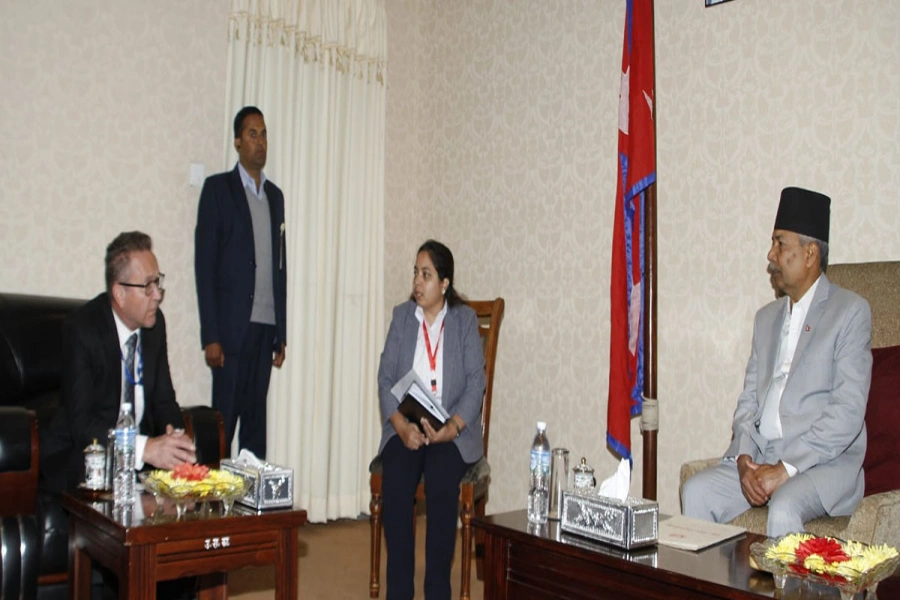
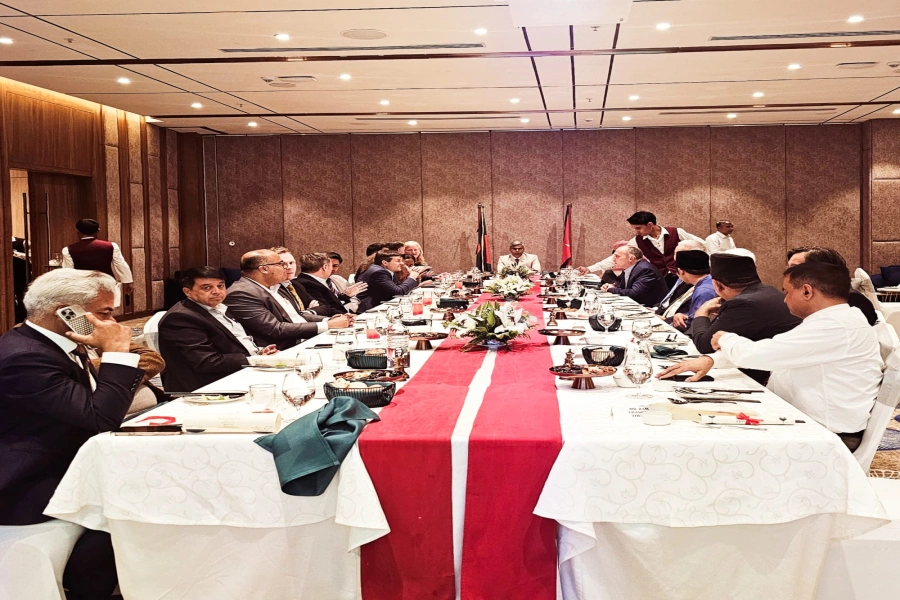
Demo, which is a collaboration of political parties of Finland for democracy, works with the youth wings of 19 major political parties of Nepal towards strengthening the voice of youth in politics in Nepal. [break]
Republica discussed politics with these foreign delegates.
Politicians in Nepal spend large sums of money during election campaigns. This extravagance is more often than not linked to corruption. How are such campaigns carried out in your country?
Sarita Niemi: Well, there have definitely been a few scandals related to campaigning. Political parties have been questioned on the source of money spent, and parties have been accused of taking money from various companies. However, in Finland, we have a law that restricts any political party from spending more than 15,000 Euros for a particular campaign.
What are the major lobbying points of the youth political parties? For example, in Nepal we have issues like education, health, girl child etc.
Kimmo Heikkinen: We have issues like gender-neutral marriages and also we fight against language-based discrimination and minority rights preservation. Apart from that, currently there are issues like economical crisis that came with the recession.
There are, however, some issues that are given high importance, especially by youth leaders. In Finland, we take up issues like student benefits. Although a very important issue, it’s amazing that politicians here have no such agenda.
What other things do you think Nepali youth politicians lack? What’s your overall impression of the youth politicians of Nepal?
Inka Venetvaara: The participation of women is extremely low here. Also, from how much ever I’ve seen of the youth politicians, I can say that they aren’t very young. Back in Finland, we have as young as fifteen-year-olds involved in politics.
Antti Kainulainen: This is my third visit to Nepal, and I’ve had quite a few opportunities to interact and observe the political system here. What I have particularly noticed is that politics here is a top-down process. It’s practiced in an extremely hierarchical method. The young leaders have very little or no participation in the major decision-making process. I think it’s very important to have a common ground to share thoughts because it’s always the young ones who will come up with fresh ideas. Also, the younger lot is educated and that’s always a plus point.
Politics is a huge part of college life. All governmental colleges will have politically affluent youth. Do you think it is possible to remain apolitical and still have interest in it?
Sarita Niemi: Maybe it is. In Finland, too, we have students highly involved in politics, and due to their engagement in it, taking regular classes or college takes a backseat.
Daniel Kukkonen: Although it’s difficult, it’s very important that it’s done. The youth of a country need to be aware of what’s going on in the country. As for the politicians, it’s always good to have educated ones. Only when the youth of the country are aware, they can support or disagree with the amendments and regulations policymakers bring about. It’s the youth that reacts.
What’s your say on the Nepali protest style? How do the Finnish people express their disagreement?
Heidi Auvinen: I think people there are calmer. There are strikes and protests, no doubt, but it’s done in a different way. We carry a two-hour-long march sometimes or maybe a speech is delivered in some public place. Also, an important part of strikes is that we have to inform the police beforehand. If it’s done without doing so, the strike is called illegal, and this is a very good aspect. It takes away a lot of bad aspects of politics.
Is good politics possible?
Julius Oforsagd: If politics is practiced with cooperation, it’s good politics.
Sarita Niemi: Also what’s important is that politics needs to be done openly. The citizens of a nation have the right to know about the movements and the ideas of their politicians, and it’s the foremost duty of the politicians to keep in mind the wants of the citizens. Politics in this form can be called good.
Inka Venetvaara: I can’t say that politics can be neat and clean. However, when political parties communicate with each other and understand the fact that no one party can have all its ideas implemented and compromise is inevitable, citizens will definitely enjoy good politics.

Inka Venetvaara is the acting President of the Green Party.
Julius Oforsagd is the Vice President for Union of the Centre Studies.
Sarita Niemi is the President for Social Democratic Students.
Kimmo Heikkinen represents Svensk Ungdom, the youth organization of the Swedish People’s Party.
Heidi Auvinen is the Secretary at one of the regional offices of Left Youth, the youth organization of Left Alliance.
Antti Kainulainen is a board member of the Christian Democratic Youth of Finland.
Jenna Simula is the second Vice President of the True Finns Youth Party.
Daniel Kukkonen is a member of the Christian Democrats.
Päivi Pulsa is on the national Board of the Student Union of National Coalition Party and in-charge of the working group of International Affairs.
Related story
Nepal and Finland to cooperate to reduce climate-induced natura...