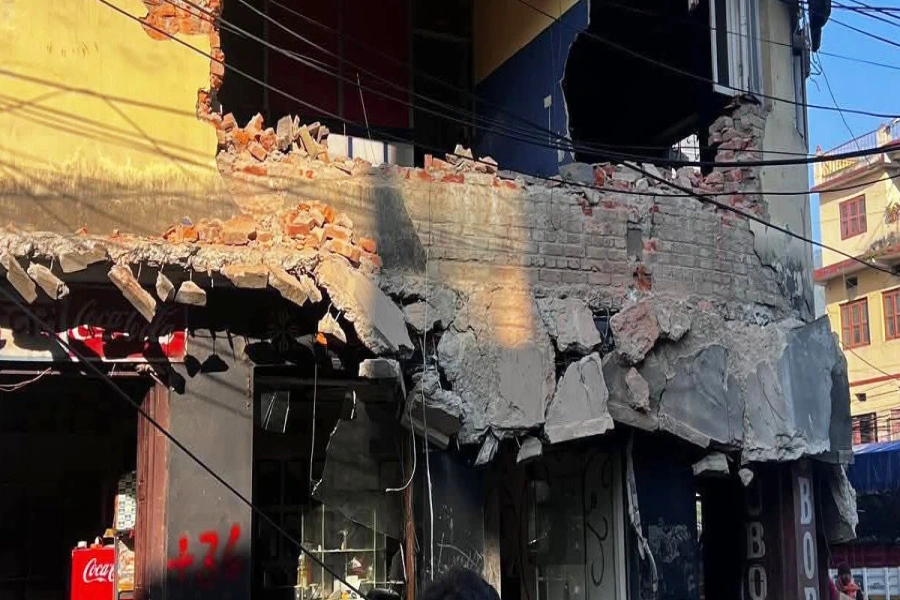
Moreover, these spaces also function as important codes and clues for us to peep into and ponder over the minds and souls of the custodians of the cities. They tell us that the more visionary and culturally- and artistically-rooted the guardians or the power personas, the better remain the ecology of their cities. They also make us aware that the politicians, development planners and policymakers, among others, need to practice certain ethics as part of creating moral codes and conducts for everyone to adhere to in order to maintain the ecology of our cities.
The ethically-corrupt custodians of the city are sure to further destroy the cosmic body: A system of the sky, water and land. They are also sure to spread diseases and deaths i.e. destroy the body of the humans and their fellow sentient beings residing here. The classical Greek tragedies very powerfully dramatize this physical as well as metaphysical relationship between the polis or the nation-state and the power personas on the one hand, and the physical as well as spiritual health of the fellow citizens on the other. Such relationship begins to appear as a metaphor of continuum as we start to ponder over the health of our cities.
One may find it natural to observe that many lanes and open spaces of our cities in the valley are shrinking everyday. Greeneries are disappearing at a fast pace as the machineries of the real-estate business are replacing them on a daily basis. Gone are the trees and the beauty that they used to exude by creating eye-soothing streetscapes as they have been butchered down mercilessly to expand roads and pavements. One may also assume it as natural to disappear in the concrete jungles constructed in hishimaru or banal architectural forms and styles, encounter piles of garbage and walk along the banks of rivers that stand still choked with human-generated filth. It may also be nothing surprising to see traditional water taps, known as hiti, that have gone dry. Similarly, it may also be a common experience for us to pass by houses, temples and public spaces designed in traditional Nepali architectural forms here and there, and then to disappear again into some dark lanes overcrowded with people and vehicles.
Once we realize the interconnection between politics and urban ecology, many things start to become clear to us.
Such a walk no matter how personal or natural it may be cannot exist outside the frame of national politics and policies of urban development that our cities in the valley have gone through so far. Therefore, as we walk down these visible tracks and trails no matter how narrow or wide they may be, we also happen to march through some invisible lanes of ideologies that the politicians and development policymakers in our cities have lived or failed to live by for decades. Once we realize the interconnection between politics and urban ecology, many things start to become clear to us. We stand with dismay and stare into the void hypothesizing that had the politicians and policymakers of this country acted wisely and pragmatically in and on time, the hitis of our cities would not have gone dry and the greenery would not have disappeared. Neither would have the rivers – sources of many lives and emotions – faced such a fate. The urban spaces in our cities could have maintained or retained the traditional aura and beauties. Architecturally- and culturally-important public spaces or heritage sites would have acted as “mother texts” through the regeneration of similar spaces and buildings in multiple forms and fashions within the cities and beyond. A different but beautiful urban civilization would have flourished.
Perhaps, we would not have been depending on foreign nations to preserve and protect our national or international heritage sites as our local talents would have emerged as the best minds for such jobs. Our jatras and festivals would have been more spectacular and vibrant, so would have our temples and monasteries. Gods and deities too would have become happier in the ethereal zones of the valley. Indeed, so much depended on politics and developmental policies that did not go the way they should have. If it had moved in the right direction, we would presently be experiencing a uniquely vibrant and beautiful urban ecology. Naïve policymakers and those in power have gradually, knowingly and unknowingly, destroyed the urban ecology of our cities. It is their avarice, guilt, stupidity and moral failures that have caused the rivers to stand still and hitis to go dry.
Instead of contemplating on the development of home-brewed skills and talents needed to construct bridges, buildings and roads, the politicians and development pundits of our nation have always been bent on bringing whatever support is given to us in the name of poverty alleviation. Frankly speaking, politicians and developmental policymakers in this nation have mostly spent their energies in impressing the diplomats and donor agencies to ensure a safe career for themselves.
My request to the politicians and developmental policymakers is to muse on the traditional face and facets or the urbanscapes of the valley. Muse upon the rivers and trees, arts and cultures and skills and talents of the locals of our cities. Urban development is inevitable but tame the process to strengthen the urban ecology so that the future generations will not point fingers at you. Please realize that so many things depend on how we do our politics. Change the politics and policies affecting the urban ecology so that the cities will look more beautiful and prosperous.
rijalshiva@gmail.com
Related story
Second South Asian Symposium on Microbial Ecology concludes suc...




-1200x560-1783336185.webp)