“In the 1970s, honking was so rare that people found it entertaining," recalls senior journalist Bhairav Risal.
According to Risal the city people, in those days, were too friendly to the sound that they, at times, did not ride the bus that had no music. “And passengers in those days wanted the music to be loud,” he added. [break]
In the past four decades, Kathmandu has grown so loud that the once entertaining sounds are now increasingly blamed for many health problems.
If the noise level continues to grow at the same rate, it will not take long for the people in the core city area of Kathmandu to shout at each other even for a gentle conversation.
Experts say that people exposed to excessive noise pollution over a period of time develop hearing impairment. Padam Ayer, a constable with Nepal Traffic Police, who is deployed in an area with a heavy flow of traffic, is an example.
“I have felt my hearing power decline over the years,” he said. The cases of hearing impairments are high among the traffic police.
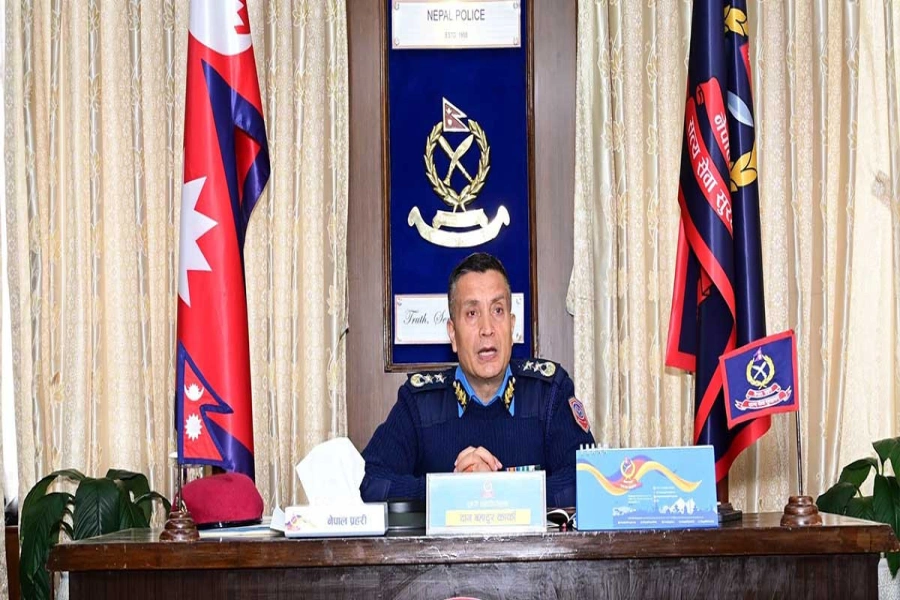
“Exposure to the sound level over 60 decibels for 13 to 15 minutes poses threat to our health, including the danger of developing hearing impairment,” said Deputy Superintendent of Police Pawan Kumar Giri, spokesperson of Nepal Traffic Police.
Noise pollution affects people in various ways. Keshav Karki, 45, who runs a trekking agency in Thamel, finds it difficult to deal with trekkers during the peak traffic hours. “I find it hard to deal with my clients outside my office due to the honking from bikes and taxis," said he.
Upendra Tulachan, 47, from Chabahil-7, loses his temper whilst stopping for the traffic signals. “A five seconds delay is reason enough for people to blare horns, even when they know honking does not help.”
Bijaya Laxmi Maharjan, 25, from Kirtipur-10, has a hard time commuting to her office because of all the sound. “The noise is even more deafening at the cross-roads. And I usually have a headache by the time I reach the office,” she said.
Phurba Lama Sherpa, 16, an eleventh-grader living in Thamel, suffers not from the traffic noise, but the blasting music from neighborhood dance bars. He has found a way to drown out the dance bar noise. “I turn on a television as the bars begin their business,” he said.
Throwing light on the sound pollution caused by traffic, Sureshwor Lal Karna, audiologist and chief of Speech and Hearing Unit at Teaching Hospital, Maharajgunj, said “The standard sound level is 85 dB (A) for busy city areas, but we exceed that limit and reach up to 120 dB (A), which is very dangerous.”
“We have fined those who violate the traffic rule regarding sound,” said DSP Giri. “But then the fine amount is only 25 to 200 rupees for violating the rules related to noise,” he added. According to Giri, there are no clear rules about how to penalize those who honk unnecessarily. Traffic policemen are most susceptible to the sound pollution but still we are helpless.
Noise level in the areas surrounding dance bars has not been measured yet. It surely crosses 120 dB (A) with vehicles carrying bar customers blasting horns in the middle of the night as they leave. The midnight noise comes mostly from pick-up vans and taxis.
Monitoring on regular basis by concerned authorities can certainly keep the noise coming from dance bars to the standard level. There is a provision that the dance bars must be sound-proof. According to the police, the problem with the policy is that the penalty is very low if one weighs the damage noise coming from dance bars causes to public health. “The penalty must, at the least, be fifty-thousand rupees for not following the code,” said Moti Maya Tamang, 52, a cold store owner at Ashok Galli, Thamel.
As for the traffic-caused sound pollution, the enforcement of the policy from the government alone cannot minimize the noise level. For the better result, people should be made aware that the unnecessary noise is bad for their health. According to Karna, the sound pollution has auditory and non-auditory effects. Hearing impairment is auditory effects, whereas non-auditory problems concern negative effect to the cardiovascular system, headache, stress, and crankiness. The most vulnerable to sound pollution are the school children. “Our study found that the student exposed to higher level of sound pollution had lower performance than those who were exposed to lesser level of noise in the school surroundings,” Karna added.
According to Giri, vehicle owners and drivers often replace the standard built-in horns with the noisiest ones available in the market. "It is the job of the transportation department to cancel the registration of such sound polluters,” said Giri.
“They expect traffic police to solve the problem of noise pollution. But we are not in a position to do so despite the fact that we are the worst sufferers of the problem,” he said.
´Sound level in core area is harmful´
Sureshwar Lal Karna,
Audiologist and Chief of Speech and Hearing Unit, Institute of Medicine, TU, Maharajgunj
Audiologist and Chief of Speech and Hearing Unit, Institute of Medicine, TU, Maharajgunj
What is the standard sound level recommended by the government of Nepal for core city area?
The recommended standard sound level for Kathmandu is 70dB (A), but in the core city area, recommendation level has been raised to 85 dB (A).
What is the current level of sound in the core city area in Kathmandu?
The sound level crosses 85 dB (A) in the core city area, which is harmful. Sound-wise the core city of Kathmandu is unhealthy.
How is hearing impairment related to noise pollution?
When you are exposed to an excessive sound, fire crackers, bomb or other kind of explosions, it does not take time to diagnose the problem. But in the case of hearing impairment due to traffic sound pollution, the patients hardly know the cause of the problem because it is a gradual process. When we learn the patience´s living surroundings and the level of sound they are exposed to, only then we know the cause of the hearing impairment. Hearing impairment in people working in iron factories, and other metal work-shops are higher in numbers, than those exposed to traffic sound pollution.
What should the government do to minimize the sound pollution?
The government should come up with adequate disseminative strategy and plans whilst introducing environmental policy regarding the sound pollution. People just don´t seem to take notice of health hazard owing to sound pollution. Government should first reach to parents and school in order to make the implementation of the policy effective. Policy and traffic police alone cannot achieve the desirable sound environment.
Related story
Crusher plants causing noise pollution: Locals