“They’re so out of touch.”
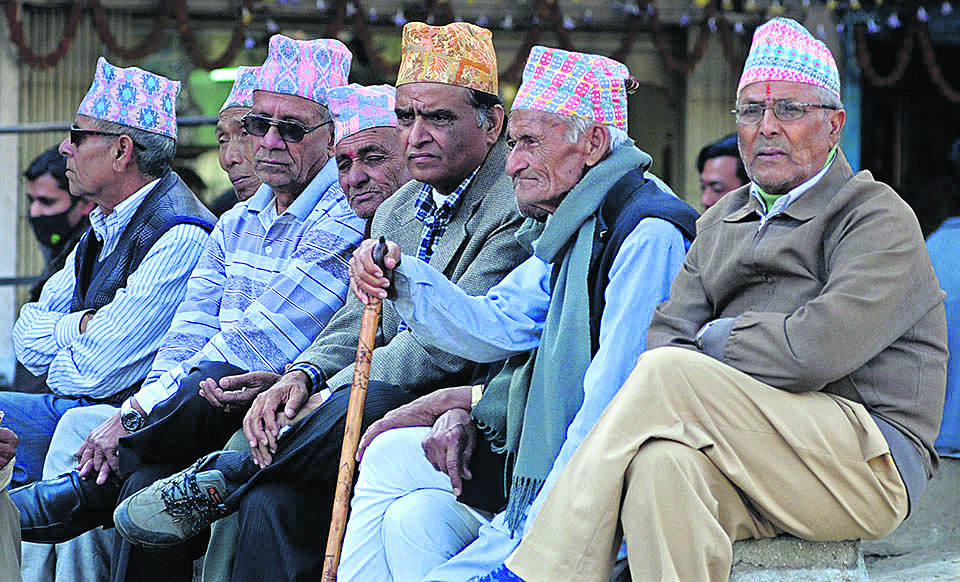
I hear it in the impatient, staccato sighs of Gen Z as they watch an older person struggle with a QR-code menu or pause, searching for the settings icon on a brand-new interface. To a generation that seemed to hear the chime of a smartphone in the womb and held a tablet as a toy before they could form a full sentence, we, the cohort born in the ’50s, ’60s, and ’70s, look like digital immigrants who lost our maps in a storm. They see the graying hair and the deliberate pace and assume we’re obsolete. They see a lack of instant proficiency and assume a lack of education.
They couldn’t be more wrong.
The irony of this modern pity is that it’s aimed at the most radical, rebellious, and adaptable generation in human history. We are not relics; we are survivors—the “Bridge Generation,” uniquely able to inhabit three different centuries at once and thrive in them all. The young may master the virtual world, but we are experts in the material one—and as the world grows more fragile, it is our “analog” manual they will ultimately need to survive.
Before we were labeled “old folks,” we were the disruptors. Today’s youth are praised for challenging norms on social media, but we were the ones who did the heavy lifting of breaking the first, most rigid social cages. We looked at centuries of suffocating tradition and said, “No more.” We were the women who pushed aside the ghumto (veil) and gunyu cholo, evolving our identity through the sari, then the kurta, and eventually into pants. We even dared to wear the “god-forbid” half-pants when the world whispered that a woman’s place was to remain hidden beneath layers of fabric and modesty.
SC stays ban on analog cable TV

We didn’t post about breaking stereotypes; we lived our protest with every step at home and outside. We refused to be confined to the kitchen. We fought and claimed our place in schools and university classrooms and became professionals. We became doctors, lawyers, and engineers, professors and scientists. We were the rebels who crossed oceans alone to study abroad, rode motorbikes through crowded streets, and drove cars when society insisted it wasn’t our place. Our education was earned through the courage it took to dismantle the expectations our ancestors inherited. We didn’t just change our clothes; we rewrote the very permission structures of society.
What Gen Z calls “progress” has come at a staggering cost: the erosion of the Indigenous knowledge that sustained humanity for millennia. Our generation didn’t just live in houses; we knew how to build them from the earth up. A home was not a product to be bought from a developer but a creation of the community itself. We knew the exact mortar mix—the ratio of lime, clay, and husk—and how to lay each stone so the structure could stand for a century against the monsoon rains.
We were once the masters of the khet-bari (fields), carrying agricultural wisdom now vanishing into the digital ether. We could read the clouds without a weather app and judge the soil’s health by its scent. We understood the alchemy of food preservation, the arts of drying, fermenting, and storing that sustained families through the leanest months. From source to table, we knew how to process milk, transforming a raw product into a dozen lifelines. We weren’t merely "consumers" of life; we were its primary architects. To eat was to work, and to live was to understand how the world functioned beneath its surface.
Our journey became a masterclass in global adaptability. We still remember the heft of the bucket and gagri and the powerful sense of community at the village well, where news and stories flowed as freely as the water itself. We started with soil under our fingernails in the fields and, as global nomads, eventually leapt into the high-tech West of the ’80s, where computers and the emerging “push-button” lifestyle of microwaves and electric ranges made heat feel like magic.
Our true strength revealed itself when we returned. In the ’90s, going back to Nepal or India brought a profound reverse culture shock: we went from the instant glow of the American kitchen to the smoky wisdom of the wood-fired stove. Yet nothing held us back. We became deeply adaptable because we had already done—and could still do—every level of effort for the same task. If there’s a microwave, we use it; if there’s only a bundle of wood and a stone, the meal still gets cooked. When push comes to shove, we can move effortlessly between different “time zones” of human progress.
It’s funny how a single bar of signal, or lack of it, makes the modern world feel like it’s stalled out. But for us? Life doesn't just stop because the bars disappear. We don't scramble for a charger or a better window. We just remember how it used to be. Back then, news didn't travel through a tower; it moved from porch to porch and across the ridges, just a chain of folks carrying the word. It wasn’t instant, but it always got there. We didn't need an algorithm to find our neighbors; we just looked up and waited.
There is one thing we know that the "instant generation" has yet to learn: there are no shortcuts to anything that truly matters. Today, everything is just a swipe away, but we are the ones who have witnessed the slow, grueling arc of change. We know that success, character, and mastery are nothing like flipping a smartphone screen. They demand the same patience it once took to wait for a trunk call and the same persistence it took to haul water in a gagri from a distant well.
Young people today speak of "transparency" and "democracy" with an air of discovery, as if these were terms invented by Transparency International or a modern NGO. But where do they think that foundation came from? It was the same "worthless," "analog" people they now pity who gave them the very glimpse of democracy they enjoy. We fought the battles for transparency when it meant standing in the streets, not just typing a hashtag.Now, it is their turn to preserve it, not destroy it. Building a stable house—or a stable nation—takes years of meticulous labor; destruction is immediate. You can kill a forest in a day, but it takes a century to grow one. Even a baby must stay in the womb for nine
months to be born, and it takes another 25 years before they can truly start thinking like an adult. There are no shortcuts to maturity.
What the younger generation mistakes for a lack of "education" is actually a Dual Operating System.Their OS is purely digital. It is fast, but it is fragile. When the battery dies or the infrastructure falters, their world grinds to a halt. Our OS is a hybrid. We have the "Analog OS"—the knowledge of the mortar, the harvest, and the social intelligence of the "yell across the hill." And we have the "Digital OS"—the tenacity to re-learn life every single decade.
Nothing is truly lost as long as our generation is still here. But the new generation needs to communicate better if they want to survive. They need to talk to their grandparents to get a glimpse of the past and a manual for the future.
To the Gen Z readers, pause for a moment, look up from your screens, and truly see the people who built the world you stand in today. Honor them for what you have now. Remember, we cleared the path so you could walk it freely, without a veil and with the confidence to claim your place in the world. You don’t need to repeat every struggle or hard lesson we went through. Instead, take our experiences to heart, use what we’ve already learned, and build something that lasts.
We have our hands out for you to take. All you need to do is grab them and use that connection as your ultimate advantage. You don’t have to relearn every hard lesson from scratch; you can "download" it directly from your grandparents' experience and use it constructively to build something that lasts.
We are the Bridge Generation. We’ve seen it all. We have seen two millennia. We lived through the turn of the millennium, watched old traditions crumble, and had to figure out every new piece of tech as it showed up. We’re handing you the keys here; now we’re just waiting to see if you’ve got the sense to take our lead and build a future that doesn't fall apart the second the power goes out. I have faith in you. I know you can do it. It’s just a matter of time!!