Despite the failure of the Nepali delegation to convince the Indian side to provide an additional 100 MW electricity to Nepal at a concessional rate, the PM will request the Indian authorities to consider the proposal once again.
India has rejected Nepal´s request for supply of an additional 100 MW of power at concessional rate.
“We will still take up the issue with India during the PM´s visit,” Minister for Energy Dr Prakash Saran Mahat told myrepublica.com.
Mahat added that Nepal will request India to give the additional power at a concessional rate thereby taking the total import from India to 150 MW. India is currently supplying 50 MW from various points.
Mahat said that for the power import, Nepal will also request for ´upgradation´ of the transmission lines, which “is a must” for future power trade. “It will take two to three years to build the 145-km Dhalkebar-Muzaffarpur cross-border transmission line. We will press for completion of at least one or two more lines immediately.”
The government, which was skeptical whether or not to take up the power trade agenda with the Indian government after the failure of the talks at the Power Exchange Meeting, decided to go ahead with the agenda on Saturday.
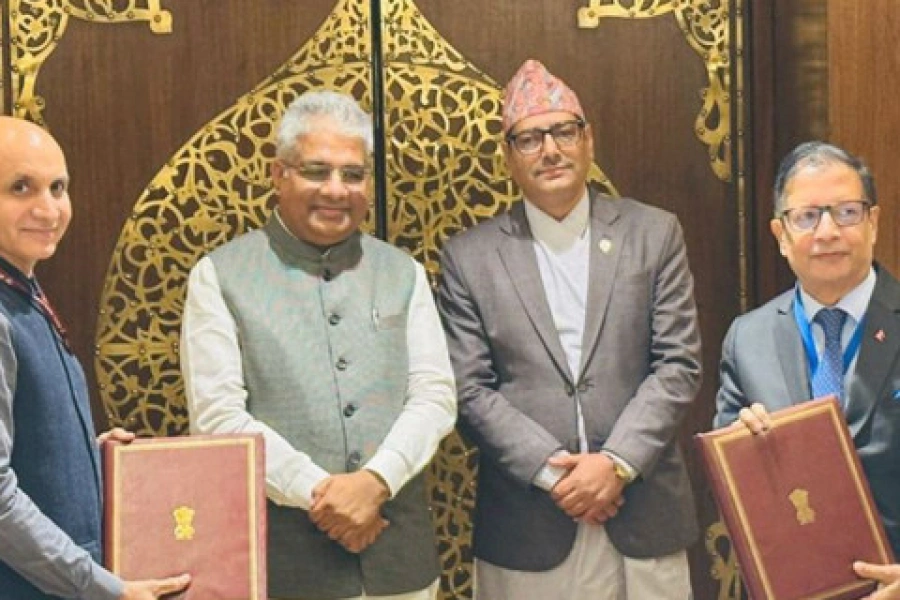
The Power Exchange Committee meeting held between Nepal and India from August 10-11 at New Delhi ended ´inconclusively´ after India rejected Nepal´s proposal outright. The Nepali delegation headed by the Managing Director of Nepal Electricity Authority Dr Jivendra Jha upon arrival on Wednesday said that India is willing to export additional power only at commercial rate and, therefore, it ´rejected´ to give the additional 100 MW as sought by Nepal.
The NEA authorities, however, say that the additional power import is crucial for Nepal for the coming winter. The country faced a load-shedding up to 18 hours a day last year.
“It will be better if the government still takes up the request before India as a political understanding can be reached to import the additional 100 MW,” a NEA official and a member of the negotiating team said on condition of anonymity.
India had also rejected Nepal´s request for the additional 30 MW power supply at the peak of load-shedding crisis in April-May last year.
akanshya@myrepublica.com
Related story
Cooperation for trade