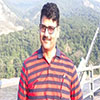
And, against all odds, he has. Tamang, now 37 and living with his wife and two children in Mill Valley, is the founder of the year-old Nepal FREED, a nonprofit organization devoted to building schools and educating the children of Nepal.
“When I was in my village, I never even dreamed that I would be here in Mill Valley today,” he said. “I never even thought I would end up coming to America, but life has taken me here. I feel so lucky.”
Through fundraising events in Marin and at Park Elementary School in Mill Valley, where the Tamang children, Nyima, 9, and Sonan, 6, are students, Nepal FREED (Nepal Foundation for Rural Economic and Educational Development) has built seven classrooms in two villages, sponsored a soccer team and is in the process of hiring a teacher. More than 350 children have directly benefited.
On Nov. 5 at Park School, Tamang and Nepal FREED will present a Diwali celebration, an annual Nepalese holiday that marks the end of the harvest season.
“As the days grow shorter, the lighting of candles symbolizes the victory of light over dark, good over evil,” he said, sounding a perfect metaphor for the triumph of education and prosperity over ignorance and poverty.

Need for Native Language Education in Nepali Schools

Tamang works as a checker at Whole Foods in Mill Valley, making him a familiar face in town. Whole Foods is donating the refreshments for the Diwali party.
“We want to celebrate in Mill Valley and at the same time raise money for a school in Nepal,” Tamang said. “I appreciate the parents of students at Park School and the people in Mill Valley who have helped me achieve my dream of educating the children of Nepal. In one year, we have accomplished a lot.”
Tamang grew up in the village of Bhalche, northwest of Kathmandu, the capital. Villagers had no electricity, running water, telephones, hospitals or much hope. He had to walk great distances over rugged mountain terrain for hours to attend school. When he got there, he sat with as many as 100 students in the classroom. But education was the only way he could see to escape the horrors of poverty.
“There are so many problems in Nepal, such as child slavery and the trafficking of women to India for prostitution,” he said. “The political leaders are fighting for their own selfish interests. They send their children abroad to get an education, but they don’t care about poor people who are suffering. I see that the only way to solve these problems is through promoting education.”
Tamang was too poor to be able to finish high school. He left home for the promise of a better life in Kathmandu, working as a porter for a friend’s trekking company. It was a promise unfulfilled. At least at first.
“I faced tremendous problems, mentally and physically,” he recalled. “I was hungry for three days. I slept in an abandoned car with mosquitoes biting all night. I went on my first trek with nothing. I had no jacket, just a T-shirt and a pair of slippers. We were at 15,000 feet, and it was so cold. But the more difficulties I faced and the more I learned about different cultures, the more I saw how important education is.”

For 10 years, Tamang led tourists on treks into the mountains, working his way up to manager of the trekking company. He married, and he and his wife, Biba, who now works as a nanny, had two children. When a Maoist insurgency threatened to overthrow the country’s parliamentary government, Tamang knew he would have to leave the country.
In 2004, with the help of American sponsors he met on treks, he left Nepal and came to the United States. He had to leave his family behind, promising to bring them later, once he was established. He arrived first in Wisconsin, where his sponsors were, and later moved to Mill Valley, where one of his trekking friends lived.
Culturally, he had some adjusting to do. He laughs about the first time a Whole Foods customer asked him if the market had a rest room. Tamang said no, thinking that a rest room was literally a room where people go to rest.
After 1½ years, his family was able to join him. He recalls picking them up at the airport and his son telling him, “Daddy, you’re rich now” because he was driving a car.
But wealth has never been Tamang’s goal. He has not lost sight of that vow he made to his mother on the morning he left home. And he hasn’t forgotten the children of Nepal, the ones who haven’t been as fortunate as he’s been.
He got his green card in 2008, and started Nepal FREED the following year. His immediate goal is to raise $20,000 to buy computers and establish a library in Kahule, a village near where he grew up.
“I was born on this earth with nothing, and I am not going to take anything with me when I go,” he said. “So I want to do something very important in my life, to share my compassion and love with others by doing what I can.”
(Marin Independent Journal)