Food inspectors in the American state of Georgia had to close down a famous restaurant in September for failing a routine inspection. Among the eatery’s sins (as noted in the inspection report): “Employee contaminated her gloves prior to wrapping silverware by handling cell phone… Floor tiles are in disrepair or missing in several locations in the kitchen…” Food inspection there is effective because it is done year-round and without any prior warning. The transparency of the whole process makes it easy for consumers to know if the erring party has taken remedial measures and is ready for business again. We don’t expect our food inspectors, or other market monitors, to be as rigorous. The market monitoring mechanisms in Nepal are severely understaffed and underfunded. The rules are also rather ambiguous, making prompt action difficult. Even factoring in these constraints, the current state of market monitoring in Nepal is simply unacceptable. [break]
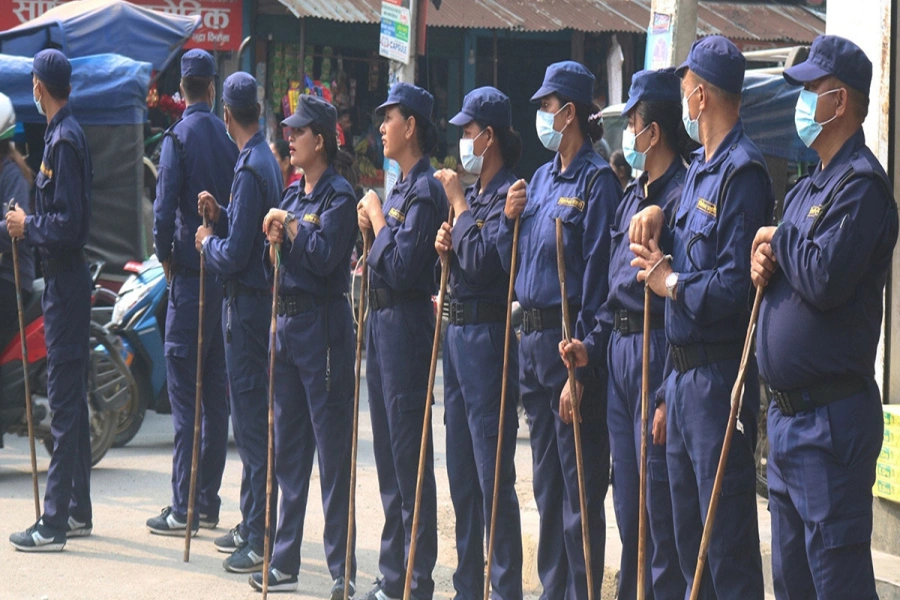
Every time the festive season rolls around, well-dressed personnel from law enforcement and regulatory agencies are seen on TV raiding business firms, especially food outlets, selling substandard products. But soon as festivities end, these ‘market inspectors’ almost disappear from the scene. Then, out of the blue, there is news about their ‘sweeping campaign’ to clean up the market. For instance, a couple of months ago the Department of Commerce and Supply Management (DoCSM), one of the three government bodies authorized to monitor the market, raided and subsequently filed cases against some jewelry shops selling substandard gold jewelry. But what happened after that, no one knows. Were the culprits brought to book? Are the businesses that were warned for their failure to comply with consumer regulations but are back in business now in compliance? The modus operandi of the two other government market monitors—the Department of Food Technology and Quality Control (DoFTQC) and the Nepal Bureau of Standards and Metrology (NBSM)—are equally vague and arbitrary.
DoFTQC filed cases against 22 food outlets/companies during Dashain and Tihar on charges of using substandard materials in sweets and failing to maintain proper hygiene in production processes. But some of the famous eateries that were raided are back in operation, and people don’t have a clue about the safety of the food on offer. The failure to enforce food quality regulation is clearly reflected in state of eateries along the Prithvi Highway. When DoFTQC began a campaign to categorize the standard of the eateries in terms of quality of service and food, only a dozen of the 183 inspected eateries were in compliance. But the vast majority of these eateries are still in operation, without any apparent improvement in the quality of their food and services. Most troubling is the fact that even the available resources and manpower are not being utilized properly. If they were, their actions would surely have been publicized on a regular basis. This in turn would show that they are accountable to the public. Measures like raiding shops on Dashain and Tihar have come to be seen more as publicity stunts than genuine measures to protect consumer rights. Whatever our constraints, Nepali consumers deserve better than what they are getting.
Related story
Lessons from Hong Kong protests