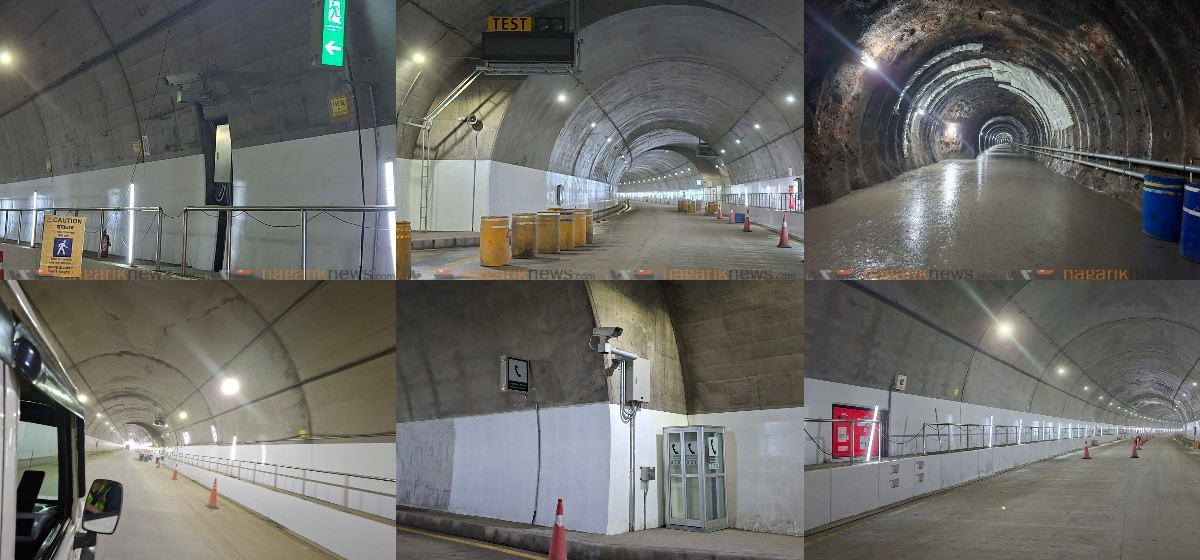
SISNEKHOLA, June 29: The Nagdhunga–Sisne Khola tunnel is now nearly ready for operation. Except for a few minor works, all construction has been completed.
According to Sanjay Panthi, Senior Division Engineer at the Nagdhunga Tunnel Construction Project under the Department of Roads, more than 92 percent of the tunnel work has been completed. “The contractor's deadline ends in Kartik (October–November), and the tunnel will be operational from Poush (December–January),” he said.
The contractor company is preparing to hand over the tunnel to the Department of Roads before Kartik after completing all work. The project office stated that vehicle testing is currently underway inside the tunnel. Some minor works remain on the Sisne Khola side.
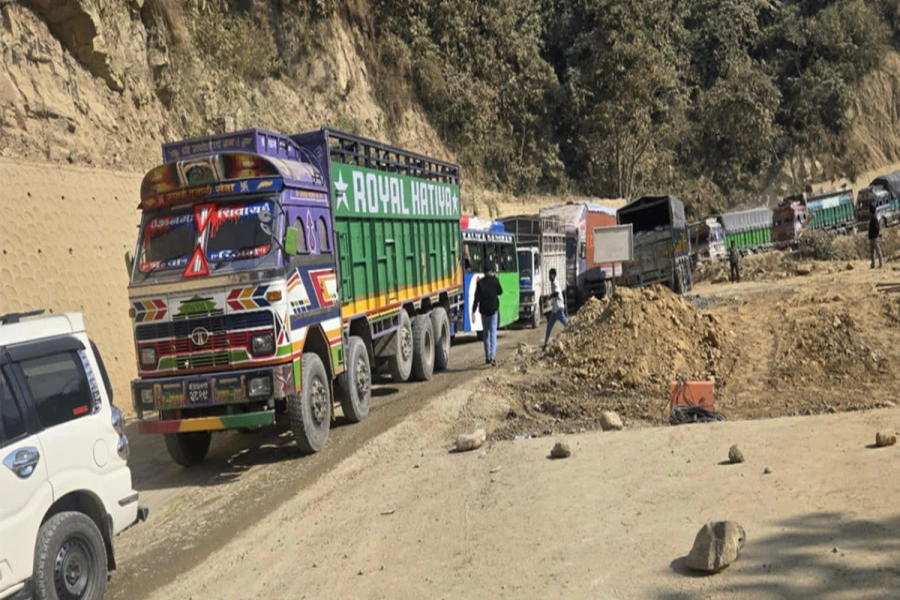
Once operational, the tunnel will eliminate the need for vehicles entering or leaving Kathmandu to endure hours-long traffic jams at Thankot/Nagdhunga. Vehicles using the tunnel will complete the stretch within half an hour. According to Engineer Panthi, the tunnel will shorten the route by 2.5 kilometers. Currently, the distance from Balambu to Sisne Khola is 7.5 km, which will be reduced to 5 km after the tunnel comes into use.
Private Sector to Operate the Tunnel
According to Engineer Panthi, the operation and management of the tunnel will be handed over to the private sector through a tender process.
Coronavirus fear stretches traffic jam in Bhaktapur

The Ministry of Physical Infrastructure and Transport has already prepared a directive for tunnel operation, management, and maintenance. The directive has been sent to the Public Procurement Monitoring Office for approval. Once the office grants its approval, the ministry will forward it to the Cabinet. After Cabinet endorsement, the directive will be implemented, and then the Department of Roads will call for tenders.
Toll Between Rs 50 and Rs 500
The draft directive proposes toll charges ranging from Rs 50 to Rs 500 for using the Nagdhunga–Sisne Khola tunnel. According to a department official, small four-wheelers to large 14-wheel trucks will be required to pay the toll before entering the tunnel.
However, motorcycles and vehicles carrying flammable fuels such as diesel and petrol will not be allowed to enter the tunnel. The proposal suggests a fee of Rs 50 for small vehicles, Rs 200 for buses, and up to Rs 500 for large trucks. Different toll rates have been proposed for vehicles that enter and exit through the tunnel.
The directive explains traffic movement within the tunnel under various headings. Once the toll is collected, the toll-operating company or agency will be responsible for ensuring services such as oxygen supply, fire safety, security, and communication. They will also be responsible for providing electricity inside the tunnel.
An official at the ministry said that drafting the legal framework took time because this is Nepal’s first tunnel of its kind. "We are learning from this experience, and it will be easier going forward," the official said.
Construction History and Financing
Construction of the tunnel began in 2019 (2076 BS) and the deadline has already been extended twice. The tunnel is being built by Japanese contractor Hazama–Ando JV. The project is funded with Rs 16 billion in concessional loans from JICA, with an additional Rs 9 billion spent by the Government of Nepal on land compensation and other expenses. The construction work includes underpasses, box culverts, and overpasses.
Three bridges at the tunnel entrance are completed. The project said flyover (overpass) construction is also almost done. The flyover will be one-way—only vehicles leaving Kathmandu can use it, while incoming traffic will not be allowed to use the flyover.
Passenger Safety Is Top Priority
According to project consultant engineer Ramesh Koirala, passenger safety measures inside the tunnel will differ significantly from surface roads. On open roads, passengers can be rescued from any direction in emergencies, but this is not possible inside a tunnel. If an incident occurs, both forward and backward movement may be blocked, preventing escape or quick rescue.
Therefore, an "evacuation tunnel" or rescue tunnel has been constructed parallel to the main tunnel, 30 meters away. Seven gates connect the main tunnel to the rescue tunnel, according to Koirala.
Telephone booths and CCTV cameras have been installed in the tunnel. A control room has also been set up to coordinate emergency response in case of an accident. Arrangements are being made to ensure mobile phone networks work inside the tunnel. Ambulances and fire trucks will be on standby at both tunnel entrances to respond immediately in emergencies.
Continuous oxygen supply is the most sensitive issue inside the tunnel. The accumulation of vehicle emissions can cause oxygen deficiency. To counter this, a ventilation system with 15 jet fans has been installed. These fans expel harmful gases from inside the tunnel and draw in fresh air from outside.