An “ism” is more than a suffix. It is an ideology—sometimes for good, often for ill.
Racism, casteism, sexism, classism, and ageism do not merely describe personal prejudice—they are structured mechanisms that rank humans and convert difference into hierarchy.
Linguicism belongs in this category of injustices. It is discrimination rooted in language: who speaks which language, with what fluency, accent, or eloquence, and how that performance is mistakenly interpreted as intelligence, competence, or legitimacy.
Linguicism in Nepal: Quiet but Pervasive
In Nepal, linguicism operates quietly yet pervasively. It rarely announces itself as discrimination. Instead, it disguises itself as “competence” or “communication skills.” Fluency is confused with intellect. Accent is mistaken for capacity. Eloquence becomes evidence of leadership, while linguistic difference is read as deficiency. The result is a silent but enduring hierarchy that privileges one linguistic community while marginalizing dozens of others.
Language, Power, and the Illusion of Superiority
Nepal has more than 108 languages spanning the Indo-Aryan, Tibeto-Burman, and Dravidian families. Yet social mobility, educational success, and access to state power remain disproportionately tied to fluency in Khas Nepali. What began historically as a lingua franca has hardened into a sociopolitical filter—one that sorts citizens long before their actual abilities are assessed.
Modern linguistics leaves no ambiguity on this matter. Former MIT linguist Professor Noam Chomsky, whose work reshaped the scientific understanding of language, has emphasized that “all human languages are equally complex and expressive.”
Judgments about “inferior” or “superior” languages, he argues, are not scientific but political. A person who speaks any dialect possesses the same linguistic competence as someone who speaks a standardized language. Yet in Nepal, this scientific truth dissolves at the classroom door.
From Classroom to Bureaucratic Machinery
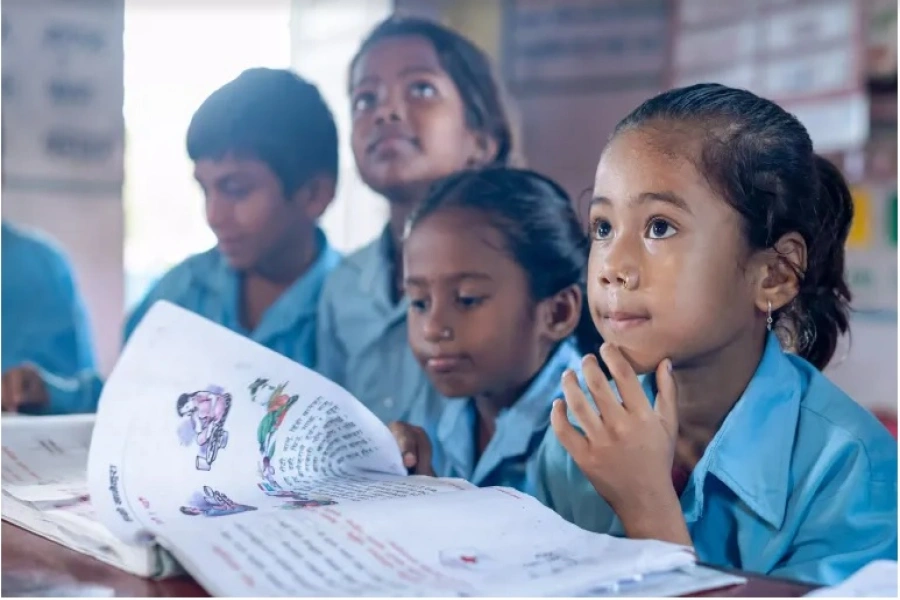
At the level of a village primary school, linguicism often appears in its earliest and most damaging form. A child whose mother tongue is Tamang or Maithili may struggle with Nepali-medium instruction and is quickly labeled “dull” or “slow.” Meanwhile, a Khas Arya child who speaks Nepali fluently at home, often with Sanskrit influence, is assumed to be bright and capable. The difference is not cognitive ability but linguistic proximity to societal validation.
Defiant ex-leader Jacob Zuma compares S.African judges to apart...

This early prejudice accumulates over time. Linguistic shame, once internalized, produces silence, withdrawal, and self-censorship. Many older-generation Nepalis still recall being punished for speaking their mother tongue in schools—an experience that deeply ingrained inferiority and shame over one's native language.
Over time, this practice channels linguistic privilege upward and linguistic disadvantage outward. By adulthood, linguicism has already done much of its damage.
Nepal’s civil service, judiciary, political parties, and mainstream media reveal a striking pattern: an overrepresentation of fluent Khas Nepali speakers. At a Freudian, subconscious level, standardized Khas Nepali has come to signify competence and acceptance.
Peculiar accents or grammatical flaws, even when accompanied by high intellectual or technical competence, are still interpreted as inadequacy.
Harvard University cognitive scientist Steven Pinker, writing on language and social judgment, observes that accent is among the most reliable indicators of social class and one of the hardest prejudices to eliminate. Nepal’s experience confirms this insight: an individual's accent or fluency acts as a societal gauge of being considered capable—or otherwise.
Nowhere is this clearer than in civil service exams, conducted almost exclusively in Khas Nepali. These exams impose a linguistic handicap on capable candidates who speak or write primarily in their mother tongue since early years at the community level—be it Urdu, Sherpa, or other languages.
This is not meritocracy; it is gatekeeping. When linguistic fluency becomes the filter, the state ignores diverse abilities while reinforcing homogeneity.
For citizens whose first language is not Khas Nepali, interaction with the state becomes a constant act of translation—often without translators. Legal documents, court proceedings, land records, and government forms assume linguistic mastery. Misunderstanding is interpreted as ignorance; hesitation as incompetence.
Economically, linguicism narrows opportunity. White-collar employment rewards linguistic capital accumulated over generations.
Even within Khas Nepali, hierarchies persist: urban, hill-accented Nepali carries mainstream acceptance, while ethnic or regionally inflected speech is stigmatized, such as Newari or Sherpa-influenced Nepali.
One's knowledge of land, agriculture, ecology, or community governance—often profound among marginalized groups—is routinely undervalued because it is not articulated in the “right” language.
Although this pattern is not unique to Nepal, its persistence here is especially stark given the country’s proclaimed multiculturalism.
From Mono-Identity Monarchy to Multilingual Federalism
For much of its modern history, Nepal pursued a mono-identity model of nationhood: one language, one religion, one culture.
Under the Shah monarchy, and later in the Panchayat system, Khas Nepali was elevated as the language of nationalism, while other languages were reduced to folklore—celebrated symbolically yet excluded from power.
The political transformations of 1990 and 2006 marked a pivotal shift. The Constitution of Nepal recognized the country as multi-ethnic, multilingual, multireligious, and multicultural.
Federalism, in principle, decentralizes linguistic authority and allows provinces and local governments to use mother tongues in administration, judiciary, and education.
Symbolically, this is significant, but structurally, linguicism remains resilient. Khas Nepali continues to dominate civil service exams, the judiciary, and media.
Now, English has layered itself atop Khas Nepali, creating a new hierarchy that often benefits the same social groups.
Federalism has opened doors, but many remain only partially unlocked.
Confronting Linguicism
Dismantling linguicism requires more than constitutional recognition. It requires identifying the problem.
Like racism or sexism, linguicism thrives when invisible. Education policy must move beyond token mother tongue inclusion toward genuinely multilingual pedagogy, where native languages are treated as intellectual foundations rather than obstacles.
Civil service and administrative systems must recognize translation and interpretation as rights—not mere accommodations.
Symbolic reforms also matter. Institutions such as Nepal Rastra Bank could affirm linguistic plurality by representing major native languages (with at least 100,000 speakers) on its currency notes, signaling that Nepal's identity is pluralistic rather than singular. This would also show respect to taxpayers speaking various languages.
We must accept that an “official” language is not a badge of mainstream capability; accent is not intelligence; fluency is not competence.
A federal democratic Nepal cannot afford a system where language silently determines whose voice matters and whose is sidelined.
As mentioned, linguicism, like every other “ism,” is ultimately about state reach and sociopolitical power.
Confronting it does not weaken national unity; it strengthens society.
When language ceases to be a weapon of exclusion, it can finally become what it is meant to be: a medium of shared dignity in a plural nation like ours.