This is an interesting time for Nepal watchers in India. A stalemate in Kathmandu in the process of writing the constitution has forced Maoist leader and Ex-Prime Minister Baburam Bhattarai to try lobbying in India for support against the ruling coalition.
Related story
NC will stay away from religion, say NC leaders

In interviews with The Hindu and The Hindustan Times, Bhattarai has openly pleaded for Indian interference. A 'key role' for India in Nepal's politics (which was later corrected as 'positive role') is, according to him, quintessential.
In the elections for Constituent Assembly in November 2013, with the highest ever turnout in Nepal's democratic history, Nepali Congress emerged the largest party and CPN-UML was a close second. It was a courageous and revolutionary statement by the people, given the backdrop of a violent opposition of elections by a faction of Maoists headed by hardliner Mohan Baidya. The Maoist faction that participated in the elections under the leadership of Pushpa Kamal Dahal 'Prachanda' and Bhattarai lost, finishing a distant third.
This mandate has scared the Maoists. Right after their election defeat in 2013, an attempt to misinterpret the mandate was initiated, calling it Matadesh (mere 'Vote Count') and not the real Janadesh or 'will of the people'. This has become the biggest political joke in Nepal's non-Maoist intellectual circles. Obviously, it has failed to have the desired impact.
The ruling Congress and UML have been united on most contentious issues. And the fourth largest party, Rashtriya Prajatantra Party of Kamal Thapa, seems to be towing similar lines, apart from their demand to reinstate the 'Hindu Nation', an idea not supported by the two largest parties. Together, they have two-thirds majority in the assembly, enough to promulgate the constitution by due process.
If a constitution is promulgated by two-thirds majority, the Maoists will have almost no say in it. And hence there will be no political gains for them. Therefore, they have now united with the Madheshi parties to impede the process. They have also joined shoulders with the radical Maoist faction led by Baidya which had initially opposed the elections, which is openly anti-India and which has a declared motive of dissolution of the CA. This was followed by a threat of violence and recently a 'show of force' with a rally in Kathmandu.
The longstanding internal power struggle within the party is also alive and kicking. Bhattarai had launched a fierce struggle within the party to usurp party chairmanship from Prachanda immediately after the elections, trying to turn this adversity into an opportunity.
Prachanda maintains his stronghold over the party while Bhattarai gives an impression of amiable relations with India to maintain his influence. The combined 'show of force', acrimonious attitude of Prachanda towards the ruling coalition and Bhattarai's lobbying is, strangely, also a continuation of the battle for leadership between the two top leaders of the party.
It's a time to demonstrate who holds the real power. Bhattarai is now trying to do that by showing his Indian influence. An attempt to mislead the Indian public and the leadership through concocted notions propagated by cultivated influences in the Indian media is underway. The same elements that have a track record of brushing aside objectivity for their ideological and ethnic proclivities have been deployed for this power game.
It is worrisome that Bhattarai has touched a new low in his desperation for power. He and his supporters have shown no regard for the relations between the two countries. And political ranting against the opposition by a leader of his stature (an ex-prime minister) in a foreign land has raised questions about his real intentions.
Bhattarai's speech at the Khula Manch, Kathmandu's equivalent of Ramlila Maidan, was reminiscent of the famous speech by Nazi propaganda minister Joseph Goebbels, delivered to a large audience in 1943. As the war had gone from bad to worse for Germany, he had demanded to know: 'Do you want total war? If necessary, do you want a war more total and radical than anything we can even imagine today?' And the crowd was roaring mad.
After a round of thundering applause and piercing roars from the crowd at Khula Manch in Kathmandu, Bhattarai hurriedly left the stage to catch a flight for Delhi. The same evening, he was in Delhi giving an interview to a journalist in which he said, 'A conflict in Nepal will impact India too!'
Striking parallels
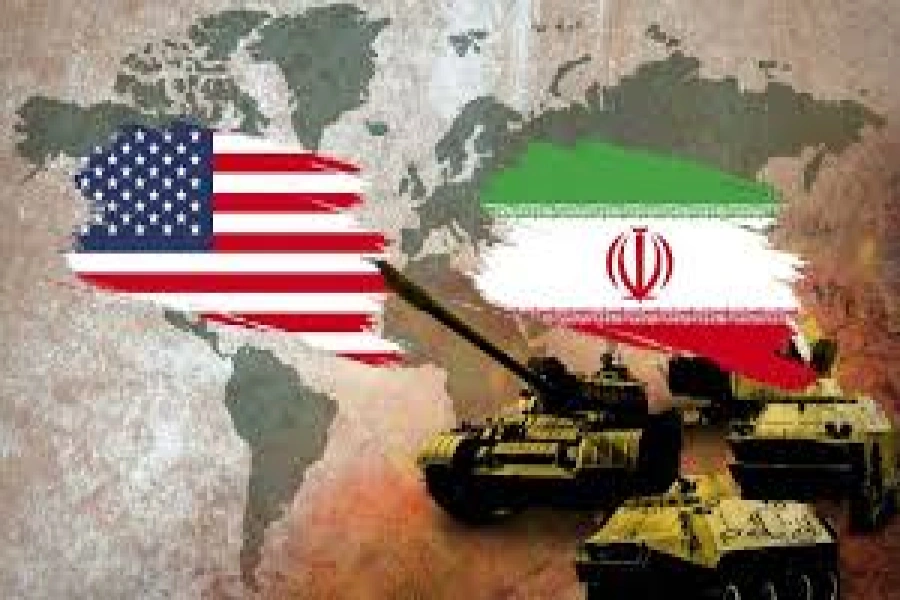
"American foreign policy is controlled by fools," Doug Bandow, American thinker, wrote recently in an anti-war, anti-interventionist article published in Forbes. Talking about the wars America has fought in foreign lands, he added in the same article, "Uncle Sam has demonstrated that he possesses the reverse Midas Touch. Whatever he touches turns to mayhem. Whenever and wherever Washington gets involved, the situation worsens."
Luckily, India does not have the grave and unforgiving responsibility of running the world yet. But India's neighborhood policy, since Nehru's era of 'Sphere of Influence' doctrine, also offers some valuable lessons.
Except Bhutan, which remains strictly committed to Nehru's Dictum till date, dissentions from neighbours have been increasing. And a progressive drift away from core influence of Delhi has been recorded all around. Even Bangladesh, a nation helped in C-section birth by India, has managed to escape without paying due compliments.
In Nepal, a tiny minority along with the monarchy sympathizers have a deep resentment against India's recent role in internal politics. India had facilitated the pact between the political parties and the then rebel Maoists in 2005, signed in Delhi, which created a ground for their soft landing into mainstream politics. Generally known as the '12 Point Understanding' in Nepal, this became the basic guideline for the peace process and paved a path for ousting of monarchy.
Monarchy has been ousted and Maoists have been mainstreamed. But India's Himalayan problems entered a new chapter with the Madheshi Movement in Nepal. At present, Madhesh and not the Maoist, is the real issue of concern for India. Maoists are simply trying to hitch a ride on that concern and blow their importance out of proportion. A serious issue—with multilateral hues of ethnicity, nationality, caste and tribe—Madhesh may pose a serious decision dilemma for Delhi.
The Nepali psyche about India in the future depends a lot on what South Block is interested in now and what it ignores. The public opinion in India about its neighborhood policy, when it rises beyond the security rhetoric, will also pose objective scrutiny in retrospect about the choices India makes now.
One striking example is India's foreign policy disaster in Srilanka. J N Dixit has written in Assignment Colombo, "India's involvement was unavoidable not only due to the ramification of Colombo's oppressive and discriminating policies against Tamil citizens, but also in terms of India's own national security concerns..."
But was India's approach in Sri Lanka of abetting, funding and training the Tamil insurgents correct? In the same book, Dixit provides the answer, "the answer obviously has to be negative. Sri Lanka should have been allowed to sort out its own problems. India should not have interfered in any way, even if developments in Sri Lanka and its government's policies endangered India's interests."
What if the conflict affects India? Dixit adds, "India should have tackled them domestically." But back then, the policymakers thought otherwise because RAW thought "they have the boys in full control" and if they stopped listening, the military said it could "tame them down in fourteen days." But it did not work out that way. And rest is history and a tough lesson in foreign policy for India.
Statecraft is complex and balancing national interest in a complex neighborhood is always a walk on tightrope. The proclamations like 'reverse Midas Touch' may be a simplistic overstatement. But the underlying insight that micro-management, mostly, doesn't produce expected outcome cannot be ignored.
The hawks never run out of excuses to flex muscles but history proves that any solution reached with an overt external intervention lacks legitimacy and longevity. It is in the best interest of India, Nepal and future of the relationship that India should simply stay away.
The author is pursuing Mphill in International Relations at Jawaharlal Nehru University, New Delhi Shankar.southasia@gmail.com