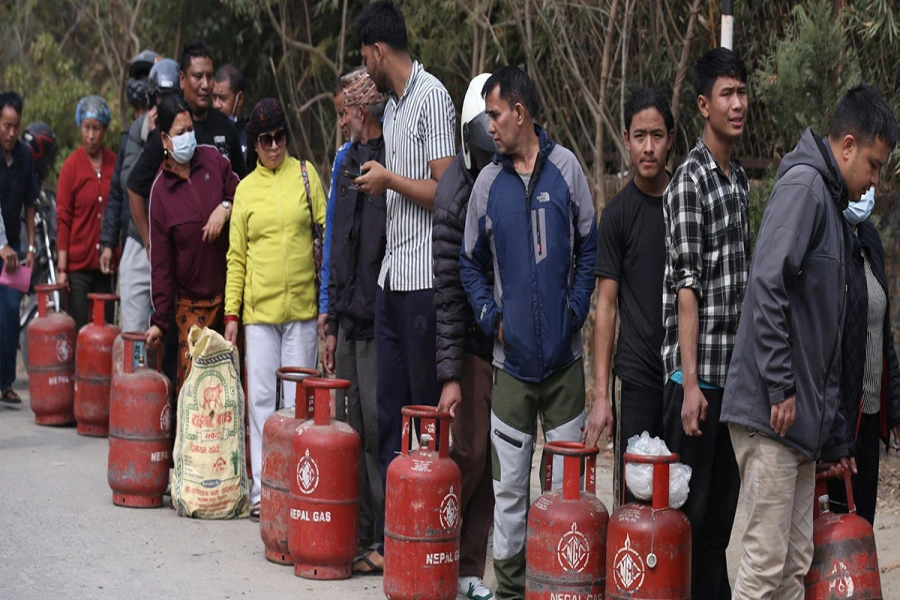
Commerce Minister Rajendra Mahato recently sent a letter in this connection to his Indian counterpart requested the Indian government to pave the way for Nepal to source fuel from any refineries and OMCs in India. [break]
Nepal has called for the amendment to Petroleum Supply Agreement the two countries signed in 1974 -- something that led to the commissioning of Nepal Oil Corporation (NOC) and designation of IOC as the sole supplier of fuel to Nepal, starting formal fuel trade between the two countries.
Prior to that, multinational petrochemicals based in India like Exxon used to directly retail fuel in the Nepali market. Since 1974, the provisions related to petroleum supplies to Nepal is worked out and governed by the agreement that NOC and IOC have signed.
Elaborating on Nepal´s decision to open avenues of sourcing fuel from alternative suppliers as well, officials said that new arrangements were sought mainly keeping in view changes in market dynamics, India´s growth as oil exporter and better management of petroleum sector of the country.
“Besides, the changes were sought considering the long-running vision of the government to liberalize petroleum sector and open imports to the private players,” said Commerce Secretary Purushottam Ojha.
So far, petroleum is state-controlled commodity and NOC functions as the sole importer of oil in Nepal. But, in the letter, the Ministry has cited that Nepal aims to open import to the private players and has already embarked on introducing reforms in the sector. An Act to this connection is in the process of enactment, it states.
Sources, meanwhile, said that the government decided to seek changes in the way Nepal sources fuel mainly after leading Indian private petroleum refineries and also the public sector OMCs showed interest to supply fuel to Nepal.
The Essar Group, the private refinery operator in India, had knocked the doors of the government and NOC about a couple of months ago, requesting them to buy fuel from it. Likewise, Bharat Petroleum Corporation Limited (BPCL), another leading Indian public sector OMC, too had urged its government to allow it export fuel to Nepal, eying the growing business prospect here.
Amid increased urbanization, modern lifestyle and protracted power cut, Nepal´s petroleum market has bloated to a size of about Rs 48 billion per annum. And NOC projects it to grow to Rs 60 billion in this fiscal year, ending mid-July 2010.
Although NOC does not openly support the move, its officials admit that operating with multiple fuel sources will be beneficial for both the consumers and the country.
The beginning of competition among exporters can instantly trigger competition in price, efficiency in supply logistics, enhance quality of supply and introduction of wide array of efficient product line to serve needs of different consumer groups.
However, experts said that changes in sources alone will not ensure strong transfer of benefits to the people. “There has to be multiple OMCs in the country. For this, reforms need to be introduced within the market as well and government must open imports to private sector,” said Umesh Dahal, oil marketing specialist.
milan@myrepublica.com
Related story
NOC pays over Rs 13 billion to IOC with govt’s help