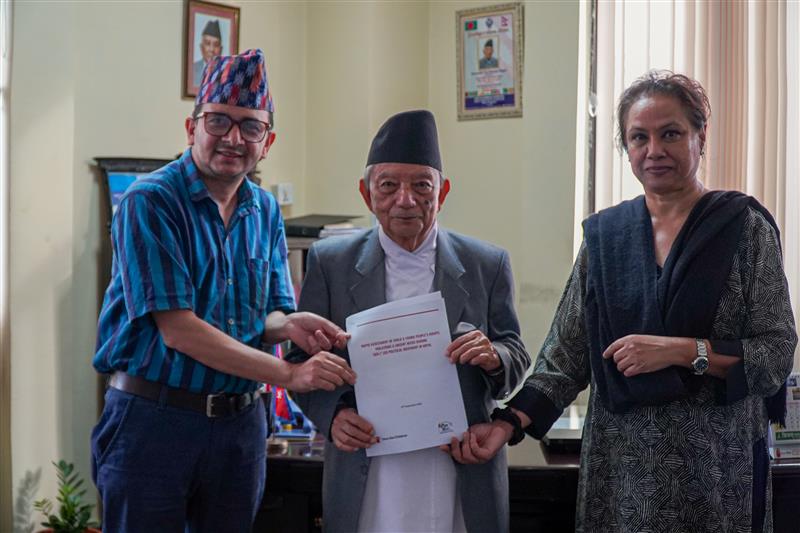

KATHMANDU, Sept 9: Minister for Finance Dr Swarnim Wagle has instructed the concerned bodies to make the details of the Rapid Damage and Needs Assessment (RDNA) of the Bhotekoshi flood more realistic.
He issued this directive to the National Planning Commission (NPC) and the World Bank's representative in Nepal during a discussion at the Ministry of Finance on Tuesday. The discussion was on the separate initial assessments of the Rapid Disaster Needs Assessment (RDNA) being prepared by a task force formed by the NPC and the Global Rapid Damage Estimation (GRADE) prepared by the World Bank.
"To make reconstruction and rehabilitation effective, it is necessary to assess physical damage and needs caused by the flood realistically. The RDNA and grading should be based on reality and truth to form a national document and for the government to make accurate decisions and mobilize investment," he explained.
The NPC is preparing a draft report for rapid and initial assessment of the physical and human damages caused by the flood. The World Bank has already prepared an initial assessment of the damages.
Govt must seek compensation under ‘loss and damage’ mechanism:...

The Finance Minister discussed with stakeholders on Tuesday to verify the preliminary details of that draft and prepare a shared initial report.
The discussion was attended by NPC Vice-Chair Dr. Gunakar Bhatta and other senior officials of the commission. It was informed on the occasion that the damage to physical property caused by the flood was assessed by categorizing it into four different areas for RDNA.
The categories include social, production-based, infrastructure, and other sectors.
The study results of the damage to private buildings and structures, as well as infrastructure in public, education, health, and cultural heritage areas, have been included under the social sector. The damage caused to agriculture, fisheries, livestock, financial, and economic activities is being evaluated under the productive sector.
Hydropower projects and transmission lines, household green energy use, roads, bridges, telecommunications, environmental health, as well as irrigation and river management works are evaluated as part of the infrastructure sector.
The condition of accumulated debris and hazardous waste in flood-affected areas has also been assessed by including it as the fourth sector (intersectoral topic).
The government is preparing to release a joint RDNA report soon, combining both reports. The Planning Commission, led by Joint Secretary Arjun Bhandari, is preparing the RDNA report with representatives from the concerned ministries, including the Ministry of Physical Infrastructure Development.
Based on that same report, the government will move ahead with everything from arranging relief at the time to gathering investment sources and carrying out reconstruction and restoration works.