KATHMANDU, Nov 3: A meeting of opposition parties led by the main opposition Nepali Congress at Singha Durbar on Monday called on the government to immediately summon a session of the federal parliament.
The meeting decided to develop a common strategy on what opposition parties described as the government’s arbitrary style of governance through ordinances, interference in press freedom, judicial independence, post-flood and landslide rescue and relief efforts, and issues affecting people's livelihoods.
The meeting took place as leftist parties, including the CPN-UML and the Nepali Communist Party (NCP), prepare to intensify street protests after the Chhath festival.
The ruling Rastriya Swatantra Party (RSP) commands a near two-thirds majority in the House of Representatives. Given their numerical weakness in Parliament, why are opposition parties seeking to make the legislature their primary platform?
Under constitutional provisions, the government can issue ordinances only when Parliament is not in session. Once a parliamentary session begins, such ordinances must be presented to Parliament for approval. Opposition parties are pressing for a parliamentary session because the authority to debate ordinances and scrutinise their justification rests with the legislature.
The opposition lacks the numbers to defeat a government with a near two-thirds majority through parliamentary votes. For them, however, Parliament is more than a place for voting. It provides a legitimate platform to question the government, hold it accountable and generate public debate.
Opposition parties argue that the government's practice of issuing ordinances immediately after suspending parliamentary sessions has raised questions about the relevance and authority of Parliament itself.
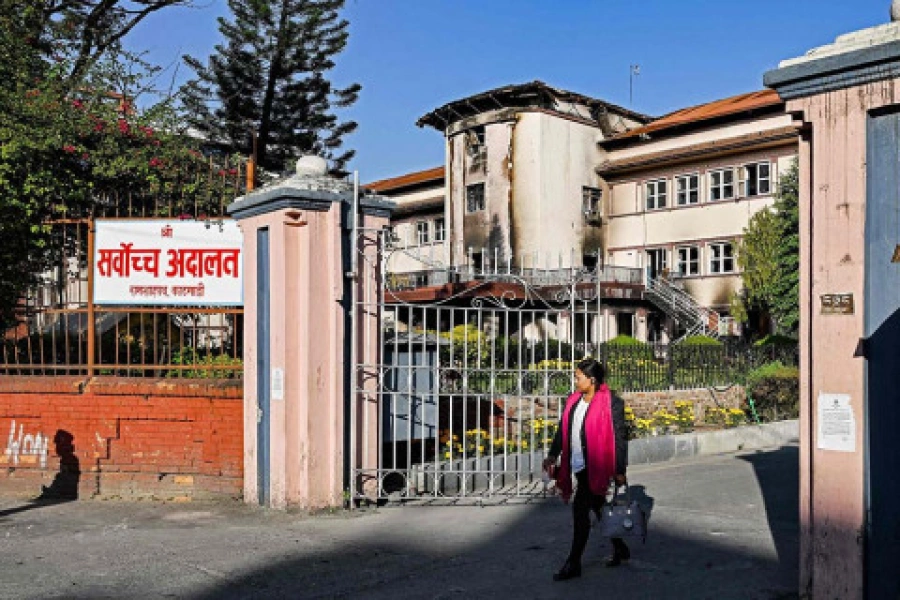
This is why the impeachment motion against Chief Justice Rana i...

With reports that the government is preparing to introduce the Federal Civil Service Act through an ordinance, opposition parties have taken a firm stand against the move. Reports suggest that the government plans to withdraw the Civil Service Bill already registered in Parliament and introduce the legislation through an ordinance instead.
The Nepali Congress, as the main opposition party, wants to challenge the government inside Parliament on ordinances, press freedom, judicial independence and good governance. This is one reason it has been reluctant to join the kind of direct street protests being planned by leftist parties.
The leftist bloc, comprising the CPN-UML and the NCP, is preparing to launch nationwide public awareness campaigns and street protests after Chhath. Its agenda includes people's livelihoods, rising prices, good governance, ordinances and national sovereignty.
The nine-party Progressive Front is also seeking to increase pressure on the government over identity rights, Madhes rights, strengthening federalism and social justice. It plans to organise a large public demonstration in Kathmandu on November 26 (Mangsir 10), followed by further street protests, around these issues.
Analysts say turning shared opposition to the government into a common long-term political programme will be difficult. In the past, opposition alliances have come together around common issues but frequently split when negotiations over power-sharing and political positions began.
Ruling party leaders have accused opposition politicians of threatening protests out of fear of being jailed in corruption cases.
According to analysts, time will tell whether the opposition's planned street protests after Tihar and Chhath can bring issues such as livelihoods, rising prices and disaster management to the forefront of public debate.
Ordinary citizens, meanwhile, expect the government and Parliament to play an effective role in relief distribution, controlling inflation, protecting media freedom, ensuring good governance and safeguarding judicial independence.
The opposition parties' meeting, convened at the initiative of the Nepali Congress, also demanded that the House of Representatives be summoned without delay.
The meeting, held at the Nepali Congress parliamentary party office in Singha Durbar, decided to formulate a position on the controversial judge only after considering the stance and preparations of the ruling RSP.
Speaking to journalists after the meeting, Nepali Congress parliamentary party leader Bhishmaraj Angdembe said the ruling party had yet to reach a clear position on the proposed impeachment of the controversial judge.
Stressing the need for thorough discussions on impeachment and related issues, Angdembe said, "On such a serious and important matter, it is essential to see how the parties represented in Parliament express their concerns and how Parliament takes up those concerns and moves forward."
He said opposition parties would develop a common position on impeachment only after the ruling RSP presented a clear stance.
"We stood together in support of good initiatives yesterday, and we continue to do so today," he said.
Following the meeting, NCP leader Pramesh Hamal said the opposition parties had agreed to demand that the government summon a parliamentary session.
"We have decided to demand, on behalf of the opposition parties, that a parliamentary session be called as soon as possible," he said.
The Nepali Congress parliamentary party had also held a meeting before the broader gathering of opposition parties.