- Samwad, Basanta Kumar Chaudhari[break]
These lines from the chapter “Kunjini ra Nepali Sankriti” from Chaudhari’s book speak of the current poignant reality. Bagmati and Bisnumati were names chosen for the very reason of being pious and clear but contradicting the rationale behind the name, the picture is grim with the situation all the more deteriorating.
There was a time when the holy river of Bagmati was fit even for a swim, and when I was a kid I even remember catching fish in the same river. But now the water can’t even be touched. The river’s pollution has been a hot topic every now and then but it is not so often that we hear about how the situation has put a stake to our culture and traditions. Rivers as such reflect our culture and the fact is that culture is present in almost all the nooks and corners. Culture is present in art, music, people’s hearts, thoughts and deeds but the sad part is that our culture is slowly disappearing from almost all the fields.

I really like these lines because it evokes a sense of awareness to us and it just reminds us to reflect on where we are heading with all the recent developments in terms of everything. There has been rapid growth in civilization but people tend to forget to take their culture along. We may have surpassed our ancestors in terms of development and we may be in any situation but we shouldn’t be forgetting our roots and culture as it is the only foundation that has provided us with a unique identity.
Another important factor is that discipline is the most important thing that can give us the right direction in lives. Unless discipline becomes a second nature, we cannot expect people to preserve their heritage and culture.
Chaudhari is someone who has always been interested in literature and does justice to his writing with his flow of creative ideas. Also a poet and lyricist, his book is like a painting, as the words read beautifully as he expresses his thoughts in an aesthetic way.
About Manandhar
Artist and painter Manandhar derives inspiration from nature and is interested in art that presents realism. Manandhar, the chancellor at Nepal Academy of Fine Arts, has come a long way as the Academy came into existence after years of struggle. Born to be an artist, he was inclined to arts since his childhood days and was determined in his path to set a certain standard in the field of arts.
He believes that arts have the power to change the course of society if done in the right way. “Arts can inspire people and can spread awareness as it speaks for itself,’’ says Manandhar.
“Impressionism and Expressionism in the West was all about movements by artists to express themselves. We have indeed come a long way but we still need to work hard to promote our Nepali art,” he says.
The sounds of birds chirping and river flowing may seem like a natural and normal phenomenon for the common people but in Manandhar’s observance it is such occurrence that drives him to indulge in art as nature itself is his greatest teacher. He prefers expressing himself through realistic arts.
He is also selective when it comes to reading books as he likes reading those that he can relate to and something that evokes a deep realistic meaning. Also fond of reading books that are based on true events, Manandhar is passionate about things that give him a sense of hope and makes him dream.
Manandhar’s five picks
Selected poems of Laxmi Prasad Devkota
I can read his book almost everyday and find it more interesting every time. This is a collection of Devkota’s poetry and every poem of his has a special underlying meaning. When I was a child, I had read the poem “Udeshya ke linu udi chhunu Chandra ek” for the first time and I used to wonder how it was even possible to touch the moon and what it really meant. But in today’s world, that line has proven to be true as humans have achieved a lot. So the imagination the poet had at that time has become the ultimate decision and truth.
Napotiyeka Rangaharu by Ramesh Shrestha
Shrestha is a poet and also an illustrator from Pokhara. Every poem of his talks about the current situation and can be related with the political happenings as well. There’s a line in the poem “samjhautako dui thunga fool timi liera au, yauta ghayal dinko asish liera jau” which reflects the outpouring of the poet’s pain. So the book is full of such emotional lines which are deep and meaningful.
Pailaka Nibharule by Manjul, Tirtha Shrestha and Kumar Ale
I am currently reading this book and the content has been basically inspired by nature. I really like this book as there are artistic photographs as well which has been taken by Kumar Ale. Artists usually say that nature is their teacher and nature’s gardeners are the artists. If you grow a plant, you need to care to make it bloom properly. Similarly, artists relate and draw stimulation from nature to grow their creative sides. In this way, the book is a beautiful product of Manjul, Tirtha and Ale.
The Search by Geeta Kesari
The book is basically centered on women and it touches other issues as well. The book also addresses the situation in prisons. Those prisoners whose children are up to 10 years of age usually live with the parents in the jail. So what kind of mindset do the children grow up with when they are placed behind the walls? Placing children in prisons is unfair as it might build up criminal attitude. Like patients are treated in hospitals, criminals should also be given education so that when they come out of it, they learn something and can sustain themselves. The book touches such profound issues that raise awareness. The cover illustration of the book was made by me as well.
Chitrawali Laxmi Ramayan by Hrishi Ram Regmi
If someone asks me the question of my origin and my identity, I should be able to answer. So this book has the originality and is related to my ancestor, which is why I am reading it. The book also talks about a prominent person from my community, and even being in the same area I had never interacted with him. So the book answers many of my queries. The book was preserved well and the pictures have characters and details that show local Nepali culture as well. The book is being launched soon.
As told to Nistha Rayamajhi
Related story
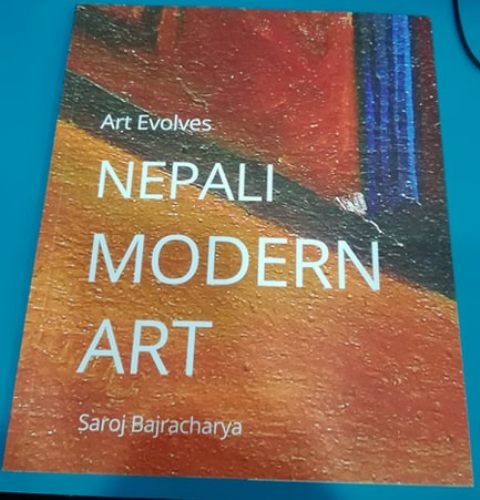
‘Art Evolves: Nepali Modern Art’: Review








-1778746562.webp)