There is a striking irony in Nepal’s agricultural landscape: the very farmers who work the land struggle to obtain loans, while “fake farmers” living in concrete jungles receive the largest share of agricultural credit. This exposes the gap between Nepal’s agricultural policy and its practice. Much of the Kathmandu Valley is now densely settled, with urban expansion reaching the foothills. In these plots, grain no longer grows—land sales do. That such areas receive the highest volume of agricultural loans is deeply troubling. It shows how real agricultural development has been sidelined, with loans routinely misused for non-farming activities. Of the agricultural loans disbursed across the 13 districts of Bagmati Province, 52.6 percent has gone to Kathmandu. For non-farmers in a largely non-agricultural city to receive agricultural loans is a blatant misuse of the system. This has blocked genuine farmers from accessing the support meant for them. According to a Nepal Rastra Bank study, Rs 121 billion in agricultural loans has been disbursed in Bagmati Province, of which an astonishing Rs 64 billion was concentrated in Kathmandu alone. The Valley has only 19,943 hectares of land used for food and vegetable production. Meanwhile, Kavrepalanchok—a major vegetable-producing district—has received only Rs 5.17 billion, despite having nearly 29 times more cultivable land at 590,662 hectares. These figures reveal a disturbing pattern: agricultural loans intended for farmers are being captured by influential groups and used for non-agricultural purposes.
Revised interest rate corridor system introduced
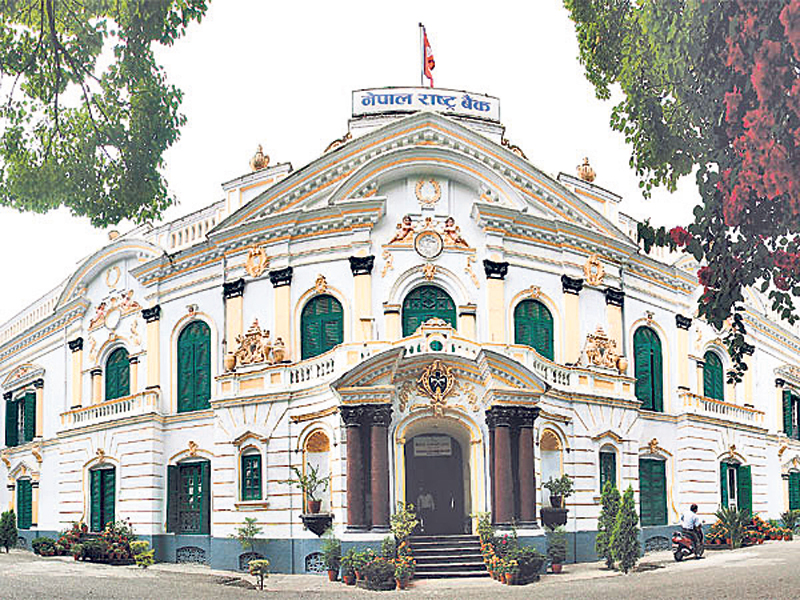
The government’s stated aim is to promote agriculture and livestock businesses and generate production and employment. Banks are required to provide subsidized loans at interest rates no more than 1.5 percent above the base rate. Yet agricultural credit remains concentrated in Kathmandu and Chitwan, with Dolakha receiving only 0.5 percent. For agriculturally dependent districts like Dolakha and Rasuwa, this imbalance is particularly alarming. Although Kavre contributes the highest share of food and crop production in the province, half of all agricultural loans are absorbed by Kathmandu. Since major banks approve loans through central and regional offices—mostly located in Kathmandu—their credit portfolios are naturally skewed toward the capital. Nepal faces serious challenges in boosting agricultural output through commercialization and modernization. Arable land has been fragmented, abandoned, or converted into housing plots, drastically reducing cultivable areas. Once a farming hub, Kathmandu has seen agriculture decline sharply in recent years. Domestic products also struggle to compete with cheap imported fruits, vegetables, and other agricultural goods, and imports continue to rise.
Nepal needs a clear strategy to increase agricultural production. Farmers must be made competitive, and reliable supplies of fertilizers and seeds ensured. Because domestic products are expensive, consumers often prefer imports; making local goods competitive would naturally reduce import dependence. Nepal has made progress in meat and egg production in recent years, and similar improvements are possible in other sectors. Yet youths continue to migrate abroad despite opportunities at home, largely because local agricultural products do not receive fair market value. The green hills around the Kathmandu Valley hold immense potential for agriculture, livestock, and fruit cultivation. Properly channelled agricultural loans could have helped develop these sectors, improving livelihoods and reducing the country’s widening trade deficit.