Born in Jhule VDC in Dolakha district 78 years ago, Tamang spent almost all his life for the cause of democracy after joining Nepali Congress in 1957. [break]A school headmaster-turned-political leader, Tamang became a member of parliament and also a cabinet minister for law, justice and parliamentary affairs in 1994.
But he never chose to live a life of luxury as many in his own party leaders did. For the past 15 years, he had been living in a small room given to him by NC leader Radhe Shyam Adhikari in Thapagaun. He did not own anything beyond the bare necessities of life.

(Photo: Keshab Thoker)
Tamang, who studied up to intermediate level in Darjeeling, India, was highly impressed by the idea of democratic socialism propounded by NC´s founding leader late BP Koirala. This was the reason w0hy he decided to devote his whole life for the cause of democracy after then king Mahendra Shah usurped power, dissolving the elected government led BP Koirala in 1961.
The struggles he waged for the cause of democracy cost him dearly. While his wife left him, Tamang not only had to serve in prison, but was also forced to live in exile in India. He worked under the leadership of martyr Saroj Prasad Koirala in Jayanagar, Darbhanga and Banaras camps while in exile.
He also actively took part in the armed struggle NC had waged in 1963 in Ramechhap, Sindhuli and Udayapur districts to protest the royal takeover. Though he returned to Nepal after then government granted general amnesty to many leaders in 1969, he decided to remain in exile for another one year in view of the government´s crackdown on democratic activists.

NC President Koirala offers his last respects. (Photo: Keshab Thoker)
Again in 1929, he was arrested and subsequently detained for. six months in Hanuman Dhoka before being sent to Nakkhu jail, where he spent nearly five years with another saint leader Krishna Prasad Bhattarai.
As a Dolakha district committee president of NC after 1977, Tamang played an active role in the referendum held in 1980 and in the historic people´s movement of 1990. He was also elected as member of the parliament in the mid-term election held in 1994 and subsequently became minister for law, justice and parliamentary affairs.
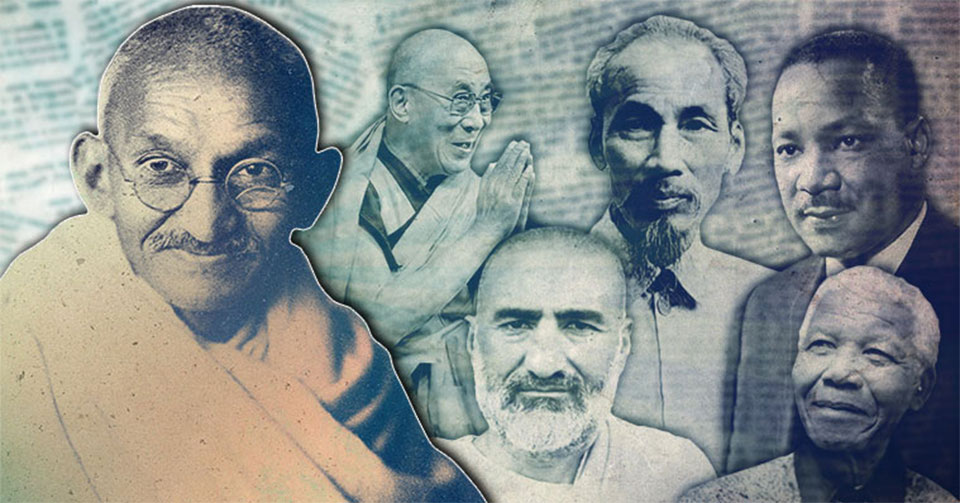
Tamang, who fielded his candidacy for party presidency in the 12th general convention, held a distinct image in the party. His simplicity and Gandhian way of life had won him high reverence both within and outside NC.
Even when many leaders from indigenous nationalities defected from their respective parties for forming a party exclusively meant for indigenous nationalities, he continued to hold a balanced view. Late Tamang is survived by a son and a daughter.
Related story
150 years of Gandhi: Five world leaders who drew inspiration fr...