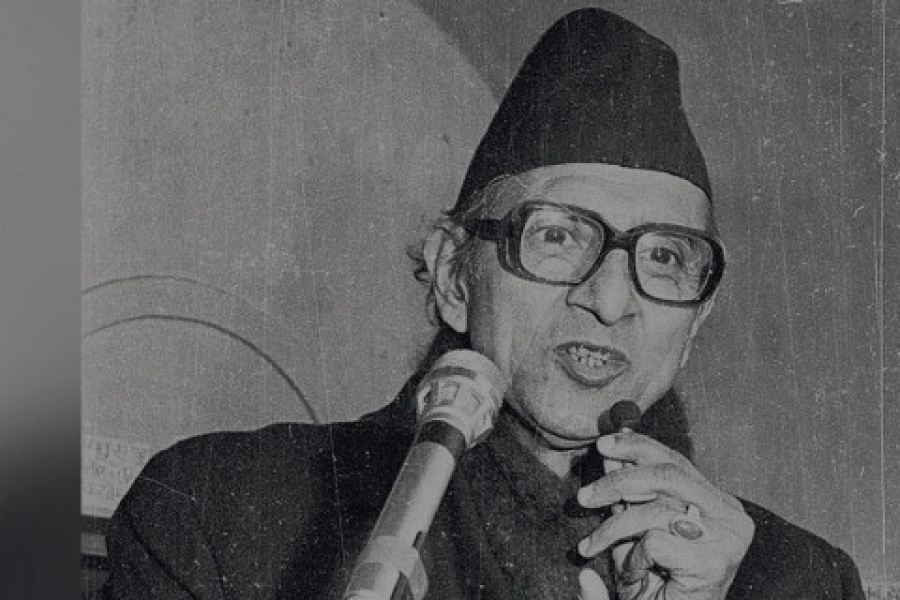
From college students and bank officials to teachers, cab drivers and street vendors, everyone was seen with different versions of daura suruwal and chaubandi cholo in this small district and hill station in the Indian state of West Bengal. But it wasn’t merely a sentimental celebration of Nepali roots for those who took to the month-long dress code. Any outsider who gets to discuss the anthropological significance of ’s national dress being donned by the denizens of Darjeeling will also be treated to the issues these hills have been battling over. The threading in the daura suruwal and chaubandi cholo has deeper knots than meets the eye.

It was Gorkha Janamukti Morcha (GJM), a new party formed in October, 2007 and locally known as ‘GoJaMuMo’, that called for the month of Nepali dress in and around Darjeeling. It was timed for official visits by ministers of the West Bengal Government and aimed at intensify the demand for full statehood for ‘Gorkhaland’. GJM, a breakaway group of the Gorkha National Liberation Front (GNLF), is under the leadership of Bimal Gurung, whose name is apparently is on everyone’s lips as the statehood movement keeps getting stronger.

The demand for a separate Gorkhaland state has long been heard in the hills of West Bengal and the GJM, although not a ruling party, has managed to call an indefinite shutdown of government offices in three sub-divisions (Darjeeling, Kurseong and Kalimpong) of Darjeeling district. Party members claim that their’s is a Gandhian (civil disobedience) form of protest that refuses to pay state tariffs for electricity or phone bills until the demand is duly addressed.
Variations to this protest have spanned the social landscape. The Nepali dress code has revived dormant feelings. A walk in the town centers allows one to observe vehicle number plates changing WB (West Bengal) for GL (Gorkhaland). The name Gorkhaland is printed everywhere. And it wasn’t just the ethnic Nepalis who reportedly dressed Nepali. Even non-Nepali residents in the towns were spotted with the dhaka topi of.

Every evening are were peaceful torch rallies and a number of people on relay hunger strike every day. Last year, a female GJM supporter reportedly died when a protest gave way to rioting and a political shakedown beneath these quiet hills. Teargas has been used; talk of Gorkhaland keeps getting louder and people more anxious by the day.
The cry for Gorkhaland is not a new one. However, what is intriguing is how there are no parallels with the previous GNLF campaign, which was sometimes violent. GJM president Gurung has vowed that 2010 A.D. is to be the year for the movement to achieve its goal, and the party shall not be participating in future elections. The absence of politically motives might be just what people, already weary of GNFL boss Subhas Ghising, want in a new leader. The popularity of the GJM is something we might start paying more attention to.

A further division of itself is surely not what the state of West Bengal has in mind but the bustling hill towns of Darjeeling already believe what Bimal Gurung is promising. The demand for a separate state is the cry of those who know how it feels to be a minority. Nepalis are a minority in West Bengal and Gorkhaland is a projection of the proud heritage of these people whose ancestors migrated to these hills. One proud local resident says to this scribe, “We are not Nepali, we are Gorkhali.”
Related story
Sindhuli Gadhi: History that deserves to to be remembered