I am writing this following our last meeting on 19th May at the Nepali Congress party office. We expressed to you our concern about the peace process in light of the new situation created by Prachanda’s video tape revelations. We also reviewed some recent documents from the UN and your office. We regret to say that we did not find them well balanced, and in some instances, factually wrong. We feel, in the interest of maintaining the impartiality, independence and integrity of the highest order which the UN as an institution represents, any source of bias and partiality which could have occurred inadvertently, should be immediately rectified. Let me draw your attention specifically to the following:
SECURITY COUNCIL NEWS REPORT OF 6119TH MEETING
The fourth paragraph of the report on the 6119th meeting of the Security Council refers to your report to the Security Council calling for an inclusive, concerted and well-managed consultative process to achieve the important work of drafting a new constitution and ‘integrating and rehabilitating verified Maoist combatants into the Nepal Army’. The last portion of this sentence is misleading. You are aware that integrating and rehabilitating all the verified combatants “into the Nepal Army” has not been part of any agreement in the peace process. This is interpreting the peace accord too far. This must be corrected immediately.
From your report, it would appear UN has accepted the Maoist commitment to the peace process in letter and spirit. The perception of other political forces including the Nepali Congress is little different.
LANDGREN’S REPORT OF MAY 5, 2009
You have made reference to the government action on General Katawal in the context of explanation sought from him on three issues. While you have correctly reported the Maoist position on the three issues, you have not done the same with regard to the army position supported practically by other major parties. As you are aware, we have not accepted the UNMIN interpretation of “additional recruitment” to cover even the routine recruitment to fill up the vacancies of Nepal Army. Our position which was subsequently validated by the Supreme Court interpretation is - recruitment to fulfill the vacant positions arising from retirements and other reasons, without raising the total strength, cannot be interpreted as “additional recruitment” which the peace accord prohibits. Your report says the army did not stop the recruitment following the government order, without mentioning the army’s explanation for the same. The report makes reference to “army reinstatement of eight retiring brigadier-generals” not recommended for extension by the Ministry of Defense. This is incorrect. The reinstatement was affected following the Supreme Court order. Your failure to mention the Supreme Court side of this episode will naturally mislead the readers.
The report also fails to provide the background behind the President’s instruction to maintain the status quo in the Army leadership. While the report quotes the outdated Army Act which empowers the government to sack the Army Chief, it is silent on the constitutional provision which requires the government to build consensus while taking vital decisions, a fact reminded by the President when the Prime Minister expressed his intention to sack the General. The report does not mention about the written petition from eighteen political parties representing parliamentary majority, which asked for President’s intervention on the matter terming the Prime Minister’s action to remove the General illegal and constitutionally wrong. One also does not fail to note that on all the three counts the Maoists sought clarification from the Army Chief; there was a conflict of interest because of its bearing to the Maoist private army. The objective was to raise the status of their combatants and demoralize the Nepal Army.
You have mentioned about the Army Chief’s “restrictive stance” on the integration issues. It is not clear what you mean by “restrictive stance” and how he has done it. As you are aware, the Special Committee has the final say on the integration and rehabilitation matter of the Maoist combatants. The Army Chief has never said he would defy the Special Committee decision.
You also seem to have made some controversial and unsubstantiated remarks like “the Army Chief challenging the Prime Minister’s constitutional authority to fire him” and the army officers’ statement about their role between democracy and totalitarianism. But you have failed to take account of the public pronouncements repeatedly made by Maoist leaders, the resolution of their party conclave in Kharipati and Prachanda’s videotape about the Maoist revolutionary agenda.
Interestingly, the report mentions the Prime Minister had reportedly secured the agreement of the major opposition party the Nepali Congress also “to remove the Army Chief” but the agreement fell apart after 19 April. Nothing can be farther from the truth. The NC’s objection to the move came from the day since the time the government sought clarification from the General. The Maoists wanted to oust him, because he understood their true intent which the ‘videotape’ has now exposed.
From your report, it would appear UN has accepted the Maoist commitment to the peace process in letter and spirit. The perception of other political forces including the Nepali Congress is little different. The continuation of their revolutionary rhetoric, the paramilitary structure of their front organizations, failure to separate the disqualified combatants from the cantonments, continued grabbing of private land, failure to return the seized property etc are some of the reasons for this. Their parallel administration of the insurgency days have started resurfacing in some districts. The gap between the promise to play multiparty constitutional politics and their activities on ground is too wide. You also seem not to have taken note of the violent activities of YCL cadres, the massive impunity under state protection, and the campaign to drive away workers belonging to other political parties from rural areas. All these put question mark on their commitment to the peace process and competitive democracy.
THE VIDEO TAPE
The recently publicized videotape of Prachanda should be an eye opener to everybody. This shows how the Maoists were hoodwinking everybody even after they signed the Comprehensive Peace Agreement. The videotape, among others, has: i) raised serious questions about the quality of verification exercise conducted by UNMIN which inflated the actual number of combatants many fold raising the Maoist military strength, ii) revealed the misuse of scarce public money and donor assistance to strengthen the Maoist party militarily - they were using the subsistence money meant for the inmates in the camps to procure arms and strengthen party organization, iii) the Maoist plan to intimidate and use violent means during the CA election including their plan to break the legs of opposing party candidates. The video tape reveals that the Maoists are preparing for a final revolt - something which their party has decided in their plenary. The Maoist claim that the video speech by Prachanda was made in a different context cannot satisfy anybody since it happened after a year since signing the CPA.
The videotape has confirmed the suspicion about the real Maoist motive and agenda. On the surface, they continue to commit themselves to the peace process. But internally, they are preparing towards achieving ‘the revolutionary goal’. A careful analysis of the videotape speech together with the speaker’s body language can easily lead anybody to conclude that Maoists signed the formal peace agreements only for tactical and public relation purpose which could be discarded any time when it would suit them. Therefore, in the light of new revelations and developments there is need to review afresh the combatants verification, the use and misuse of funds channeled to the camps, the account and whereabouts of the rebel arms, the type of training classes imparted in the camps etc.
It is natural for anybody to question whether the weaponry they have reported and deposited in the UN-monitored storage is all that they possess. There are reports coming from those who fled the camps that many sophisticated weapons are hidden outside the cantonments. For the peace process to succeed, it is absolutely necessary that no illegal weaponry remains outside and a parallel force which is maintained by the taxpayer’s money ceases to exist. Herein lies the urgency of arriving at a political consensus on the issue of integration and rehabilitation of the Maoist combatants at the soonest possible.
The peace process has arrived at a very serious and crucial moment. Failure to understand the seriousness and gloss over the unanswered questions in the past could land us into next bout of conflict. In the interest of long-term peace and democracy in this country, it is time all the concerned parties including the UN look beyond the signed formal agreements to appreciate the meaning of internal resolutions and on ground activities of the Maoist party. I hope you will take the issues we raised seriously.
Sincerely Yours
Ram S Mahat
Central Committee Member, Nepali Congress,
Member of Constituent Assembly
Ram S Mahat
Central Committee Member, Nepali Congress,
Member of Constituent Assembly
Related story
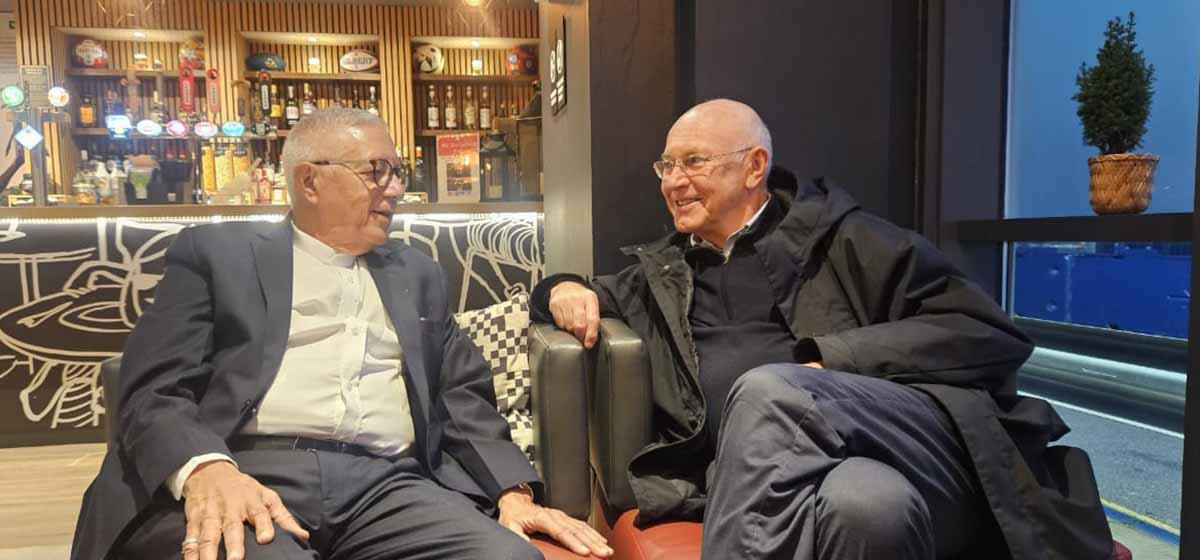
NC leader Koirala and then UNMIN Chief Ian Martin hold meeting