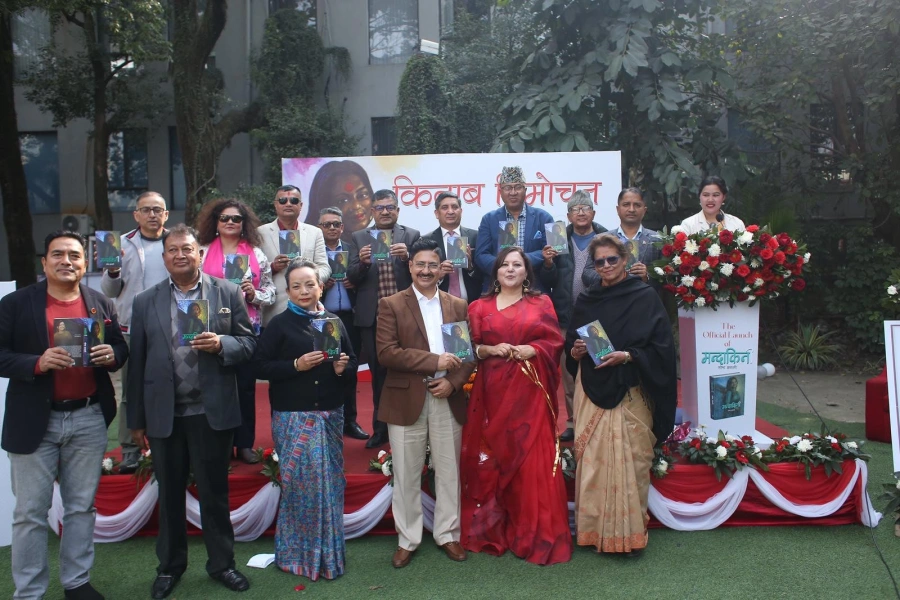
The event included presentation of sanitation reports, and a documentary titled “Aba Dhilo Nagarau” (Let’s not delay any longer) on the condition of public sanitation in and around the Kathmandu Valley, a photo exhibition and interaction among sanitation workers.[break]
“Each day, 16 million Nepalis openly defecate and 6.5 million don’t have access to clean water,” states the book “Off-Track, Off-Target” that was launched at the meet by the chief guest, Top Bahadur Rayamajhi, Minister of Local Development.
The book is a report on the status of current investments in sanitization by the government and international donors, and the actual progress of these funds.
The report show that aids are not channeled properly due to the government’s negligence and also due to the fact that the funds are not enough.

“At present, Rs 9 billion is invested in sanitation but the requirement is at least Rs 14 billion,” explains the report.
The documentary explores the deteriorating conditions of a number of public toilets that Kathmandu has and how the users feel about it.
The sanitation workers had their own melancholies to share.
“We have to risk our lives in order to enter the drainage systems since they are deep and release extremely harmful gases as well as for the particles of glass and metals that often cause injuries. We don’t have enough manpower to do our job, either. The worst is when we’re forced to get rid of unidentified bodies at and from the hospitals without proper equipments and uniforms required for it. The bodies are often in decayed condition and keep falling apart. Furthermore, we have to take the bodies to Pashupati openly in a tractor due to lack of covering materials, and policemen, drug addicts and hospital staffs harass us. We feel scared and immensely disgusted, yet we have to carry on with our responsibilities despite the lack of incentives and lack of proper environment to work.”
The event’s main objective was to appeal to donor agencies and to the government on three major grounds.
First, increase and work towards better targeting of resources. Secondly, proper leadership and accountability on fund management issues. Lastly, maintain equity and sustainability.
It is not only the government and the donor agencies who need to buckle up but the people themselves have to take responsibility that can make a huge difference in sanitation.
Related story
Weird and wonderful toilet facts for World Toilet Day