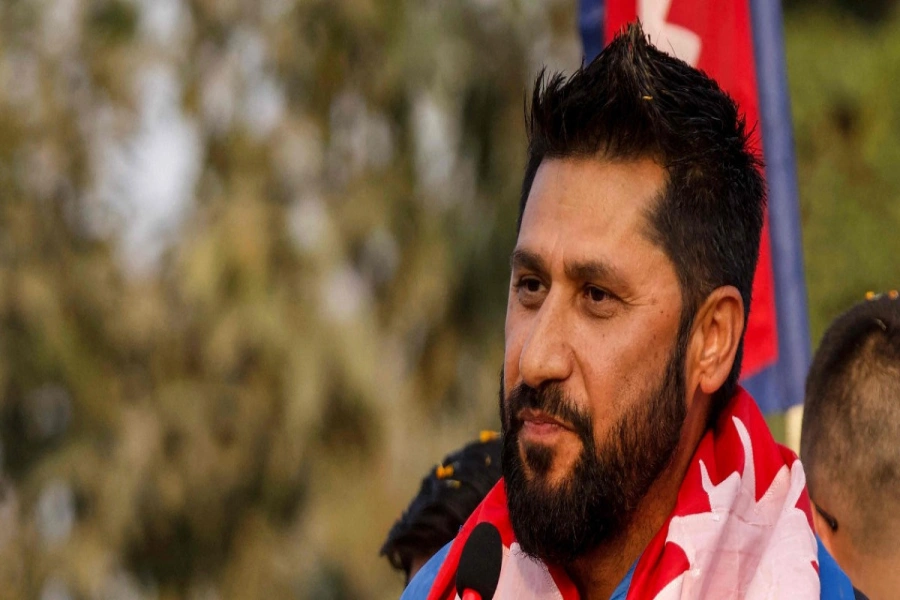
A professional social worker, Bhandari is the maker of “Beneath Everest, Nepal Reborn,” a documentary which captures Nepal while in its turbulent transition from a monarchy-ruled Nepal to a new Federal Democratic Republic.[break]
Filmed over four years, “Beneath Everest” documents some of the most critical defining moments in Nepal’s modern history and describes them.
In his first documentary, Bhandari has managed to capture the lives of the everyday Nepalis, and questions some of the prominent political leaders.
The film, which had its New York premiere at the Asia Society headquarters in New York on December 1, 2009, has been screened at around 25 venues in the capital since mid 2010. Still on its road show, the film has traveled across the country and will reach Sauraha next week.
Almost all of the film was funded by the makers. The current screenings around the country too is being carried out solely on the maker’s expenses.
“We applied for grants which went into the post-production costs and The National Human Rights Commission (NHRC) of Nepal funded five screenings. Apart from that, everything has been looked after by our group,” clarified the filmmaker who sat with Republica for a chat.

Why and when did you begin filming this documentary?
I was a student of Social Work and Public Administration in the US. For one of my projects, I had to prepare a report on the conflict and its effects on the people of El Salvador. In my visit, the people there in many ways reminded me of my home country. Both nations were going through war at that time and my birthplace was counted among the most affected places. I then decided to come back. I had to do something about it. One of my friends in the US was a filmmaker and with him and a few others, I came back to start filming.
Share with us your experiences while filming the documentary?
It was a tough ride. The documentary took me five years to complete. In the initial stage, we were traveling in Nepal all on our own. We had no sponsors or recommendations, and this made things tougher. To convince the locals, the army and the combatants to talk to us was no less tough. I’ve had to wait for months to get interviews of people. It took six moths to get Maoist leader Pushpa Kamal Dahal to talk to me. I was however determined that I would complete the film and have people see it.
So much has been said about the civil war Where does your film stand?
I would like to believe that my documentary is different. I tell the story of people during and immediately after the insurgency. I believe their stories need to be discussed. It’s been just a few months since I began screening my film across the country. While in the capital, there were a lot of people who were of the opinion that the film talks of things bygone, but the villagers reacted in just the opposite manner. Being very honest, my film is dedicated to my subjects. The real people who participated in the war, the families who shed blood and lost lives, and if they are accepting my film with applauses, I don’t think anything else matters.
But what’s the relevance? Why show it to them?
Many like to think that forgetting the past is the way to go. But for me, it’s different. I believe we always need to look back and reflect, and that way we learn. We learn what we have lost and gained. I want people to see my film and realize how much has gone into the war so that we can value today. While I was screening the film in Parasi in Nawalparasi District, I actually met a boy who is also in my film. He had lost his father and brother in the war. I talked to him to find out that nothing has changed for him. He still has no financial support of any kind and is living a miserable life. I want people to understand this and help out thousands of such abandoned people.
At one point, the film critically questions the use and continuation of violence. Give us your personal opinion.
Yes, definitely. Revolution is possible without violence. I believe in social discourse and truthful reconciliation. Dialogue between opposing parties will always lead to peaceful consequences. That is the message I wish to spread through my film.
Any immediate future plans?
I’ll be busy with the screenings for a bit more. I plan to travel all across the country and hold screenings in the most affected areas. Apart from that, I see myself filming more documentaries in the near future. I would like to work on youth engagement programs.
Related story
Documentary 'Co-Husband' by Ganesh Panday wins Best Internation...